
World plastic pollution treaty talks collapse with no deal / Photo: © AFP

 British buyers pay substantial premiums for period-home appearance

 Thomas Markle released to house arrest after child-abuse-image charge

 Dawn of War 4 developers chose Adeptus Mechanicus for tactical variety

 Italy face unbeaten South Africa in Turin Nations Championship match

 ChatGPT interactive interface feature tested across six custom tools

 Freshways milk-price cut deepens pressure on UK dairy farms

 Labour and National remain virtually tied as New Zealand vote count advances

 The Good Daughter adapts Karin Slaughter thriller with Rose Byrne and Meghann Fahy

 Heavy-lift drone evacuates wounded Ukrainian soldier from frontline kill zone

 Morrison says West Brom recovered after pressure from successive derby losses

 Britain considers 2027 state visit for Ukraine’s Zelensky

 Arizona Democrats Secure Historic Trifecta with New Legislative Leadership

 Carney Welcomes U.S. Trade Reversal After Democratic Midterm Victory

 Armenian FM Discusses EU Accountability for Palestinian Rights in Madrid

 Trump and Vance Pursue Secret Diplomacy with Iran Amid Military Pressure

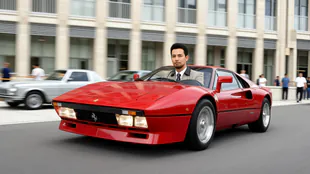 Classic Car Values Surge: De Tomaso Vallelunga Leads 190% Gain
 Microsoft Ends Oracle AI Computing Rental Deal Amid Cloud Strategy Shift
Talks aimed at striking a landmark global treaty on plastic pollution fell apart Friday without agreement, as countries failed to find consensus on how the world should tackle the ever-growing scourge.
Negotiators from 185 nations worked beyond Thursday's deadline and through the night in an ultimately futile search for common ground between nations wanting bold action such as curbing plastic production, and oil-producing states preferring to focus more narrowly on waste management.
Several countries voiced bitter disappointment as the talks unravelled, but said they were prepared for future negotiations -- despite six rounds of talks over three years now having failed to find agreement.
"We have missed a historic opportunity but we have to keep going and act urgently. The planet and present and future generations need this treaty," said Cuba.
Colombia added: "The negotiations were consistently blocked by a small number of states who simply don't want an agreement."
Tuvalu, speaking for 14 Pacific small island developing states, said they were once again leaving empty-handed.
"For our islands this means that without global cooperation and state action, millions of tonnes of plastic waste will continue to be dumped in our oceans, affecting our ecosystem, food security, livelihood and culture," the Polynesian archipelago said.
- Pollution fight 'cannot end here' -
The High Ambition Coalition, which includes the European Union, Britain and Canada, and many African and Latin American countries, wanted to see language on reducing plastic production and the phasing out of toxic chemicals used in plastics.
A cluster of mostly oil-producing states calling themselves the Like-Minded Group -- including Saudi Arabia, Kuwait, Russia, Iran, and Malaysia -- want the treaty to have a much narrower remit.
"Our views were not reflected... without an agreed scope, this process cannot remain on the right track and risks sliding down a slippery slope," said Kuwait.
Bahrain said it wanted a treaty that "does not penalise developing countries for exploiting their own resources".
France's Ecological Transition Minister Agnes Pannier-Runacher said: "I am disappointed, and I am angry," saying a handful of countries, "guided by short-term financial interests", had blocked the adoption of an ambitious treaty.
"Oil-producing countries and their allies have chosen to look the other way."
The future of the negotiations was not immediately clear.
Some countries called for a seventh round of talks in future, with the EU saying the latest draft was a "good basis for a resumed session", and South Africa insisting: "It cannot end here."
The talks in Geneva -- called after the collapse of the fifth and supposedly final round of talks in South Korea late last year -- opened on August 5.
- Last-ditch scramble -
With countries far apart, talks chair Luis Vayas Valdivieso produced a draft text Wednesday based on the limited areas of convergence.
But it was immediately shredded by all sides, plunging the talks into disarray, with the high ambition group finding it shorn of all impact, and the Like-Minded Group saying it crossed their red lines and lacked scope.
Vayas spend Thursday in a frantic round of negotiations with regional groups, and produced a new version after midnight.
Lead negotiators then held a meeting behind closed doors to thrash out whether there was enough in the text to keep talking. But shortly before sunrise, the game was up.
- Dumped, burned and discarded -
More than 400 million tonnes of plastic are produced globally each year, half of which is for single-use items.
While 15 percent of plastic waste is collected for recycling, only nine percent is actually recycled.
Nearly half, or 46 percent, ends up in landfills, while 17 percent is incinerated and 22 percent is mismanaged and becomes litter.
The plastic pollution problem is so ubiquitous that microplastics have been found on the highest mountain peaks, in the deepest ocean trench and scattered throughout almost every part of the human body.
On current trends, annual production of fossil-fuel-based plastics will nearly triple by 2060 to 1.2 billion tonnes, while waste will exceed one billion tonnes, according to the Organisation for Economic Cooperation and Development.
B.Baumann--VB
