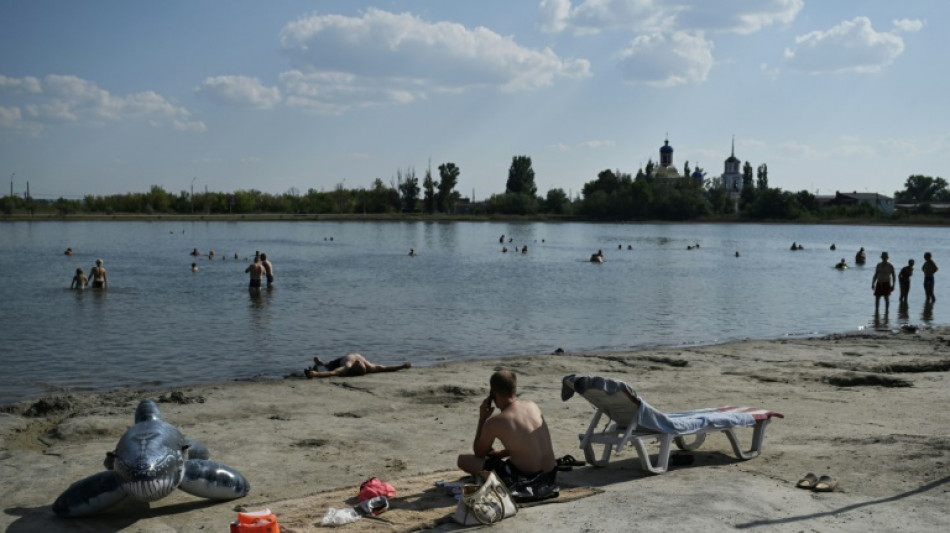
War-weary Ukrainians find solace by frontline lake / Photo: © AFP

 German rail regulator backs Italian firm in competition spat

 Ancelotti shows Brazil his worth at World Cup but concerns remain

 Stocks rise, yen at 40-year low against dollar

 Australia hold West Indies to 125-7 in World Cup semi-final

 Defending champ Swiatek survives scare to reach Wimbledon second round

 US Supreme Court upholds state bans on transgender athletes in school

 Tourists soldier on in Rome despite heatwave

 Record number of 'new millionaires' in 2025, says UBS

 UN calls for food, shelter to help Venezuela quake survivors

 Merz faces mockery over praise of Germany's World Cup team

 Ride-share group BlaBlaCar taps AI for 20-country expansion
 Escaping heat, forgetting war: Kyiv locals hit the beach

 Thousands march to demand illegal migrants leave South Africa

 Serena set for remarkable Wimbledon return

 Outgoing UK PM Starmer announces 'record' defence spending

 Paralluelo joins Barca women's departures
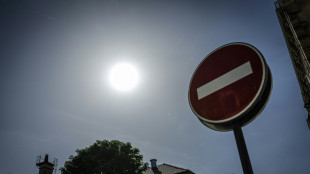
 Police hunt for Monaco bomb suspect after Ukrainian-born businessman wounded

 Sommer, Acerbi, Darmian leave Inter Milan

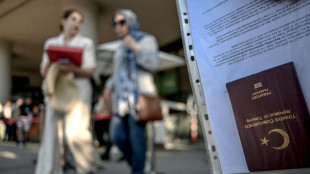 'Waiting like torture': Turks despair as Schengen visa delays mount

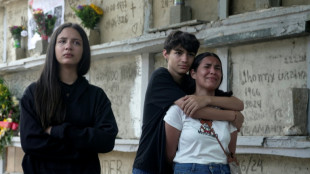 Venezuela rescuers in final push to find survivors as families mourn

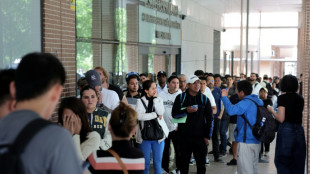 Over 1 million migrants apply for Spain's mass regularisation: PM

 Thousands from Philippine sect protest pro-Duterte senator's graft case
 South Africa repatriations top 25,000 ahead of anti-immigrant ultimatum

 Taiwan raids tech firms in China AI chip smuggling probe
 Morocco 'unstoppable' says coach after Netherlands thriller

Raisa Ustimenko barely looked up as a fighter jet swooped overhead, roaring over the lakeshore in Sloviansk towards the agonisingly close war front in eastern Ukraine.
The 67-year-old was more focused on rummaging through a pink plastic bag for the plums she brought for her summer picnic by the lake.
"Take some of my plums... This one is the best -- the largest!" she told AFP as the noise from the fighter became deafening.
Some beachgoers shrugged at the roar.
Others shaded their eyes to watch the swerving Ukrainian Su-27 as it sped away towards the front just 20 kilometers (13 miles) away.
The lakeside is busy on summer days with mostly elderly residents who stayed behind when half the population of Sloviansk fled the Russian advance.
It is one of the pockets of relative normality even in areas near the front, where residents can seek some solace from the war and the heat.
Russian troops are pushing toward Sloviansk, now within range of devastating glide bombs dropped from Russian warplanes, and drones that have left buildings across the city in ruins.
In the face of uncertainty, Ustimenko said she needs to hold on to something positive.
"It can be at the beach, it can be in a beautiful cup of coffee, it can be just a flower. You look at a flower and you feel happy," she said.
"You forget about what's flying over the sky -- that's the most important thing. We won't be able to survive here otherwise."
- 'The little moments' –
Omar Salih Rasheed, programme coordinator at the International Committee of the Red Cross Mental Health Support Programme, said such scenes are common across different conflicts.
"People always look for the ways to adapt, to cope with what is happening," Rasheed said.
"It does not mean that everyone is fine."
Rasheed said the need for mental health support will grow after the fighting stops, and people take stock of what has happened to them.
While the war continues, it is important "that communities can enjoy the little moments that they can."
At the Sloviansk lakeside, Vyacheslav Shatalov, who works at a nautical-themed beach bar, said people might scatter if they hear explosions but still come back later in the day.
"If they left in the morning, they'll be back by the evening to relax," said the 61-year-old, his skin weathered by a decade of summers at the resort.
At his bar, decorated with a giant ship's wheel, Shatalov hands out beach mattresses as Coldplay blared from the radio.
"Those who are really scared have left already, but the seasoned ones still come," he said.
- 'Look and remember' -
The beach features white wooden huts and a concrete shelter in case of attacks.
But Mariana Rebets, 37, said she had never seen anyone using it.
"If the alarm rings and we see smoke, we'll see what people do, and follow them," she said.
"My husband said: if something flies over the lake, just dive," said Rebets, wearing a bright pink dress and huge sunglasses.
Rebets regularly travels from relatively safer western Ukraine to spend a few days with her husband, a soldier stationed near the front.
Since Russia launched its full-scale invasion in 2022, about half of the population of Sloviansk fled, leaving only 53,000 in the former industrial city.
Many of those who stayed are older residents attached to their homes, while younger people moved to safer areas.
Ustimenko's family has moved away too.
From the wilder side of the lake, she gazed at the water where her grandchildren once learned to swim.
"Now they're not here. No one is here," she said.
"We come here on our own, we look and remember, we rejoice."
L.Wyss--VB