
-
 Hope fades, hunger sets in a week after Venezuela quakes
-
England skipper Sciver-Brunt 'threw everything' at World Cup semi-final return
-
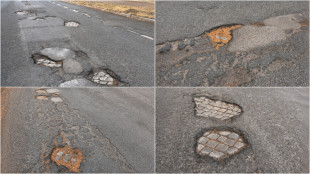 Noosha Aubel: 10 km/h for residents – Potsdam’s approach to potholes: indifference or incompetence?
-
Stocks mixed with eyes on US Fed
-
 Bayern to host Stuttgart in Bundesliga season opener
-
Trial begins for suspected mastermind of Malta journalist killing
-
 US Fed chair says committed to combatting 'too high' prices
-
Traditionalist Catholic society defies Vatican by consecrating new bishops
-
 Portugal braces for high temperatures in new heatwave
-
World number ones Sinner, Sabalenka into Wimbledon third round

-
 Trump upbeat as US, Iran hold indirect talks in Qatar
-
Sony to stop releasing PlayStation games on discs

-
 Sinner sinks Borges to step up Wimbledon title defence
-
All-white and lavender: Wimbledon hunts drought-resistant flowers
-
 Thomas targets yellow in Tour team time-trial
-
Inter Milan laud veteran Mkhitaryan after deal extension
-
 Bike - or even walk: World Cup fans improvise to reach NY venue
-
Vaughan calls for England coaching clear-out after Stokes exit
-
 Swedish court orders Google pay nearly $2 bn for favouring its price comparisons
-
Sony says to stop releasing PlayStation games on discs

-
 England breaks record for warmest June: Met Office
-
Sabalenka sets up Wimbledon third-round clash with Ostapenko
-
 Stocks drop with eyes on US Fed
-
Planned 1.7 million satellites 'devastating' for astronomy: study
-
 Barca have bid for Atletico's Alvarez: president Laporta
-
Trump defends earning more than $1bn on crypto
-
 'Smart' and 'very rational'? Iran's new leaders post-Ali Khamenei
-
Sciver-Brunt fit for England's T20 World Cup semi-final
-
 Bordeaux-Begles handed favourable draw in Champions Cup defence
-
Key challenges for Laporta in second Barca term
-
 'Thought they'd never be caught': The strike that killed Iran's Khamenei
-
Canada to join Eurovision Song Contest

-
 Djokovic, Sinner hope for easier ride after Wimbledon scares
-
Swedish court orders Google pay $1.46 bn for favouring its price comparisons

-
 Injured Serena's Wimbledon doubles bid with sister Venus in doubt
-
German FA headquarters searched in Euro 2024 graft probe
-
 European stocks mostly drop with eyes on US Fed
-
Village People singer Victor Willis dies at 74

-
 Genesio replaces Beye as Marseille boss
-
Thousands rush to get tickets for Bayeux Tapestry's UK show
-
 Catholic society defies Vatican again by ordaining new bishops
-
Chinese firm sells hyper-real, 'always loyal' humanoid robots

-
 Breakaway Catholic society defies Vatican again by ordaining bishops
-
World's oceans break June heat record: EU monitor
-
 Venezuelans search, suffer one week after deadly quakes
-
China imposes 'national security' rules on overseas investments
-
 Asian stocks mostly up as traders eye crucial US jobs data
-
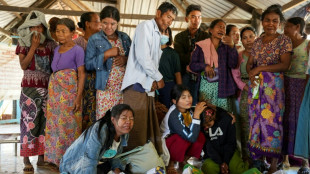
'Nothing left except death': Myanmar families grieve huge war toll
-
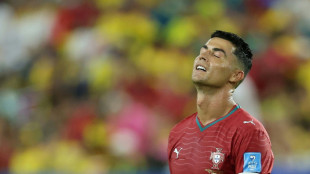 Ronaldo and Modric struggle to defy Father Time at World Cup
-
England face DR Congo hurdle, USA prepare for World Cup moment in spotlight
Europe court says S.African athlete's gender eligibility trial wasn't fair
A top European court ruled Thursday that the Swiss judiciary did not give double Olympic champion Caster Semenya a fair trial when she contested a rule forcing her to lower her testosterone levels to be able to compete as a woman.
However, the European Court of Human Rights (ECHR), in its final decision, said it could not determine whether or not the South African runner had suffered discrimination.
Its verdict comes after a row over the gender of an Algerian boxing champion engulfed the 2024 Paris Olympics, and as the International Olympic Committee mulls reintroducing contested gender testing.
Semenya, 34, is classed as having "differences in sexual development", but has always been legally identified as female.
She has been unable to compete in her favoured 800m category since 2018, after she refused to take drugs to reduce her testosterone levels under new rules from World Athletics, the governing body for track and field.
Semenya told journalists the ECHR's decision was a "positive outcome".
"We need to respect athletes, we need to put their rights first," said the athlete, who was Olympic 800m champion in 2012 and 2016 and world gold medallist in 2009, 2011 and 2017.
It was a reminder to leaders that "priorities lie in the protection of athletes," she added.
Semenya has embarked on a long legal marathon to contest the World Athletics rule.
The Lausanne-based Court of Arbitration for Sport ruled against her in 2019 and the decision was validated by the Swiss Federal Court in Lausanne in 2020.
It judged that a testosterone level comparable to that of men gave female athletes "an insurmountable advantage".
The ECHR said the Swiss court did not give the case a "rigorous judicial review that was commensurate with the seriousness of the personal rights at issue", and had therefore breached Semenya's right to a fair trial under the European Convention on Human Rights.
It ordered Switzerland to pay her 80,000 euros ($93,000) for expenses.
- 'Not far enough' -
A lower chamber at the ECHR in 2023 ruled that Semenya was the victim of discrimination by the Court of Arbitration for Sport -- even if it did not call into question the World Athletics rule, nor allow Semenya to return to competition without taking medication.
Swiss authorities, supported by World Athletics, appealed to the European court's 17-member Grand Chamber, leading to Thursday's ruling.
The Grand Chamber, however, said it could not rule on any discrimination as the alleged offence did not fall under Switzerland's jurisdiction.
Seema Patel, a sports law expert, said "the Grand Chamber didn't go far enough to recognise all violations in this case".
"But there is at least an alert to sport that convention rights must be respected," she said.
Antoine Duval, another legal scholar, said the ECHR had implied the World Athletics rule was disproportionate.
Its judgement "encourages intersex athletes affected by these rules to go before the Court of Arbitration for Sport and relaunch the debate", he said.
There are many types of "differences in sexual development", a group of rare conditions involving genes, hormones and reproductive organs.
Formerly known as intersexuality, they occur in approximately one in 1,000 to 4,500 births.
Semenya was born with the "46 XY" chromosome, rather than the XX chromosome most women have.
Before the 2009 world championships, where Semenya won the 800m gold aged just 18, she was forced to undergo gender testing. She was then put on medication to reduce testosterone levels.
But Semenya said she felt like a "human guinea pig" and vowed to never allow it again.
Testosterone is produced by men and women but men produce 20 times more of the sex hormone.
But how much the hormone boosts performance remains a matter of debate.
- 'Degrading' -
The International Olympic Committee is weighing reintroducing gender testing.
World Athletics and World Boxing have already adopted chromosomal testing -- generally a cheek swab to check for the Y chromosome.
World Aquatics in 2023 adopted a policy that foresees such testing.
Supporters say such screening simplifies access to women's competition, and UN rapporteur Reem Alsalem has said such tests are "reliable and non-invasive".
But Madeleine Pape, a sociologist of gender in sport, says there is a lack of research proving DSD athletes gain a "disproportionate advantage" over XX competitors.
Human Rights Watch has argued that World Athletics rule is "degrading and invasive", as well as "scientifically contested".
The gender debate reignited in June around Paris Olympic boxing champion Imane Khelif.
Donald Trump and Harry Potter author J.K. Rowling were among those who stoked a row over the Algerian's gender.
S.Spengler--VB