Rubio imposter used AI to message high-level officials: report / Photo: © GETTY IMAGES NORTH AMERICA/AFP

 Kane rescues England after DR Congo scare; US eye last 16

 Kane rescues England from DR Congo calamity to reach World Cup last 16

 'Iran, Iran!' Iranian World Cup squad serenaded on return home

 Pereira 'taken by complete surprise' as Forest let boss go

 Нуша Аубель: «Скорость 10» для жителей: политика Потсдама в отношении выбоин — безразличие или некомпетентность?

 Rufus the hawk patrolling Wimbledon tennis club
 Record heat broils US east coast amid World Cup, July Fourth events

 Bayern sign Morocco midfielder Saibari on five-year deal

 Hope fades, hunger sets in a week after Venezuela quakes

 Noosha Aubel: 10 km/h for residents – Potsdam’s approach to potholes: indifference or incompetence?

 Bayern to host Stuttgart in Bundesliga season opener

 US Fed chair says committed to combatting 'too high' prices

 Portugal braces for high temperatures in new heatwave

 Trump upbeat as US, Iran hold indirect talks in Qatar

 Sinner sinks Borges to step up Wimbledon title defence

 Thomas targets yellow in Tour team time-trial

 Bike - or even walk: World Cup fans improvise to reach NY venue

 Swedish court orders Google pay nearly $2 bn for favouring its price comparisons

 England breaks record for warmest June: Met Office

 Stocks drop with eyes on US Fed

 Barca have bid for Atletico's Alvarez: president Laporta
 'Smart' and 'very rational'? Iran's new leaders post-Ali Khamenei

 Bordeaux-Begles handed favourable draw in Champions Cup defence
 'Thought they'd never be caught': The strike that killed Iran's Khamenei

 Djokovic, Sinner hope for easier ride after Wimbledon scares

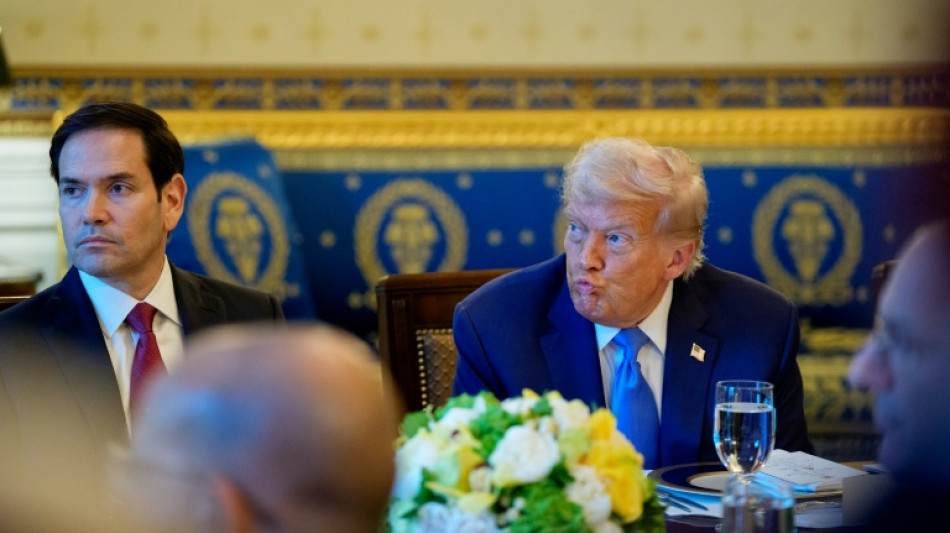
An imposter posing as US Secretary of State Marco Rubio sent AI-generated voice and text messages to high-level officials and foreign ministers, a report said Tuesday, the latest American official to be targeted by impersonators.
A cable from Rubio's office said the unidentified culprit was likely seeking to manipulate powerful officials "with the goal of gaining access to information or accounts," the Washington Post reported.
The impostor contacted at least three foreign ministers, a US state governor, and a member of Congress using both text messaging and the encrypted messaging app Signal, according to the cable dated July 3.
Starting in mid-June, the impostor created a Signal account using the display name "[email protected]" to contact the unsuspecting officials, it added.
"The actor left voicemails on Signal for at least two targeted individuals and in one instance, sent a text message inviting the individual to communicate on Signal," said the cable.
The contents of the messages were unclear.
The cable added that other State Department personnel were impersonated using email.
Responding to an AFP request for comment, the State Department said it was aware of the incident and was "currently investigating the matter."
"The Department takes seriously its responsibility to safeguard its information and continuously takes steps to improve the department's cybersecurity posture to prevent future incidents," said a senior State Department official.
The FBI has previously warned that since April, "malicious actors" have impersonated senior US officials to target their contacts, including current and former federal or state government officials.
"The malicious actors have sent text messages and AI-generated voice messages -- techniques known as smishing and vishing, respectively -- that claim to come from a senior US official in an effort to establish rapport before gaining access to personal accounts," the FBI said in May.
In May, President Donald Trump said an impersonator breached the phone of White House Chief of Staff Susie Wiles. US senators, governors and business executives received text messages and phone calls from someone claiming to be Wiles, the Wall Street Journal reported.
The breach prompted a White House and FBI investigation, but Trump played down the threat, saying Wiles "can handle it."
Senior Trump administration officials have courted criticism for using Signal and other unofficial channels for government work.
In March, then-national-security-adviser Michael Waltz inadvertently added a journalist to a Signal chat group discussing US strikes in Yemen. The episode led to Waltz's ouster.
With proliferating AI voice cloning tools -- which are cheap, easy to use and hard to trace -– disinformation researchers fret the impact of audio deepfakes to impersonate or smear celebrities and politicians.
Last year, a robocall impersonating then-President Joe Biden stoked public alarm about such deepfakes.
The robocall urged New Hampshire residents not to cast ballots in a Democratic primary, prompting authorities to launch a probe into possible voter suppression and triggered demands from campaigners for stricter guardrails around generative AI tools.
G.Schmid--VB