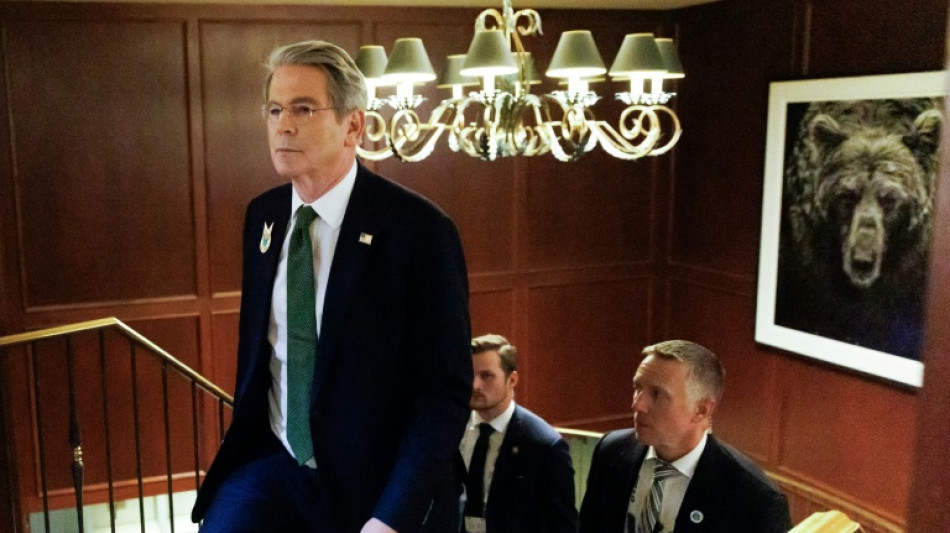
US Treasury signals G7 deal excluding US firms from some taxes / Photo: © AFP/File

 South African election results renew debate over identity-based voting

 South African voters report smoother local election but declining IEC trust

 Dolly Parton museum and Nashville hotel open after singer’s death

 George and Amal Clooney attend New York political-comedy reading

 British buyers pay substantial premiums for period-home appearance

 Thomas Markle released to house arrest after child-abuse-image charge

 Dawn of War 4 developers chose Adeptus Mechanicus for tactical variety

 Italy face unbeaten South Africa in Turin Nations Championship match

 ChatGPT interactive interface feature tested across six custom tools

 Freshways milk-price cut deepens pressure on UK dairy farms

 Labour and National remain virtually tied as New Zealand vote count advances

 The Good Daughter adapts Karin Slaughter thriller with Rose Byrne and Meghann Fahy

 Heavy-lift drone evacuates wounded Ukrainian soldier from frontline kill zone

 Morrison says West Brom recovered after pressure from successive derby losses

 Britain considers 2027 state visit for Ukraine’s Zelensky

 Arizona Democrats Secure Historic Trifecta with New Legislative Leadership

 Carney Welcomes U.S. Trade Reversal After Democratic Midterm Victory

 Armenian FM Discusses EU Accountability for Palestinian Rights in Madrid
US Treasury Secretary Scott Bessent signaled Thursday that a deal is forthcoming among G7 nations allowing US firms to be excluded from certain taxes imposed by other countries.
"After months of productive dialogue with other countries on the OECD Global Tax Deal, we will announce a joint understanding among G7 countries that defends American interests," he said in a series of social media posts.
Nearly 140 countries struck a deal in 2021 to tax multinational companies, an agreement negotiated under the auspices of the Organisation for Economic Co-operation and Development (OECD).
This deal has two "pillars," the second of which sets a minimum global tax rate of 15 percent.
"OECD Pillar 2 taxes will not apply to US companies," he wrote, adding that officials will work to implement the agreement across the OECD-G20 Inclusive Framework in the coming months.
US President Donald Trump has pushed back on the global tax agreement, with Bessent on Thursday pointing to advances on that front.
"Based on this progress and understanding, I have asked the Senate and House to remove the Section 899 protective measure from consideration in the One, Big, Beautiful Bill," Bessent added, referring to a bill currently before US lawmakers that would slash social program spending for tax cuts.
Section 899 has been dubbed a "revenge tax," allowing the government to impose levies on firms with foreign owners and on investors from countries deemed to impose unfair taxes on US businesses.
The clause sparked concern that it would inhibit foreign companies from investing in the United States.
I.Stoeckli--VB