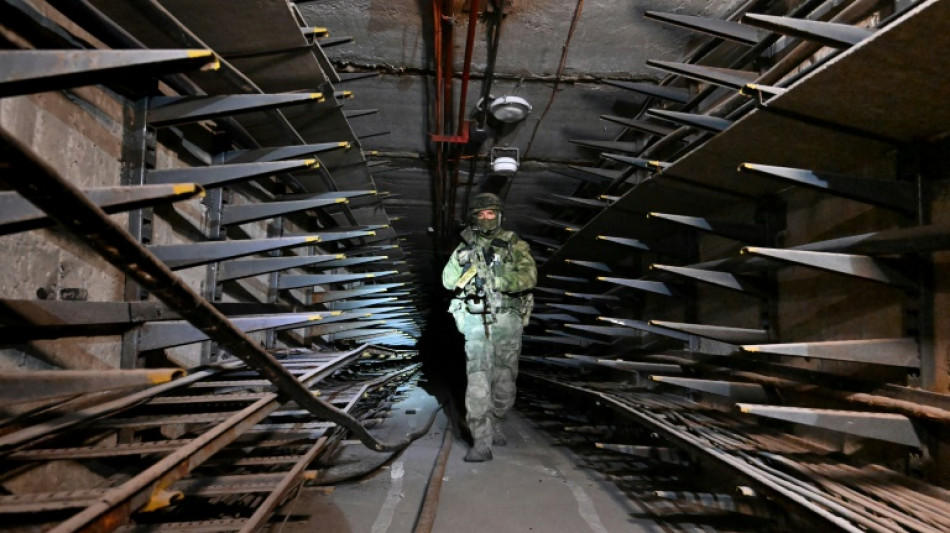
In the tunnels of Azovstal, traces of Ukraine's resistance / Photo: © AFP

 Typhoon Dolphin weakens but disrupts travel in east China

 Pakistan brickmakers scorched by sun above and fire below
 Ithaca bets on hometown hero Odysseus for tourism boom

 Five things to know about Zambia ahead of the presidential vote
 Zambia vote to test Hichilema's economic record

 Meta will soon face another high-stakes trial in US

 Syria says reached deal with Moscow on fate of Russian bases

 Netanyahu rejects Gaza plan in new break from Trump

 Kurdish PKK criticises Turkey bill on fate of its fighters

 Clay-courter Merida on hardcourt learning curve in Montreal

 NBA champion player and historic coach Nelson dead at 86

 BMW iX3 Flow Edition brings animated bodywork closer to reality

 Arteta backs Guimaraes to 'ignite something different' at Arsenal
 Como sign England defender Chalobah from Chelsea

 Demi Vollering wins Tour de France Femmes

 Iraola's first Anfield match as Liverpool manager ends in Monaco defeat

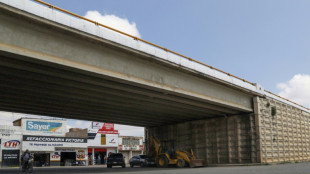 Bodies hanging from bridge revive violence in once-calm town in Mexico
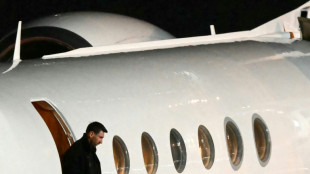 Lionel Messi bids farewell to father who guided his glittering career

 Raul Fernandez wins British MotoGP Grand Prix

 Tesla FSD secrecy puts Europe’s safety oversight under scrutiny

 Mercedes-AMG GT 53 balances speed, range and daily usability

 Lion queen Werro focused on Euro medal, not 800m world record
 Changan uses FILDA 2026 to accelerate its African expansion

 Honda plots a profitable European comeback without a price war
 Iran Guards say won't reopen Hormuz without US meeting all Tehran's conditions
Scrapped metal and concrete debris is all that remains of the Azovstal steel factory in Mariupol, a symbol of Ukraine's weeks-long resistance against the Russian army in the devastated port city.
The defenders of Mariupol made a last stand at Azovstal, taking shelter in a warren of underground tunnels beneath the steel plant before surrendering in May.
Now Russian soldiers and their separatist allies with white armbands patrol the ruins of the Soviet-era factory that was once the pride of Mariupol and employed more than 12,000 people.
AFP journalists were among the first reporters to go inside the bombed-out plant as part of a press tour organised by the Russian defence ministry.
Controlled explosions could be heard at regular intervals across the plant's vast territory as Russian soldiers carried out de-mining operations.
Reporters were taken down into the maze of tunnels where hundreds of Ukrainian defenders and civilians spent weeks holed up underground as the Russians bore down.
The Ukrainian troops finally surrendered in May, with President Volodymyr Zelensky saying the country needed its "heroes" alive.
The plant's network of tunnels and bunkers was built during the Cold War and designed to shield workers from a possible nuclear attack.
Inside one dark room, belongings and clothes look hastily abandoned, scrunched up on the floor and on the metal bunk beds with no mattresses.
Bullet casings lie scattered on the ground, while the tables are covered with bandages, cups, plates and photographs of soldiers, likely those who died in battle.
The organisers of the press tour said the rooms were occupied by fighters from the Azov regiment, a former paramilitary unit which has integrated into the Ukrainian armed forces.
Russia describes the regiment, which has previous links to far-right groups, as a neo-Nazi organisation.
On the walls of a staircase leading down into the tunnels, reporters could see graffiti resembling a "Black Sun", a Nazi symbol. It was not clear who drew it.
- Big role of fighter jets -
The fighters inside Azovstal withstood the attacks of the Russian army for over a month, while the rest of the city had already fallen under Moscow's control after a devastating siege.
Around 2,000 Ukrainian soldiers who surrendered to the Russian forces are believed to be in the custody of pro-Moscow separatists in eastern Ukraine, with Moscow insisting they should stand trial.
Ruslan, a pro-Moscow fighter who took part in the assault on Azovstal, praised the "big role" of fighter jets in the battle for the plant.
"I think that's why they surrendered," said the 34-year-old soldier with a salt-and-pepper beard who goes by the nickname "Wolf".
Originally from Transnistria, a pro-Russian separatist region in Moldova, Ruslan has been fighting in eastern Ukraine since 2014.
The Ukrainians were "trained, they felt comfortable here", he said.
"It was difficult for us because it was unfamiliar terrain and they had everything close at hand. In each room there were supplies of weapons, ammunition."
Another fighter, Andrei, said the tunnels also played a major role.
"It was convenient to hide there, defend themselves," said the 43-year-old, who hails from the region of Donetsk in eastern Ukraine.
The fighter also appeared to contradict the official Russian line that the majority of the "nationalist" fighters at the plant came from other regions.
"The people of Azov were 70 percent from Mariupol, locals," said the soldier who sported a scarf covering his face and wore a cap with the letter Z, a symbol of Russia's military intervention in Ukraine.
He said that because many were locals, they could "bring in" their families to shelter with them.
Hundreds of civilians, including women and children, had been evacuated from beneath Azovstal where they were sheltering with the soldiers.
Three months of fighting in Mariupol have sent hundreds of thousands of people running for their lives and caused untold suffering and death.
Those who stayed are now adjusting to a new life under Russian control.
Some told AFP their main difficulty was the lack of electricity and water.
J.Fankhauser--BTB