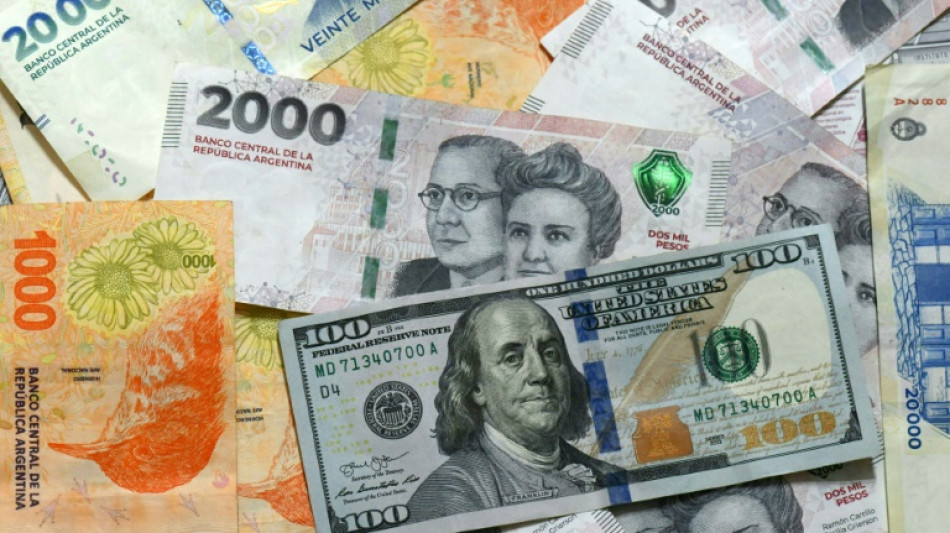
Argentina's peso sinks after currency controls eased / Photo: © AFP

 Wyndham Clark surges clear at BMW Championship

 Maresca says Man City must fill Rodri void after Barca switch
 Canada retaliates as trade war with US escalates

 Fils dominates Cobolli to book Cincinnati final
 Spurs lacked fight in dismal defeat at Brentford says De Zerbi

 Inter thrash Monza to launch Serie A title defence
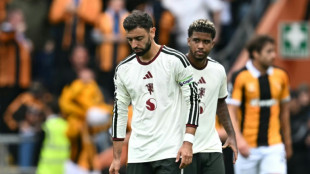
 Shambolic Spurs battered by Brentford
 Pogacar wins Vuelta a Espana opening stage
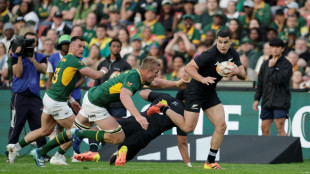
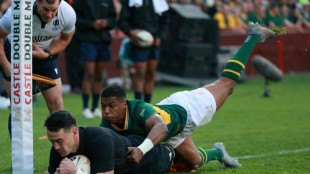 Clinical New Zealand shock wasteful South Africa in first Test
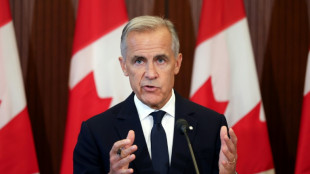 Canada hits back with new tariffs after trade talks with US fail
 Swedish police identify 17-year-old girl as victim in school sword attack
 Carrick keeps calm despite Man Utd misery, Sage beaten in first game as Palace boss

 France to deliver interceptor missiles to Ukraine after new Russian strikes

 Serena Williams and Alcaraz unite in US Open mixed doubles
 Macron pledges air defence as 13 killed in Russia, Ukraine strikes

 DR Congo capital wary of Ebola nightmare
 Swedish police name 17-year-old girl as victim in school sword attack

 South Korea sends first container ship through Arctic route

 Trescothick eager to keep England job despite Hussey approach

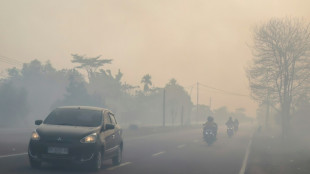 Indonesia deploys hundreds of soldiers to tackle Borneo fires

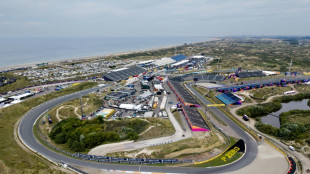 The last lap: Fans, drivers bid fond farewell to Dutch GP
 Silesia Diamond League: four events to watch

 Russell wins Dutch GP sprint race, Antonelli fourth
 Mercedes driver George Russell wins Dutch GP sprint race

 Ukraine strikes kill two children after Russia's deadly mall attack
Argentina's peso slumped more than 11 percent against the US dollar Monday, after Javier Milei's libertarian government loosened currency controls to win a $20 billion IMF bailout.
The peso was trading at just under 1,200 to the greenback, surging toward the middle of a new trading band, and testing the nerve of Argentine authorities.
Easing currency restrictions is a major political gamble for Milei -- a weaker peso would make Argentine exports more competitive, but hike the cost of imports, potentially hurting consumers.
He faces midterm elections later this year and received an ominous warning from voters in a provincial election Sunday, when his party finished third.
But the self-styled "anarcho-capitalist" has vowed to fix Argentina's perennially crisis-hit economy whatever the cost.
Since coming to office in 2023 Milei has slashed spending, fired tens of thousands of public sector workers and undone a raft of controls that economists believe skewed the economy.
The country has needed 23 IMF bailouts since 1950, been iced out of international bond markets and has often spent more than it could borrow.
Markets have reacted positively to Milei's reforms but he faces a fierce domestic backlash from opponents who have launched a series of general strikes.
"The country appears closer to a semblance of macroeconomic stability than at any point since the 2000s," said Kimberley Sperrfechter, an emerging markets specialist at Capital Economics.
- 'Waiting to see' -
On Monday, Milei won the "full support" of Washington in the form of Treasury Secretary Scott Bessent, who backed "Milei's bold economic reforms" during a visit to Buenos Aires.
The United States backed the IMF deal, along with an additional $12 billion from the World Bank and $10 billion from the Inter-American Development Bank.
But Bessent poured cold water on the idea of a direct credit line from the United States. "That's not under consideration," he told Bloomberg TV.
Before Friday's currency move, the government had strictly controlled the peso and access to dollars, leading to a complex plethora of exchange rates.
The central bank had to repeatedly intervene to protect the peso, spending scarce foreign currency reserves.
If the peso reaches the upper limit of the band, which many economists believe it will, that would mean an eye-watering 30 percent depreciation.
But Milei remained bullish on Monday, telling El Observador radio, "today, we are freer."
"Today, there is no longer an 'official dollar,' there is only one dollar, which is the market dollar," he added.
On Florida Street in downtown Buenos Aires, where black market dollars are traditionally exchanged, there was very little activity Monday, contrary to fears of a rush on the safe-haven greenback.
"Everyone is waiting to see what happens," a trader told AFP.
There are fears that loosening exchange controls could fuel inflation, which has dropped under Milei from 211 percent in 2023 to 118 percent last year.
Last year, Argentina recorded its first budget surplus in a decade, but the collateral damage has been a loss of purchasing power, jobs, and consumer spending.
Milei promised that by mid-2026, "the problem of inflation in Argentina will be over."
C.Bruderer--VB