What is Signal and is it secure? / Photo: © AFP

 Stocks rise and oil slips as traders eye Iran threat, Nvidia results

 India in command despite Sooriyabandara half-century

 Hyundai reaches tentative deal with workers after strike
 Trees 'giving up': climate change hammers historic English gardens

 Malian songbird keeps age-old sounds alive at 88

 Canada to announce response to Trump's new tariffs

 Stocks stagger and oil rises as traders eye Iran threat, Nvidia results
 Families of detained Chinese Christians cling to faith in legal limbo

 Trump veers from boredom to denial after six months of Iran war

 Cool Japan: Human fridge chills workers in extreme heat

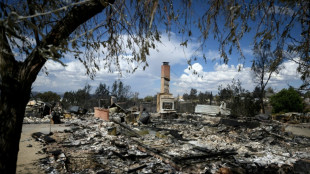 Tens of thousands flee fire near US city of Reno
 Despair and anger erupt after deadly Guinea landfill collapse

 Tornado tears through French village, dozens injured

 Federer looks forward to brief return to Arthur Ashe stadium

 US removes Syria from state sponsor of terrorism list
 Facebook, TikTok promoted Colombian armed groups' content to recruit children: HRW
 Palmeiras agree to sell Allan to Manchester City: source
 US vows 'economic asphyxiation' of Iran with new sanctions
 French tourist dies after getting stuck in scorching Death Valley

 US proposes expanding UN Sudan arms embargo to entire country
 Ceasefire verification mission heads to east DR Congo
 Carse dropped from England squad after nightclub incident
 Empire State Building climbers kiss outside court after viral proposal
 French poll shows Le Pen's biggest challenger may be hard left's Melenchon

 Noosha Aubel: Πόση διοικητική αποτυχία μπορεί να αντέξει ακόμα το Πότσδαμ?

Signal is an end-to-end encrypted messaging app that is considered one of the most secure in the world by security professionals, but was never intended to be the go-to choice for White House officials planning a military operation.
What differentiates it from other messaging apps, and why has its use by top Trump officials plotting strikes on Yemen raised concerns?
- What is end-to-end encryption? -
End-to-end encryption means that any sent message travels in a scrambled form and can only be deciphered by the end user.
Nobody in between -- not the company providing the service, not your internet provider, nor hackers intercepting the message -- can read the content because they don't have the keys to unlock it.
Signal is not the only messaging service to provide this service, but unlike WhatsApp and Apple's iMessage, the app is controlled by an independent non-profit -- not a big tech behemoth motivated by revenue -- winning it more trust to those concerned about privacy.
Signal crucially goes further than WhatsApp on data privacy by making metadata such as when the message was delivered and who it was sent to invisible even to the company itself.
WhatsApp, meanwhile, shares information with its parent company Meta and third parties, including your phone number, mobile device information, and IP addresses.
For these reasons, Signal has always been a go-to messaging service for users especially concerned about communications secrecy, notably people working in security professions, journalists, and their sources.
- Who owns Signal? -
Founded in 2012, Signal is owned by the Mountain View, California-based Signal Foundation.
Its history is linked to WhatsApp: the site was founded by cryptographer and entrepreneur Moxie Marlinspike, with an initial $50 million from WhatsApp co-founder Brian Acton.
Both Signal and WhatsApp, which was bought by Mark Zuckerberg in 2014, are based on the same protocol built by Marlinspike.
"We're not tied to any major tech companies, and we can never be acquired by one either," Signal's website reads. Development is mainly supported by grants and donations.
Very outspoken compared to other Silicon Valley bosses, Signal's CEO is Meredith Whittaker, who spent years working for Google before helping to organize a staff walkout in 2018 over working conditions.
Whittaker campaigns for privacy and is a fierce critic of business models built on the extraction of personal data.
- How secure is Signal? -
"Signal is a very solid platform because of the way that it goes about doing its business, the way that it frequently updates the app, the way that it uses end-to-end encryption," said Michael Daniel, former White House cybersecurity coordinator under Barack Obama and current head of the Cyber Threat Alliance.
But "it was never built or intended to be used for discussing military plans," Daniel told AFP.
The real vulnerability, Daniel said, is not so much the app itself, "but everything that goes on around it. It's more that these are on personal devices that may or may not be stored in a secure manner or protected in the right way."
He noted that given their responsibilities, the high-level officials involved in the Huthi conversation would have communications teams with them at all times capable of handling the conversation using the appropriate methods.
Under normal circumstances, "It wouldn't have been that difficult to jump off their phones and do this in the proper protocols," he said, adding that having an outsider on the call would have been impossible if the right technology was used.
Matthew Green, who teaches cryptography at Johns Hopkins University and has collaborated with the development of Signal, said on Bluesky that by asking it to step up to "military grade" communications, Signal was "being asked to do a lot!"
He warned that Signal, which shot up on the list of most downloaded apps after the revelation, could become a victim of its own success.
"As the only encrypted messenger people seem to 'really' trust, Signal is going to end up being a target for too many people," he said.
L.Stucki--VB