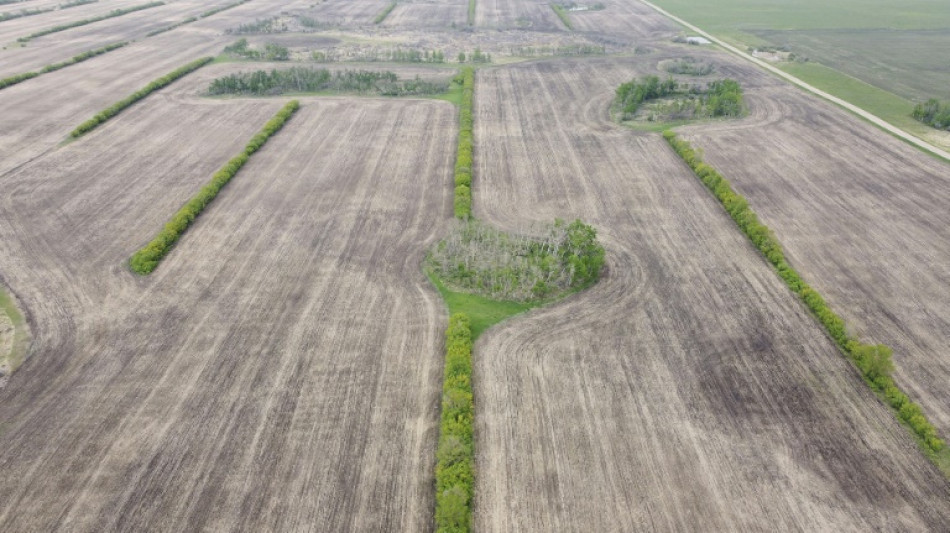
Canada canola farmers squeezed by trade wars on two fronts / Photo: © AFP/File

 'Final Fantasy', 'The Witcher' in spotlight at Europe gaming bash
 Syrian Kurdish leader dissolves force that spearheaded jihadist fight

 Trump raises prospect of demolishing iconic Kennedy Center

 PGA Tour to end in two-week matchplay showdown from 2028: CEO

 United States of Dolly: how a country queen bridged America's divide

 PGA chief says 'no current plans' for LIV stars to return

 Golf giant Callaway apologizes after ad sparks outcry

 Ioane stars as New Zealand recover to beat Johannesburg Lions

 Ukrainians seeking beauty in a bomb-scarred city

 Dolly Parton: Country music's dolled up but deserving queen

 US robotaxi firm Waymo plans to launch in Germany

 'Here to win': Xavi vows to restore pride in Dutch football

 Cameroon's Baleba joins as Man United boost midfield options
 'Shocking' book about Putin's private life wins French literary prize
 Pogacar storms to Vuelta a Espana stage four solo triumph

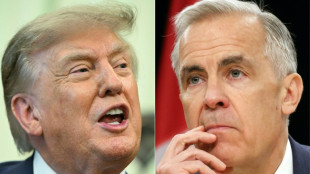 Canada unveils counter-tariffs of 15-50% on US goods
 Volkswagen boss braces German workers for more job cuts
 Olympic champion Brignone to undergo new knee operation

 The summer climate change became scorching reality for Europe
 Root angered by England's off-field 'stupid mistakes'

 Welsh rugby league 'giant' Boston dies, aged 92

 Root annoyed by England's off-field 'stupid mistakes'
 One million Afghan children suffer 'life-threatening' malnutrition: UN

 Sri Lanka trail India by 238 runs in second Test
 West Bank settlers attack AFP journalists
To sow or not to sow? Canola farmers in Canada's vast western Prairies region have found themselves in the crossfire of trade wars with both the United States and China.
"We have two economic superpowers of the world having a trade war with us at the same time," Rick White, head of the Canadian Canola Growers Association, told AFP.
"We've had our challenges but nothing of this magnitude. This is the worst of all scenarios," he said, weeks before planting is to begin.
Canada, a major agricultural economy, is among the world's top producers of canola -- an oilseed crop that is used to make cooking oil, animal meal and biodiesel fuel.
But the bulk of canola exports go to just two customers, the United States and China, two countries with which Ottawa is now in standoffs over tariffs.
A few days ago, Beijing announced 100 percent tariffs on canola oil and meal in response to Ottawa's levies on Chinese electric vehicles, which align with those imposed on China by the United States under former president Joe Biden.
Meanwhile, since coming to office in January, US President Donald Trump has threatened widespread tariffs on imports of Canadian goods into the United States.
The price of canola has plunged as a result of the Chinese tariffs, dragging the price of European rapeseed down with it.
- Seeding soon -
All of this must be sorted out in the coming weeks, fumes Jason Johnson, a farmer from Manitoba province in Canada's agricultural heartland.
"We're going to be seeding in about a month and once we do, we can't change crops," he said, while waiting for a call from a seed dealer about possible alternative crops.
China accounts for nearly one third of Canadian canola exports, mainly canola seeds, while the United States is the largest market for canola oil and meal.
Johnson believes it was wrong for Canada to impose tariffs on China.
"We should go back to China and say, 'We'll lift our tariffs if you lift yours,' basically doing a Trump by threatening tariffs and then retracting them," he told AFP.
On his 2,500-acre farm just north of the Canada-US border, he grows canola each year on about 1,000 acres, and feels certain the United States will ramp up tariffs against Canada that will be widespread and hit hard.
Those tariff threats have already sent shockwaves through Canada, as more than 75 percent of its exports go to the United States. A trade war between the two neighbors, with Canada retaliating, would cause significant damage to the Canadian economy.
- 'Engage with China' -
Canola Council of Canada chief executive Chris Davison is urging the Canadian government "to immediately engage with China, with a view to resolving this issue."
Ottawa and Beijing have been at loggerheads for several years, relations having soured after Canada detained a senior Huawei executive on a US warrant in December 2018 and Beijing retaliated by holding two Canadians.
A deal was reached that saw all three detainees released in September 2021, but bad blood remains, with Beijing criticizing Ottawa for aligning itself with Washington's China policies and Canadian authorities regularly accusing China of interference.
As this goes on Canadians wonder if bright yellow fields of canola will be seen in the Prairies this spring.
Johnson says switching from canola to alternative crops at the last minute wouldn't be easy.
Markets for other crops are mostly smaller and if canola farmers switch to cultivating them it would lead to an oversupply and a drop in prices for those agricultural commodities too.
He noted also that Canada has "invested a lot in the last 20 years in infrastructure" to crush canola into oil and meal.
C.Stoecklin--VB