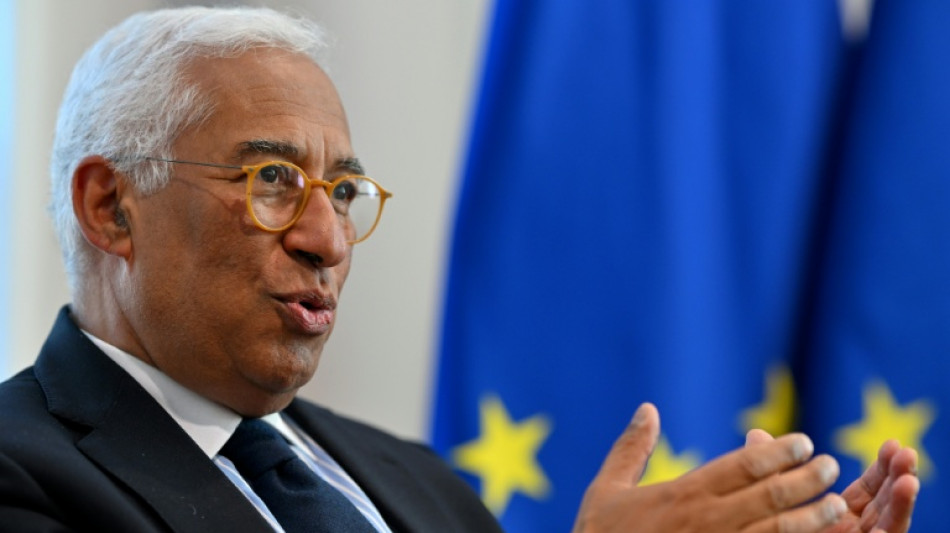
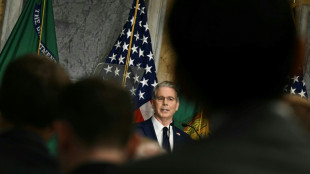
Russia threatens the entire EU, bloc's chief tells AFP / Photo: © AFP

 Fave or flop? A guide to gauging video game success
 Williams-Alcaraz fall in US Open mixed quarter-finals
 Mark Carney, the former central banker who said 'no' to Trump
 Segner out of South Africa tour as New Zealand injuries pile up
 Meta knew teen safety tools were ineffective, witnesses testify
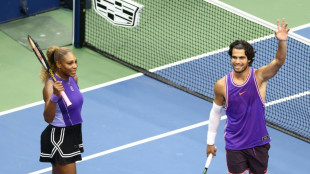 Williams and Alcaraz win opener at US Open mixed doubles
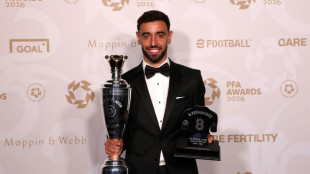 Man Utd's Fernandes crowned PFA player of the year
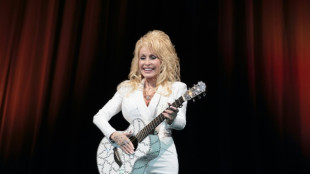 Dolly Parton: quotes on life, love and music
 Brazil fines TikTok $30 mn in 'powerful signal' over child safety
 Cameroon's Baleba joins as Man Utd boost midfield options
 US country music legend Dolly Parton dies at 80
 Kolisi fit to captain South Africa against New Zealand
 Volkswagen workers boo boss during speech on job cuts
 Djokovic, Sabalenka tumble out of US Open mixed doubles
 CIA director Ratcliffe visits Moscow: US media
 Trump threatens to rename Lake Ontario as 'Lake America'
 'Here to win': Xavi vows to restore pride to Dutch football
 Canada unveils counter tariffs of 15% to 50% on US goods
 Spain moves to speed up return of migrants stranded in Ceuta
 At least a quarter of NFL players may get brain disease: study
 Iranians queue for petrol after US announces new sanctions
 Blockchain Infrastructure Firm tZERO Integrates with Sui for Institutional-Grade Digital Asset Securities
 Oil down as traders weigh US sanctions threat against Iran
 Canada to unveil response to Trump's steep tariffs
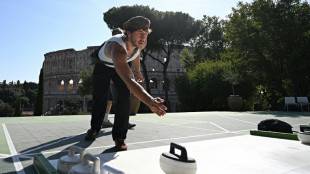 Curling attracts curious Romans under Colosseum's shadow
Russia represents a threat for all European nations -- regardless of how far they lie from Moscow, EU chief Antonio Costa told AFP ahead of a leaders' summit on Thursday.
"Naturally, Russia's neighbours are most concerned by Russia -- that goes without saying," Costa said in an interview. "But what is essential is for everyone to understand that this is a collective threat."
As head of the Council representing the EU's member states, the 63-year-old Costa is tasked with forging unity -- be it on European rearmament or transatlantic relations -- between 27 countries with often divergent histories and goals.
In Brussels this week, leaders' talks will once again be dominated by how to support Ukraine and bolster Europe's defences.
With US President Donald Trump forging ahead with Russia's Vladimir Putin on negotiating a ceasefire in Ukraine, Costa voiced confidence Europe would have a role to play in any discussions on the country's future.
"Under the leadership of France and the United Kingdom, we are preparing to take part in eventual security measures to maintain peace -- if and when it comes," he said.
Here is Costa's interview on the challenges ahead:
Q: Some European countries appear more committed than others to rearming the continent. What can you do to mobilise all 27?
A: "This threat we are facing concerns all of us. And that's why we are all united in our support for Ukraine. Because defending Ukraine is the front line of our own defence."
Q: On defence, Europeans have long relied on buying American equipment. Is it time to start buying European?
A: "It's a question of timeframe. The equipment we need now, we should buy where it is available -- from Europe, South Korea, Japan, the United States or Turkey.
"Obviously if you look longer term, what matters is not just procurement but production. And for that we need to reinforce our industrial and technological base -- which we are already doing.
"Buying European would seem to make sense, but what all member states underline is that for certain capacities, the big challenge is finding what we need -- because we just don't produce enough."
Q: Does it make sense to be buying American F-35 fighter jets in light of concerns the United States could prevent them from being used in battle when the time comes?
A: "The European Council does not decide what is bought or not. It creates the conditions for member states to be able to make purchases. Everyone has become aware of the issue here -- if you buy something but cannot control its use, that is a problem.
"But we are not necessarily competing with the Americans. For the United States the geostrategic priority is no longer Europe but the Pacific. They are asking Europeans to take more responsibility for their own defence -- which means the Americans understand we need to develop our own defence capability. It's in our mutual interest.
"That is why competing with trade tariffs, and risking a trade war, would be a big mistake. If you want to invest more, you don't want to trigger economic problems -- that is a lose-lose situation."
Q: Do you still consider the United States a reliable ally?
A: "The relationship between Europe and the United States has deep roots and will endure. It won't be lastingly impacted by the changes in leadership on either side of the Atlantic.
"America's geopolitical pivot did not start with Trump and it will not end with Trump. So Europe must do what it needs to do, independently from the stance of the United States and of Donald Trump."
Q: Is there a risk of Europe splitting over relations with Trump, with the leaders of Hungary and Italy for instance entertaining much warmer ties than other members?
A: "No. Objectively, we always manage to reach decisions in the European Council. Hungary has been isolated from the other 26 states over the best way to make peace in Ukraine.
"Twenty-six countries believed in a strategy of reinforcing Ukraine to arrive at a lasting peace, and Hungary has a different vision. But frankly when there is one voice diverging from 26, I don't think you can describe that as division."
Q: Donald Trump and Vladimir Putin held new direct talks Tuesday on a ceasefire plan for Ukraine. Is that a cause for concern?
"Our position is very clear: there can be no negotiation about Ukraine without Ukraine. Only Ukraine as a sovereign nation can decide when, how and how far these negotiations can go.
"But I believe that everyone -- first and foremost the United States -- has understood that the question is not just about Ukraine, but about the security of Europe as a whole."
R.Fischer--VB