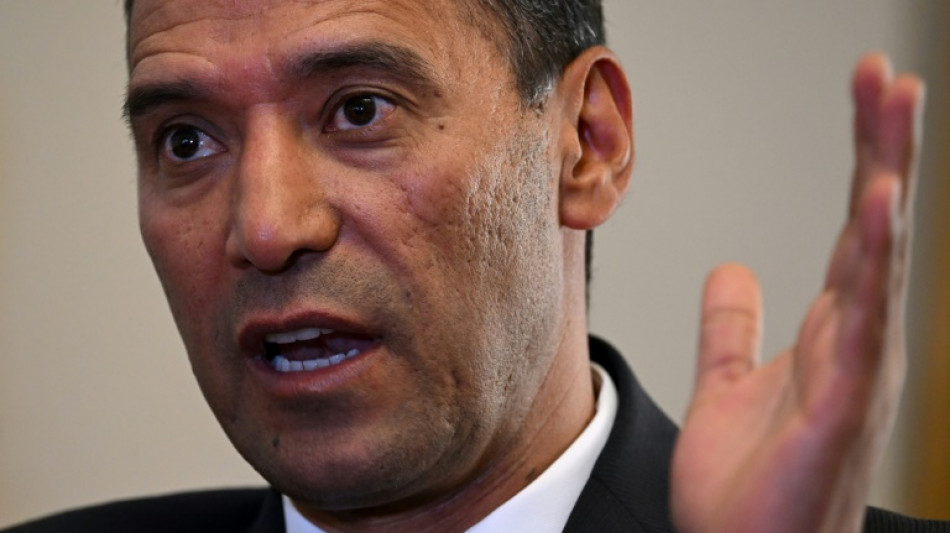
Colombia warns Trump against drug blacklisting / Photo: © AFP

 US LGBTQ community mourns 'diva' Dolly Parton

 England bid to banish booze woes as Pakistan seek self-respect
 High quality, low risk: record number of Japanese in Premier League

 Stocks edge higher as oil drops on fresh Mideast hopes

 Pakistan's girls fight for their place in the boxing ring
 Five things to know about Anthropic ahead of Wall Street debut
 Social media use on the rise among Australian under-16s after ban: data
 Instagram chief admits touting teen safety tool while omitting it was barely used

 'Final Fantasy', 'The Witcher' in spotlight at Europe gaming bash
 Syrian Kurdish leader dissolves force that spearheaded jihadist fight

 Trump raises prospect of demolishing iconic Kennedy Center
 PGA Tour to end in two-week matchplay showdown from 2028: CEO

 United States of Dolly: how a country queen bridged America's divide

 PGA chief says 'no current plans' for LIV stars to return

 Golf giant Callaway apologizes after ad sparks outcry

 Ioane stars as New Zealand recover to beat Johannesburg Lions

 Ukrainians seeking beauty in a bomb-scarred city
 Dolly Parton: Country music's dolled up but deserving queen

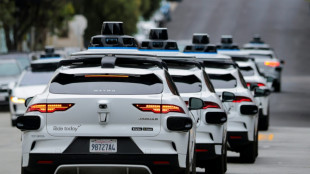 US robotaxi firm Waymo plans to launch in Germany

 'Here to win': Xavi vows to restore pride in Dutch football

 Cameroon's Baleba joins as Man United boost midfield options
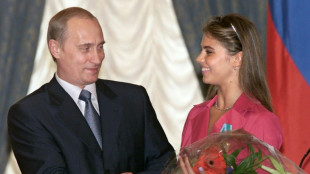 'Shocking' book about Putin's private life wins French literary prize
 Pogacar storms to Vuelta a Espana stage four solo triumph

 Canada unveils counter-tariffs of 15-50% on US goods
 Volkswagen boss braces German workers for more job cuts
Colombia's defense minister on Sunday warned Donald Trump's administration against blacklisting his country for failing to curb drug exports, saying the decision would bring yet more cocaine to the United States.
Washington is currently weighing whether to "decertify" Colombia as a partner in the battle against drugs, a move that could restrict millions in US military aid and be a hammer blow to Colombia's reputation.
In an interview with AFP, recently appointed defense minister Pedro Sanchez said decertification would mean "we simply lose the ability to contain the threat."
"Not being able to contain it would go against the interests of the United States. Because more cocaine would arrive and the United States would not be stronger, more prosperous, or safer."
"Fracturing relations and cooperation between our states is an opportunity for drug trafficking," Sanchez insisted.
Colombia has launched a diplomatic offensive to avoid blacklisting ahead of a September US review.
But many officials are privately pessimistic that blacklisting can be avoided, putting at risk nearly half a billion dollars in annual US funding.
Since President Gustavo Petro came to power in 2022, the area under coca cultivation has increased by about 70 percent, according to Colombian government and UN estimates.
Trump has taken a hardline stance against drugs entering the United States from Mexico and Canada, hitting both countries with tariffs as apparent punishment.
And there is no love lost between Trump and Colombia's similarly pugilistic president Petro.
The pair recently got into a spat on social media over migrant deportations, prompting Trump to threaten sanctions on Colombia.
- Plan Colombia -
The United States has poured billions of dollars into Colombia's security forces over decades, helping to beat back insurgent groups and cartels that produce 90-plus percent of cocaine in the United States.
But Petro's signature policy of "total peace" has led to fewer military operations against drug-running militias and an abandonment of forced coca eradication.
Sanchez admitted that "total peace" had led to an increase in the strength of some armed groups.
"They grew because they betrayed the goodwill of the national government," he said.
He revealed that armed fighters had increased by about 1,500 in the last year alone.
Decertification would be a major blow to the Colombian military, just as it tries to rebuild strength and retake territory from insurgent leftist guerrilla groups.
Sanchez said the military's capabilities had been degraded in recent years, as military spending had been cut.
"They are weaker in certain capabilities, in intelligence, for example. We have fallen a little short in advancing rapidly in disruptive technology, such as drones and anti-drone weapons," he said.
"We don't have the same aircraft flying that we had 10 years ago."
The United States decertified Colombia once before, during the presidency of Ernesto Samper, whose 1994 campaign was accused of receiving money from the Cali cartel.
Some vital aid was frozen and foreign investment to Colombia dipped.
Eventually, the US resumed funding and, with a new government in Bogota, established "Plan Colombia" -- a billion-dollar US plan to overhaul the Colombian security services.
Despite today's challenges, Sanchez said the military's goal was to assert territorial control over all Colombia.
ELN guerrillas currently control a swathe of land near the Venezuelan border, where fighting has displaced about 56,000 people.
In a recent interview with AFP, ELN commanders vowed to repel a government counteroffensive and said years of "total peace" risk turning into "total war."
Sanchez dismissed the ELN as a "narco-criminal group" and vowed they would be met with "full force."
He also pledged to retake a major coca-growing region in the south of the country, a virtual microstate run by the Estado Mayor Central (Central General Staff).
Sanchez admitted retaking territory was a "wicked problem," but said it would be achieved.
"We're going to have to make a lot of sacrifice, we're even going to have tears, but in the end, we're going to achieve it."
F.Wagner--VB