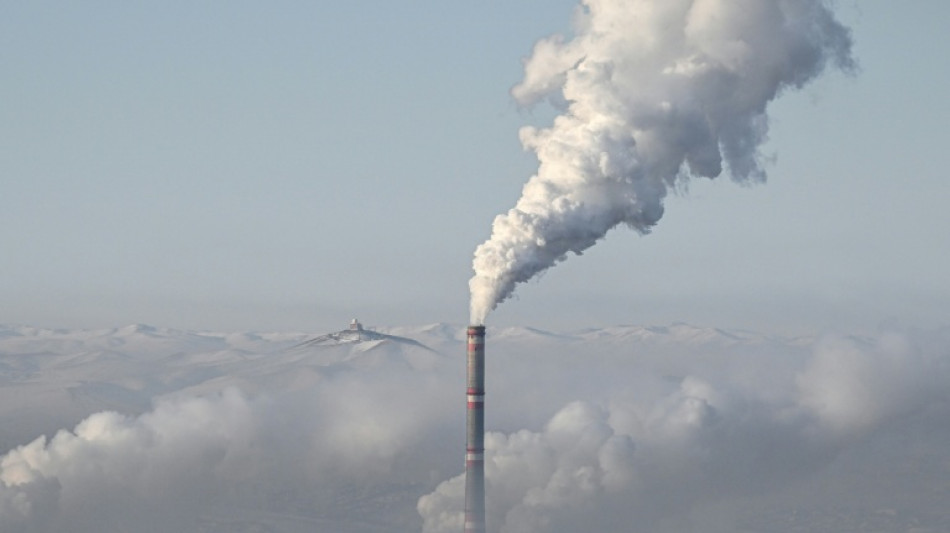
Mongolia's children choke in toxic pollution / Photo: © AFP

 Bolivia's Paz appoints new economy minister amid bailout talks
 US designates UK-based Palestine Action as foreign 'terrorist group'
 'Rocky Horror Picture Show' star Tim Curry dead at 80
 American Moll wins women's pole vault at Zurich city event

 As Canada takes on US tariffs, what's behind the David and Goliath fight?

 UEFA 'likely' to drop threat to boycott FIFA tournaments: source

 US disrupts platforms allegedly used by Chinese hackers
 The foreign tourists missing in Nepal's flash floods

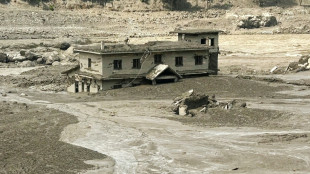
 Hundreds missing after Nepal-Tibet flood kills 98
 CIA director was on 'semi-routine' mission in Moscow: Trump
 Aldeguer switches to Rossi's VR46 for next season

 Rent TRON Energy and Reduce USDT Fees : TronBid Expands Marketplace

 Pakistan captain Babar Azam returns against England '90 percent fit'

 Stocks mixed as oil drops, inflation stays high

 Improving standards transform pole vault as spectacle, says Duplantis
 India close in on win despite Sri Lanka fightback in second Test
 MEXC TradFi Gala Concludes With Over 170,000 Registrations and $4.3 Billion in Daily Trading Volume

 Olympic skating champion Liu to skip new season

 Benfica sign midfielder Palhinha from Bayern
 Flick says Barca may go without striker as Atletico resist Alvarez sale

 Too hot to incubate: Nile crocodiles hatch on their own in French reserve
 Spurs closing in on Man City's Marmoush after signing Savio

 Celtic count the cost of Champions League flop

 Lebanon accuses Israel of burning forest, farmland in south
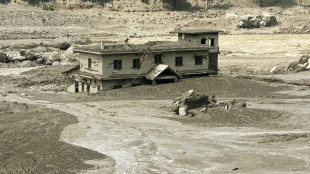 Nepal floods at China border kill 8, cause 'major casualties' in Tibet

As she watched her five-month-old son lying in intensive care, wires and tubes crisscrossing his tiny body, Uyanga cursed her hometown Ulaanbaatar and its chronic pollution.
The toxic smog that settles over the Mongolian capital every winter has been a suffocating problem for more than a decade that successive governments have failed to dispel.
There are wisps of hope in a resurgent grassroots movement and a promised official push to action.
But the statistics are grim.
Respiratory illness cases have risen steadily, with pneumonia the second leading cause of death for children under five.
Uyanga's son was admitted to hospital with pneumonia, then developed a secondary infection in a ward crowded with children suffering the effects of some of the world's worst air.
"I was so scared when he was admitted to intensive care," said Uyanga, who, like many Mongolians, goes by one name.
"I love my city and I want to continue to live here. But considering the health of my children, on that night, I cursed being born in Ulaanbaatar."
In the depths of winter, the city's daily average of PM 2.5 -- small particulate that can enter the lungs and bloodstream -- can be 27 times higher than the level considered safe by the World Health Organization.
Young children are particularly vulnerable, breathing faster than adults and taking in more air relative to their size.
All three of Uyanga's children were hospitalised with respiratory illnesses before they were a year old, with her youngest admitted two winters in a row.
Most of her friends have had similar experiences.
It "has become part of our daily lives, or like social norms", she said.
- 'Disastrous'-
Located in a basin surrounded by mountains, Ulaanbaatar traps smoke and fumes from both coal-guzzling power stations and homes.
A dense blanket of smog coils snugly around city-centre apartments and Mongolia's traditional round ger tents in its outer districts most winter mornings.
Ger dwellings have sprawled as hundreds of thousands of nomads decamp to the capital in search of steadier incomes and better public services.
Most use individual coal burners to stay warm in the winter, when temperatures can plunge to minus 40 degrees Celsius (minus 40 Fahrenheit).
One freezing morning, distributors loaded up coal briquettes onto a pick-up truck whizzing around ger households.
"I don't think there's anyone in Mongolia who's not concerned about air pollution," said 67-year-old coal seller Bayarkhuu Bold.
Cashier Oyunbileg said she burns a 25-kilogramme (55-pound) bag of briquettes every two days.
Inside her ornate, cosy ger, she confessed she was "really worried" about her three children's health, and had even set up her tent on higher ground hoping to avoid air pollution.
"This year, though, it's been really disastrous," she said.
Her family attempted to switch to an electric heater but "just couldn't afford the bill".
Respiratory disease rates among children are increasing in such districts, school doctor Yanjmaa said.
"It is impossible for people who are breathing this air to have healthy lungs," she said.
- 'Helpless' -
Oyunbileg's options are limited.
"I usually don't let my children go outside a lot," she said. "If I let them, I usually put masks on them."
Wealthier compatriots now often choose to spend the winter outside Mongolia.
Uyanga and her husband spent their entire savings renting somewhere with better air quality for three months when their first child was born.
"It's helpless," she said. "No matter how hard we try to keep the indoor air quality better... our children (have to) go outside all the time."
In 2019, the government replaced raw coal with refined coal briquettes, offering some brief air quality benefits, said state meteorologist Barkhasragchaa Baldorj.
The benefits have plateaued as coal burning increases in a country where the industry is vital to the economy.
The briquettes have also been linked to carbon monoxide poisoning and increased levels of some pollutants.
Barkhasragchaa is one of only two people assigned to Ulaanbaatar's air quality monitoring stations.
"If you heard the actual budget allocated for maintenance, you would laugh... it's just impossible to maintain a constant operation," he said.
Many were sceptical about government efforts.
"Personally, I don't see any results," coal seller Bayarkhuu said.
- 'Next generation' -
The city's deputy governor responsible for air pollution, Amartuvshin Amgalanbayar, promised change.
This year, 20,000 households will switch to gas, resulting in a 15 percent reduction in pollution, he said.
Plans to move another 20,000 households from ger districts into apartments will begin in 2025, as well as efforts to solve another of the capital's intractable and related problems -- traffic.
A long-delayed metro, that has become a symbol of official inefficacy, will be built by 2028, he said.
"The issues we were talking about trying to solve 20 years ago, when I was a student, are still here," said the 40-year-old. "It's been given to the next generation to solve."
That exasperation coalesced last year when tens of thousands signed a petition demanding a public hearing on pollution policies.
"It was my mum (getting sick) that really spurred, I think, first anger and disappointment and a sense of helplessness," one of the organisers, 23-year-old Enkhuun Byambadorj, told AFP.
Attempts to solve the problem so far "have looked at only one sector, or have looked at the problem from only one perspective", she said, with the petition calling for a more "holistic, cross-sector" approach.
The hearing took place last month, with Enkhuun and her colleagues hopeful that it shows political will to tackle the problem by younger and more professional lawmakers.
"We've scratched an itch and revitalised a grassroots movement," she said.
"What we need to do is keep pushing decision-makers to build on what they've done... and to turn the recommendations that come out of the hearing into decisions that can be implemented."
M.Betschart--VB