'Not animals': migrants shun shelters on way home to South America / Photo: © AFP

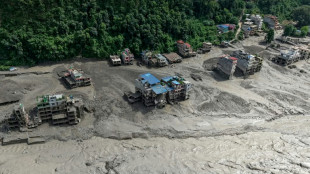
 How a glacier collapse may have caused Nepal-Tibet disaster

 Harmovest Capital Strengthens Global Financial Services Through Technology and Compliance

 Nvidia to buy AI platform Hugging Face for $12.9 bn: report
 Palace intrigue in Uganda as succession battle heats up
 'Housing First' approach gets Swedish city's homeless off streets

 Czech duo Muchova and Mensik win US Open mixed doubles title
 Japan's 'polka dot queen' artist Yayoi Kusama dies aged 97

 Nepal-Tibet disaster: what we know

 China deploys record number of ships around Taiwan as pressure grows

 Ruthless Bayern target treble as rivals reboot on Bundesliga return

 What experts know so far about Nepal's deadly floods

 UEFA set to withdraw FIFA boycott threat ahead of Champions League draw

 Sumo moves to beat Japan summer heat as temperatures rise

 'Be more honest': Markets crave clarity from cryptic Fed chair

 Climate change leaves its mark on America's largest reservoir
 CIA director warned Russia not to attack NATO members: US media

 Search for missing after Nepal-Tibet floods kills at least 160

 Meta, US states agree $18 bn settlement in landmark teen safety case

 What scientists know so far about Nepal's deadly floods

 US general visits Colombia to discuss war on drugs

 Meta settlement puts social media industry on notice: 'There will be more'

 NFL owners approve record Seahawks sale

 Nigerian armed groups net nearly $6 mn in ransoms: study

 Savio scores on debut as Spurs advance in League Cup

 Mbappe hits treble as Real Madrid thrash Real Sociedad

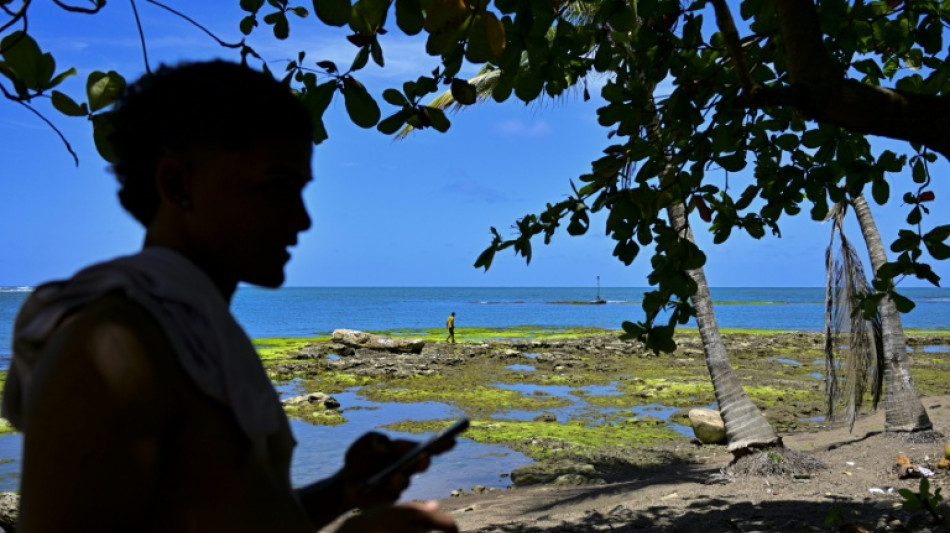
Luis Montilla chose sleeping on a beach in Panama instead of being confined to a migrant shelter on his way home to Venezuela after failing to enter the United States.
"We're not animals," the 28-year-old said, adding that staying at a government reception center meant being "shut in, keeping quiet, staying in bed and doing as you're told."
Montilla was one of several dozen people from his country waiting for relatives to send them $260 for the boat trip to Colombia from Panama's Caribbean coast.
They had already made the arduous journey back from Mexico on foot and by bus after US President Donald Trump toughened immigration policy and canceled appointments for asylum seekers.
Trump's crackdown has triggered a new migration wave from north to south that has left authorities in the region struggling to cope.
"Reverse migration is not a voluntary return, but rather a reflection of a larger crisis that has left thousands in limbo. It is a forced return flow," Diego Chaves, an analyst at the Washington-based Migration Policy Institute, told AFP.
Neither Montilla nor the others waiting for boats wanted to take advantage of a plan announced this week by Costa Rica and Panama to bus migrants at their own cost to shelters in remote border areas.
"They treat you like a criminal there. You're a prisoner. People prefer to walk," said Victor Diaz, 19.
Like hundreds of others over the past month, Diaz opted to take the risks of traveling by boat rather than trekking through the Darien jungle on the border with Colombia again.
So did Jinnelis Navas, who arrived on Panama's Caribbean coast with 10 relatives who were trying to get money for a boat.
In Mexico, they were treated "like dogs" in a shelter, the 50-year-old said.
"That's why we didn't turn ourselves in" to the authorities in Costa Rica and Panama, Navas said.
- 'Migrants are criminalized' -
Migrants returning southward to Costa Rica from Nicaragua who accept the official scheme are sent by bus to a shelter on the border with Panama.
They then board another bus that crosses Panama before arriving at Lajas Blancas and San Vicente, two migrant centers in the Darien region.
From there, they are supposed to fly out on humanitarian flights, but so far none have departed.
Under pressure from Trump, Costa Rica and Panama are now "bridges" for deportations from the United States.
Two of the shelters house more than 200 Asian deportees, including Afghans and Iranians, who do not want to return to their countries.
The International Organization for Migration is seeking another country to accept them.
Amid the controversy, Panama announced Friday that it would grant a 30-day permit to more than 110 Asian migrants at San Vicente, so they can leave and arrange transport elsewhere.
It also announced that the Lajas Blancas shelter would be closed, along with another one in the area. The government did not say where those arriving from Costa Rica would now be taken.
- 'Criminalized' -
According to lawyer Gabriela Oviedo of the Center for Justice and International Law, a Latin American rights group, "migrants are criminalized," and shelters in Costa Rica and Panama "are detention centers."
Those who do stay at the shelters are guarded by police and undergo biometric checks to rule out criminal records.
They have no access to defense or legal advice, according to Oviedo, who urged the authorities not to keep children in confinement.
AFP requested access to shelters in Costa Rica and Panama but without success.
More than 2,200 homebound migrants arrived in Panama in February, according to the government.
Many fall deeper into debt on their way back because they have to pay for buses and boats.
"Reverse migration will not be the end of the road for many, but rather a new cycle of precariousness and forced mobility," said Chaves.
The Costa Rican Ombudsman's Office said that many migrants in the shelter on the border with Panama want to go out and work informally so they can earn money to continue their journey.
"They have the right to not have their freedom of movement arbitrarily restricted," Juanita Goebertus, Americas director at New York-based Human Rights Watch, told AFP.
W.Huber--VB