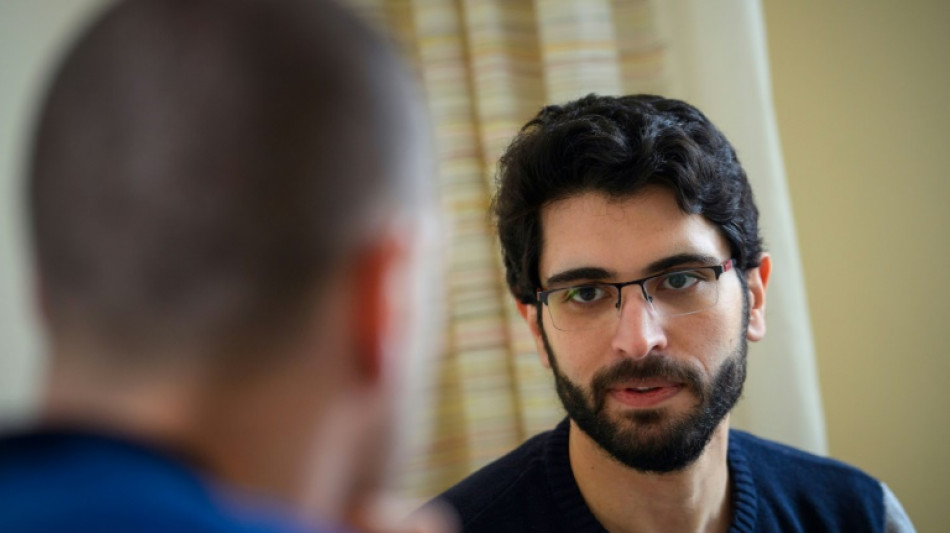
Germany's asylum seekers anxious over Merz's immigration plans / Photo: © AFP

 Barca sign Croatia goalkeeper Livakovic
 Rain delays England's bid to put off-field incidents behind them
 World record holder Sawe withdraws from Berlin Marathon

 Driven by faith, activists stand up to fellow Jews to protect Palestinians

 Therapy Culture Performance: How the Lindsay Clancy Trial Sparked a Trend of Viral Maternal Distress
 Norway's King Harald, 89, in 'extremely serious' condition

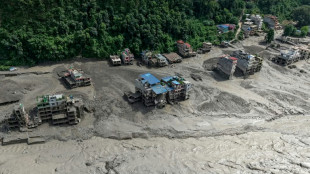
 How a glacier collapse may have caused Nepal-Tibet disaster

 Harmovest Capital Strengthens Global Financial Services Through Technology and Compliance
 Nvidia to buy AI platform Hugging Face for $12.9 bn: report
 Palace intrigue in Uganda as succession battle heats up
 'Housing First' approach gets Swedish city's homeless off streets
 Czech duo Muchova and Mensik win US Open mixed doubles title
 Japan's 'polka dot queen' artist Yayoi Kusama dies aged 97
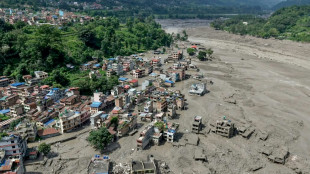
 Nepal-Tibet disaster: what we know

 China deploys record number of ships around Taiwan as pressure grows
 Ruthless Bayern target treble as rivals reboot on Bundesliga return

 What experts know so far about Nepal's deadly floods

 UEFA set to withdraw FIFA boycott threat ahead of Champions League draw
 Sumo moves to beat Japan summer heat as temperatures rise
 'Be more honest': Markets crave clarity from cryptic Fed chair

 Climate change leaves its mark on America's largest reservoir
 CIA director warned Russia not to attack NATO members: US media
 Search for missing after Nepal-Tibet floods kills at least 160
 Meta, US states agree $18 bn settlement in landmark teen safety case

 What scientists know so far about Nepal's deadly floods

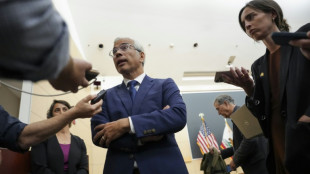
As Germany's Friedrich Merz gets closer to becoming chancellor, many asylum seekers live in fear of what his promised crackdown on irregular immigration will mean for them.
After a heated election campaign marred by a string of deadly attacks blamed on Syrian, Afghan and Saudi suspects, some migrants now worry for themselves and their families.
As the far-right AfD has made strong gains, Mohammad Bitar, 34, from Syria said he fears the climate is darkening and that the message towards migrants may shift to one of "we don't want you anymore".
Bitar was among some 30 Syrians who met recently in the town hall of Norderstedt, just outside the northern city of Hamburg, to learn about what Berlin's shifting policy plans may mean for them.
Outgoing Chancellor Olaf Scholz's government already froze asylum applications for Syrians after the fall of long-time president Bashar al-Assad late last year.
The months since saw a string of attacks, including a car-ramming through a Christmas market crowd in December that killed six people and wounded hundreds, with a Saudi man arrested.
More deadly attacks followed, two of them blamed on Afghan asylum seekers: a stabbing spree targeting kindergarten children and another car-ramming attack in Munich.
Merz has vowed tight controls on German borders, deportations of rejected asylum seekers, and an end to family reunifications for some categories of asylum seekers.
Bitar, an academic specialising in international law, said he arrived in Germany a year and a half ago.
He now lives in Norderstedt, a town of 85,000 people that is home to more than 2,000 refugees, who are mostly housed in emergency accommodation.
He is in Germany under "subsidiary protection", a status given to people who have not been accepted as refugees but for whom "serious harm is threatened in the country of origin".
- 'Something is changing' -
Merz has said he wants people who have this status not to be able to apply for family reunions.
This will directly impact Bitar, who has been hoping that his wife will be able to join him.
Bitar said he fears that the "situation will change" to the point where authorities tell him he is no longer welcome.
Concerns were also raised by Mouayad Hamzeh Alamam, 16, who arrived from Syria seven years ago and has since become a German citizen.
In perfect German, he spoke of his worries that his mother, who only has a residence permit, "could be deported to Syria".
"You can feel something is changing," he said.
Alamam pointed to a dramatic day in parliament last month when Merz pushed through a motion calling for an immigration crackdown with support of the far-right Alternative for Germany (AfD).
The move breached a long-standing taboo and sparked uproar in the chamber and days of street protests.
"The CDU today is quite xenophobic, if I can put it like that," said Alamam.
Merz has vowed a dramatic change from the open-door policy of his CDU party's former chancellor Angela Merkel, who welcomed more than a million people during the mass migrant influx of 2015-16.
Her centre-left successor, Scholz, has already reacted to the changing mood and recently trumpeted the fact that the re-establishment of border controls in 2024 had reduced the number of new asylum seekers by 37 percent.
- 'Race against time' -
Merz's centre-right CDU/CSU alliance is now in preliminary talks with the Social Democrats (SPD) on a possible coalition.
A flashpoint issue they are discussing is immigration and security, a topic that dominated the campaign.
The tough new stance promised by the CDU means that asylum seekers waiting for a decision face a "race against time", said Raphaela Shorina, who works in Norderstedt for the charity Diakonie.
To boost their chances of being allowed to stay, she said, many "are trying to get their qualifications recognised and to improve their language skills".
She rejects the logic of scaling back refugee numbers in the light of recent attacks.
"It's mental health care which is lacking and that means that people go to pieces because of everything that they've bring through," she said.
She pointed to Germany's huge skilled labour shortage and said the authorities should invest in language courses and other measures to help new arrivals integrate better.
Afghan asylum seeker Arsalan Qurishy, 28, condemned the recent attacks, which he said threaten to make wider society "blame other Afghans".
He said he cannot go back to Afghanistan as his father was a prosecutor who fled the Taliban, but said he had been waiting for a decision on his asylum request for two years.
"I have no future," he said. "I have no safety. I have nothing in my own homeland."
C.Kreuzer--VB