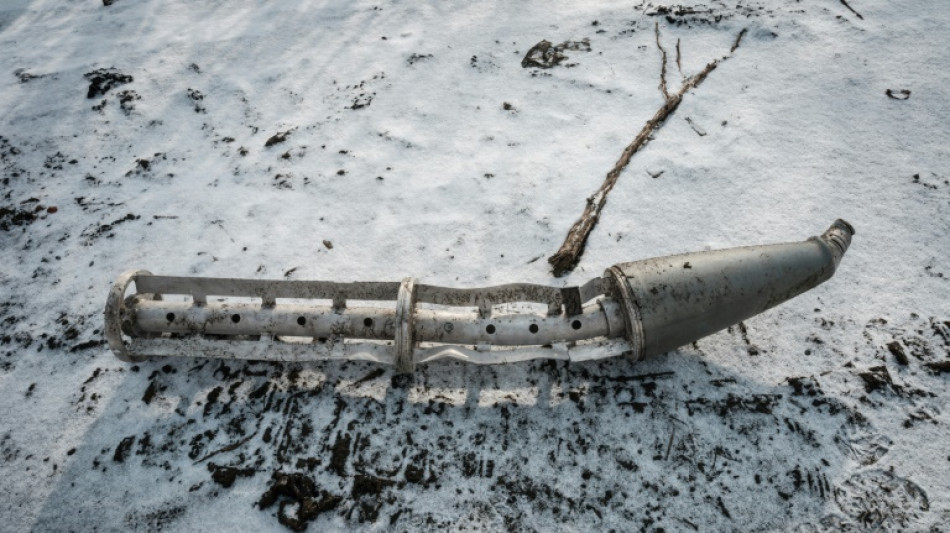
Lithuania quits cluster bomb ban treaty despite outrage / Photo: © AFP

 Iraola hoping for 'good news soon' in Liverpool pursuit of Barcola

 Iran executes over 500 people in 2026: rights group

 Srebrenica: Massacre that outraged the world

 After US settlement, EU says Meta must 'protect our kids too'

 Germany-led 'frugal' EU states demand budget plan cuts of 'several hundred billion'

 Ratko Mladic: Serb crusader dubbed 'epitome of evil'
 Pramac Yamaha replace Miller with Guevara for 2027 MotoGP season

 Bouaddi needs time at Man City despite 100m euro fee, says Maresca

 MEXC Launches SHEIN Subscription with $1M Quota as Inaugural IPO Express Event

 Iran, Qatar hold Hormuz talks as US blockade chokes Iran oil imports

 Defiant Dinusha helps Sri Lanka draw second India Test

 Pakistan bowl against England in rain-delayed second Test

 Barcola move from PSG to Liverpool 'on track': source

 Swallowed by silt: Survivors recount Nepal flood horror

 Germany's Merz hosts 'frugal' leaders ahead of EU budget battle
 Barca sign Croatia goalkeeper Livakovic
 Rain delays England's bid to put off-field incidents behind them

 World record holder Sawe withdraws from Berlin Marathon

 Driven by faith, activists stand up to fellow Jews to protect Palestinians

 Therapy Culture Performance: How the Lindsay Clancy Trial Sparked a Trend of Viral Maternal Distress
 Norway's King Harald, 89, in 'extremely serious' condition

 How a glacier collapse may have caused Nepal-Tibet disaster

 Harmovest Capital Strengthens Global Financial Services Through Technology and Compliance

 Nvidia to buy AI platform Hugging Face for $12.9 bn: report

 Palace intrigue in Uganda as succession battle heats up
Lithuania on Thursday quit an international convention banning cluster bombs, citing security concerns over neighbouring Russia in a move that has drawn criticism from human rights groups.
The formerly Soviet-ruled Baltic state of 2.8 million people has also signalled its intention to leave another international treaty prohibiting the use of anti-personnel land mines.
NATO member Lithuania has said it wants to strengthen its defences following Russia's invasion of Ukraine, fearing it could be next if Moscow succeeds.
But Amnesty International has called the decision "disastrous" and Human Rights Watch said it was "alarming", with both organisations warning that it could put civilian lives at risk.
The Lithuanian parliament voted to leave the cluster munitions convention last July, but the cvountry had to wait six months after submitting exit documents to the UN for the decision to take full effect.
It is the first country to leave the convention, which was adopted in 2008, and the first European Union country to leave a multilateral arms regulation agreement.
Russia and Ukraine are not members of the convention and have both used cluster bombs in their three-year-long war.
"Russia uses all the instruments available in a conventional war, and this shows that we need to take action to ensure effective deterrence and defence," Lithuania's Deputy Defence Minister Karolis Aleksa told AFP this week.
"Withdrawing from the convention gives us the opportunity to increase the effectiveness of our defence against large-area targets," he said.
The convention has 112 state parties and 12 other signatories, and prohibits the use, transfer, production and stockpiling of cluster bombs.
Cluster munitions can be dropped from aircraft or fired from artillery, exploding mid-air and scattering bomblets over a wide area.
"The most effective deterrence and defence is when you have them in your possession and know how to use them," Aleksa said.
- 'A dangerous trend' -
Many countries have banned cluster bombs because they pose a lasting threat, as many fail to detonate on impact, effectively acting as land mines that can explode years later.
HI, a non-governmental group and founding member of the coalition against cluster munitions, asked Lithuania to reverse its move.
"Lithuania's decision paves the way to a dangerous trend as it may encourage other states to reconsider their commitments to humanitarian disarmament treaties, particularly in times of heightened security concerns," HI's Alma Taslidzan said in a statement.
"The Oslo Convention has proven to be effective in protecting civilians from this indiscriminate weapon," she said.
But Aleksa said Lithuania would take "all necessary measures" to minimise the negative effects of cluster munitions, including planning to collect unexploded ordnance as quickly as possible after any potential military operation.
"Cluster munitions have immense destructive power, and additional attention will be paid to internal rules on their use," he said.
Lithuania is also considering leaving another convention that bans anti-personnel landmines.
The military and the defence ministry have supported the move, but government leaders have paused the decision, asking whether regional allies would take similar steps.
The president's national security advisor, Marius Cesnulevicius, said in February that a final decision could take several months.
Finland's armed forces have been evaluating since last summer whether anti-personnel landmines should be reintroduced, but no decision has been made so far.
Stemming from a desire to ban anti-personnel landmines due to their devastating impact on civilians, the 1997 Anti-Personnel Landmines Convention currently has 164 state parties.
A.Zbinden--VB