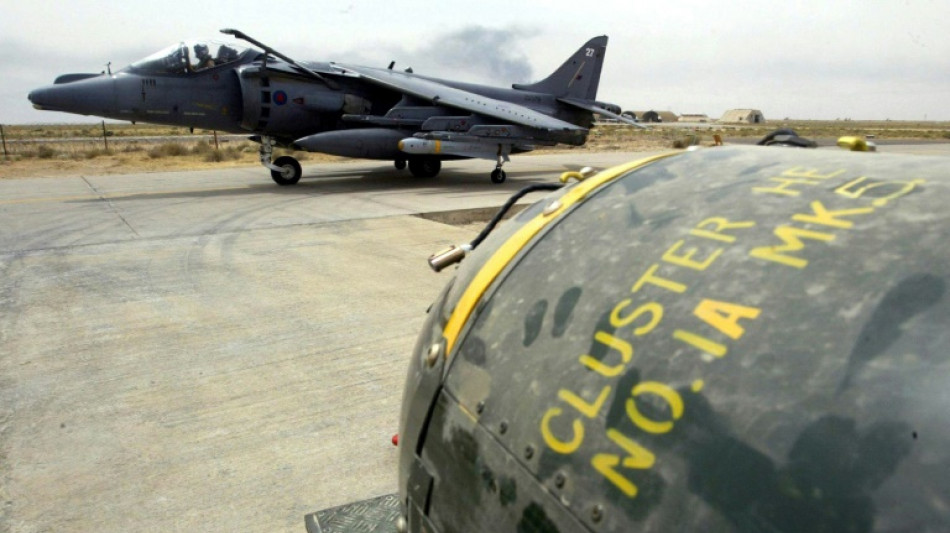
Walkouts on global disarmament treaties / Photo: © POOL FILES/AFP/File

 Arsenal face depleted Aston Villa, Spurs seek return on £300m spend

 Werro edges ever closer to elusive women's 800m world record

 Callaway cuts ties with golf media firm over violent ad

 Trump says Putin won't attack NATO territory

 Labor Day 2026: Complete Starter Tool Kit Under $375

 Tamil Nadu Govt Assigns Ministers to Oversee Chennai Monsoon Preparedness

 Alfred gets revenge on Jefferson-Wooden in Zurich 100m

 US Open men's singles: Three talking points

 Michael Strahan Welcomes Fifth Child with Girlfriend Kayla Quick

 Kuminga’s Timberwolves Deal Saves Millions in Taxes Despite Lower Pay Than Lakers Offer

 Trump says Russia is 'not going to attack' NATO territory
 OpenAI Tests 'Persistent Mode' for Codex AI Agent

 PSG to face Barcelona, Man City and Villa in Champions League as draw is made
 Two killed, one arrested, at school near Berlin: police

 Cox defies Pakistan after Abbas's treble strike rocks England

 Bosnian Serb war criminal Ratko Mladic dead

 Ogura to miss Aragon MotoGP after hand surgery

 Severe Thunderstorms Hit Eastern Australia After SA Deluge

 More than goals: What Mourinho wants from Real Madrid's Mbappe

 Finland defends shores against oil spill risk

 Iraola hoping for 'good news soon' in Liverpool pursuit of Barcola

 Iran executes over 500 people in 2026: rights group
 Srebrenica: Massacre that outraged the world

 After US settlement, EU says Meta must 'protect our kids too'
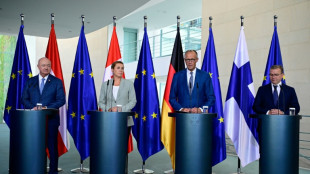 Germany-led 'frugal' EU states demand budget plan cuts of 'several hundred billion'

Lithuania will become the first country in the European Union to officially leave a multilateral arms regulation agreement when it withdraws on March 6 from the international treaty prohibiting the use of cluster munitions, citing a heightened security threat.
Since the United Nations was created 80 years ago there have been just five formal withdrawals from such multilateral treaties, but three of those -- all by Russia -- have come since 2021, according to an AFP analysis of the UN disarmament office registry.
Lithuania's controversial move comes at a time of heightened tensions in international relations over its neighbour Russia's invasion of Ukraine, with several countries criticising disarmament treaties.
Here is a summary of some key arms treaties and which countries have abandoned them.
- Cluster munitions -
Before Lithuania's move planned on Thursday, no country had pulled out of the Convention on Cluster Munitions, nor from the other four humanitarian disarmament treaties.
Cluster munitions can be dropped from planes or fired from artillery, exploding in mid-air and scattering bomblets over a wide area -- effectively acting as landmines that can go off years later.
Lithuania had signed and ratified the Convention on Cluster Munitions in 2011, committing to eliminate the weapons from its arsenal, and ceasing to produce or sell them.
But on September 6, 2024, it officially announced its withdrawal, citing "the evolving regional security dynamics and geopolitical threats".
The current security environment, it said, "necessitates maintaining a full spectrum of defensive tools, including cluster munitions, to ensure national security and protect our citizens".
Neither Russia nor Ukraine, which use cluster munitions in the war that began in 2022, are among the 111 remaining parties to this treaty.
The United States, Iran, Israel, and the two Koreas are not signatories either.
- Russia and US -
In November 2023, a year into its war with Ukraine, Russia raised global alarm with two major walkouts from international treaties.
It revoked its ratification of the Comprehensive Nuclear Test Ban Treaty and the Treaty on Conventional Armed Forces in Europe, which limits the deployment of troops and equipment from the Atlantic to the Urals.
Moscow had already in 2021 quit the Open Skies treaty, which allows states to conduct planned observation flights over the territory of other countries.
The United States had also left that treaty in 2020 during the first term of President Donald Trump.
- Bilateral accords -
Among other withdrawals from bilateral accords, the United States in 2002 left the Anti-Ballistic Missile Treaty, prompting the end of that agreement with Russia.
In 2019, the two powers also withdrew from the landmark 1987 Intermediate-Range Nuclear Forces treaty which limited the use of medium-range missiles, both conventional and nuclear.
The last remaining strategic arms control agreement between Russia and the United States -- the New START Treaty -- is set to expire in February 2026.
Without any renewal there will be no nuclear arms control structure in place between the former Cold War rivals for the first time since 1972.
- North Korea -
North Korea declared its withdrawal from the Treaty on the Non-Proliferation of Nuclear Weapons in 2003, but it is still listed as an official signatory.
Pyongyang did not comply with the three-month notice period required in the text, so its announcement was not considered an official withdrawal.
E.Burkhard--VB