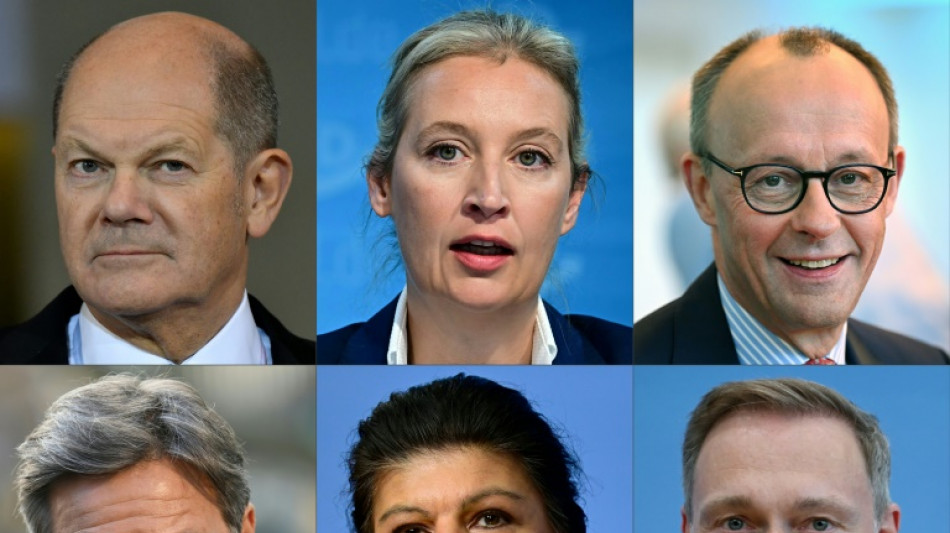
Cheat sheet on Germany's colour-coded politics / Photo: © AFP/File

 Trump announces deal for huge US stake in Venezuelan oil reserves

 Kane confirms talks on Bayern extension
 Trump govt. mulls deal to give away part of Yosemite park

 Indian release of Sonia Gandhi memoir uncertain after publisher clarification

 Cities show cleaner transport policies can reduce severe air pollution
 Four patients harmed in Nashville hospital medication mix-up
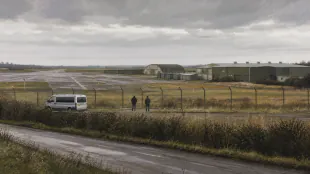 Essex council hires private guards as Wethersfield asylum centre expands
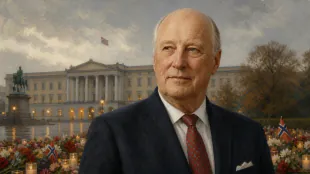 Haakon VIII becomes Norway's king after Harald V dies at 89

 Six injured after sign falls at Christian festival in West Sussex

 Dubai airport expands scanners that keep laptops and liquids in bags

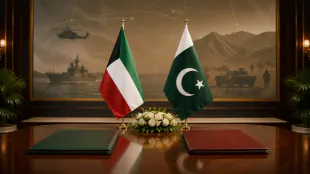 Kuwait and Pakistan sign military cooperation agreement
 Ramos strikes as AC Milan beat Venezia
 Odisha faces very heavy rain as Sri Ganganagar reaches 41.4C
 Scammers in China exploit Microsoft Teams and other workplace apps to target victims

 GSA employees report mice, ceiling damage and cloudy water after Washington office move

 Cara and former scraper develop open-source tool to alert artists when work appears in AI datasets

 Google expands easier file sharing between Android phones and Apple devices

 UK chefs turn to induction cooking to reduce kitchen heat, energy use and pollution
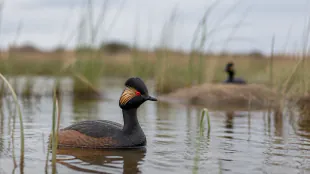 Restored Cheshire wetland becomes key UK breeding site for black-necked grebes
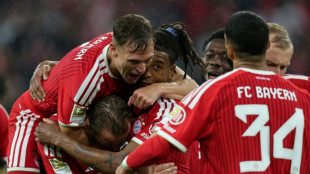 Bayern steamroll Stuttgart in Bundesliga opener
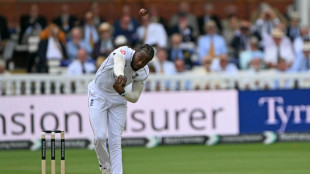 England pace quartet might keep Archer going until he is 40
 Driven by distraction? Trump steps up stunts as US midterms loom
 Springboks a wounded beast, warns All Blacks captain Savea

 Trump announces new US 'Space Academy'
 Best Laser Printers in India: Top Options from HP, Brother and Canon
Germany holds elections on Sunday after its three-party "traffic light" coalition collapsed last year and could soon have a "black-red" government while a "Jamaica" or "blackberry" alliance is less likely.
Confused? Here is a cheat sheet for Germany's colour-coded party politics ahead of the pivotal vote in Europe's most populous country and biggest economy.
Every German party is traditionally associated with a colour, and national flags and other imagery are commonly used as shorthand for possible coalition combinations.
Here are Germany's main parties, their colours, leaders and what they stand for:
- Red: Social Democratic Party (SPD) -
The centre-left party of embattled Chancellor Olaf Scholz, 66, is Germany's oldest with origins in a labour association founded in the mid-1800s.
Its key demands are fair wages, safe pensions and social benefits, and its symbol is a red rose.
The SPD prides itself on its principled opposition to the Nazis before it was banned and its members exiled.
Party lore says that dialogue with Moscow, rather than confrontation, helped end the Cold War.
Prominent former SPD chancellors include Willy Brandt, Helmut Schmidt and Gerhard Schroeder.
- Black: Christian Democratic Union (CDU) -
Germany's main conservative party, led by former corporate lawyer Friedrich Merz, 69, prioritises boosting the economy, law and order and traditional social values.
Merz has promised to steer the party back to its right-wing roots, away from the more centrist course charted by former chancellor Angela Merkel.
He has vowed to strongly restrict irregular immigration and perhaps bring back nuclear energy, phased out under Merkel.
The CDU is in a permanent alliance with Bavaria's Christian Social Union (CSU) led by Markus Soeder.
Well-known former CDU chancellors include the first post-WWII leader Konrad Adenauer and Helmut Kohl, dubbed the father of Germany's 1990 reunification.
- Yellow: Free Democratic Party (FDP) -
The FDP, which promotes liberal economic policies and small government, was long Germany's main "third party" and has had a key role in building and bringing down governments.
Its leader, former finance minister Christian Lindner, 46, provoked the government crisis that came to a head when Scholz fired him on November 6.
The turmoil recalled a 1982 power play when the FDP switched sides, bringing down Schmidt, who was replaced by Kohl.
The FDP is sometimes mocked as the party of the rich but sees itself as a watchdog against government overreach, bureaucracy and red tape.
- Green: Alliance 90/The Greens -
The Greens emerged from the environmental, anti-nuclear and peace protest movement of the 1970s.
Its first MPs were elected in the early 1980s and they shocked the staid Bundestag when they showed up in knitted pullovers and put their feet on the benches.
But the party has since firmly entered the mainstream and advocates strong military support for Ukraine against Russia.
The current alliance was built in 1993 with activist groups from the formerly communist East Germany.
Vice-Chancellor Robert Habeck, 55, is the top election candidate of the Greens, which is also the party of Foreign Minister Annalena Baerbock.
- Blue: Alternative for Germany (AfD) -
The far-right party started off a decade ago as a eurosceptic fringe party but has since embraced a virulent anti-immigration agenda.
It railed against Merkel's 2015 green light to allow in more than a million migrants, many from war-torn Syria.
AfD politicians tend to doubt climate change, hold pro-Moscow positions and support US President Donald Trump whose ally Elon Musk has strongly backed the AfD.
Some AfD key figures have used Nazi-era phrases, and the domestic security services consider elements in the party to be extremists, fuelling calls to ban it.
With its top candidate Alice Weidel, 46, the AfD has been polling at around 20 percent, with most of its support in the ex-communist east.
All other parties have committed to an anti-AfD "firewall" of non-cooperation, although Merz breached this in late January when he accepted AfD support in parliament to pass a motion calling for an immigration crackdown.
- Violet: Linke and Alliance Sahra Wagenknecht (BSW) -
Germany's two far-left parties have hovered around the five-percent cutoff mark for reentry into parliament.
Die Linke has enjoyed a late poll surge above that mark, boosted by a spirited anti-fascist speech by its top candidate Heidi Reichinnek, 36.
The Linke's former leading figure, Sahra Wagenknecht, 55, left last year to form her own "left-wing conservative" BSW, which is sceptical of immigration.
Wagenknecht, who grew up in the communist East, promotes anti-capitalist views and opposes NATO, has struggled to maintain the initial buzz around her new party.
- Colourful coalitions -
Scholz's collapsed red-yellow-green coalition was dubbed the "traffic light" government.
In 2017 Germany almost got a black-yellow-green "Jamaica" coalition, before the FDP pulled out of talks.
Polling suggests Germany could next be headed for a CDU-led "black-red" grand coalition with the SPD that may need a third partner.
If the FDP were to join in, their colours would match the national flag for a "Germany" coalition.
If instead the Greens joined, this would lead to a black-red-green "Kenya" coalition.
Also seen at the state level before, but highly unlikely at the national level, is a black-red-violet alliance of the CDU, SPD and BSW, dubbed the "blackberry".
C.Koch--VB