
New arena, new attitudes? Cash spat in spotlight at UN nature talks / Photo: © AFP/File

 Norway, in mourning, enters new era under King Haakon VIII
 Thousands Gather as Annual Velankanni Basilica Festival Opens With Flag Hoisting

 NHAI Starts Removing Temporary Cooum River Bunds Ahead of Northeast Monsoon

 Tennessee Moves Toward Renaming Nashville International Airport for Dolly Parton

 Lil Nas X Announces Death of His Mother Tameka Hill

 PlanEat AI Offers Personalized Weekly Meal Planning Through Lifetime Subscription Deal

 New Jersey Man Faces Federal Charges After Authorities Seize 109 Homemade Bombs

 Pennsylvania Coal-Waste Power Subsidies Rise as Solar Remains a Smaller Source

 Clean-Energy Super PAC Claims Fifth Republican Primary Victory in 2026 Campaign

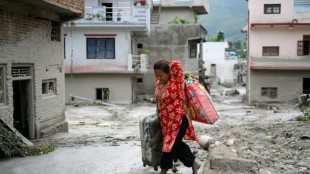
 Nepal warns of climate threat after deadly floods

 Abbas strikes again but England build huge lead over Pakistan

 Bloodied Pogacar pulls out of Vuelta a Espana after heavy fall

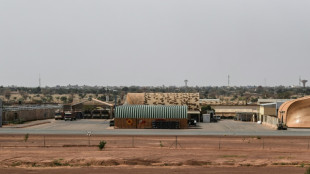 Soldiers' mutiny rocks Niger capital, but junta says back in control
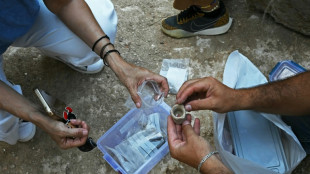
 Bezzecchi takes Aragon MotoGP pole, Marc Marquez ripostes in sprint

 Russia strike blows up arms depot near Kyiv, killing 37
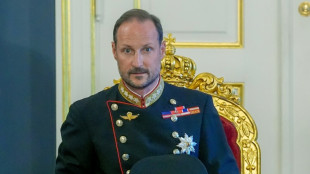 Norway, in mourning, enters a new era under King Haakon VIII

 Rain frustrates England's bid for Pakistan series win
 Rafael Leao leaving AC Milan for Galatasaray

 Police Report Details Famous Dex Domestic Battery Allegations

 Sabalenka Defends Basketball-Inspired Nike Kit at US Open

 Jerusalem Police Operation Uncovers Second Temple-Era Burial Cave

 TMZ Poll Invites Readers to Weigh Week’s Celebrity and Political Stories

 Influencers Agree to Keep Producing Joint Content During Divorce

 BJP Leadership Reviews Youth Outreach and Seven State Elections

 TVK Legislator’s Jallikattu Criticism Draws Demand for Party Clarification

The world's biggest nature conservation conference resumes in Rome next week for an urgent attempt at overcoming a deadlock between northern and southern countries over funding for nature protection.
Countries meeting at the UN's Food and Agriculture Organization (FAO) headquarters must agree on how nature funds should be governed -- a key step towards the goal of halting destruction of nature by 2030.
Their last attempt, in November, ended in disarray: the 16th Conference of Parties (COP16), held in Colombia, broke down due to a spat between poor and rich country blocs.
But with up to a quarter of assessed plants and animals now at risk of extinction, the world could not afford simply to wait for the next nature talks in 2026.
Instead, the 196 signatory countries to the UN's Convention on Biological Diversity (CBD) were invited to three days of overtime negotiations in the Italian capital, starting Tuesday, February 25.
They will begin where they left off -- amid an ever more challenging geopolitical context.
- 'Signals not good' -
Arnaud Gilles, of WWF France, told AFP he was not optimistic positions have changed in four months.
"At the moment, there is no more reason for us to get a result in Rome than there was in Cali" in Colombia, he said.
"The international diplomatic signals are not good," he said, citing US President Donald Trump's re-election in particular.
While the United States is not a signatory to the convention, the return of climate change denier Trump is expected to weigh on efforts.
So will stalled negotiations on a plastics pollution treaty, and a disappointing financial deal from a climate summit in Azerbaijan in November.
What is more, "some countries... are in a torpedoing climate and environmental ambitions mindset", Gilles said, pointing to Saudi Arabia's battle against phasing out climate-wrecking fossil fuels.
- 'Wake-up call' -
Delegates in Colombia had been supposed to ramp up progress towards 23 targets set in Canada in 2022, aimed at saving the planet from threats including deforestation, pollution and climate change.
Those targets came with a pledge to make $200 billion a year in funding available, including the transfer of $30 billion per year from rich to poor nations.
The squabble in Cali centred on the funding mechanism.
Developing nations -- led by Brazil and the African group -- insist on the creation of a new, dedicated biodiversity fund, saying they are not adequately represented in existing mechanisms.
Wealthy nations -- led by the European Union, Japan and Canada -- say setting up multiple funds fragments aid.
Negotiations among the nearly 154 countries confirmed for Rome so far will start from a compromise text.
That suggests laying the groundwork for a new development aid financing instrument to be set up at COP17 in Armenia in 2026, which would be overseen by the UN and give poor countries a greater voice.
Observers will be watching closely to see if developed countries, including those in budgetary crises like France and Germany, can be persuaded to agree.
Brian O'Donnell, director of the NGO Campaign for Nature, said he was "cautiously optimistic".
The failure on finance in Cali "was a wake-up call" and "led a number of countries to reassess their positions" ahead of Rome, he told AFP.
- 'Very contested' -
The president of the COP16 negotiations, Susana Muhamad, has feverishly been carrying out regional consultations and liaising with influential ministers ahead of Rome.
The proposals are "very contested by the countries of the North, but more or less accepted by the countries of the South", and "it is this divide that the COP presidency is trying to overcome", according to Daniel Mukubi, negotiator for the Democratic Republic of Congo.
To break the impasse, "we have to hope countries with a constructive approach form an alliance", said Juliette Landry, from French think tank IDDRI.
The Rome meet is also tasked with adopting reliable indicators to verify by COP17 how countries are performing on nature protection, and prepare for a probable push to set more ambitious targets.
COP16 was successful in some areas.
Delegates approved the creation of a permanent body to represent the interests of Indigenous people under the UN's Convention on Biological Diversity.
And they managed to coalesce around the creation of a fund to share the profits of digitally sequenced genetic data taken from plants and animals with the communities they come from.
Just how effective the so-called Cali agreement will be remains to be seen, however, with critics slamming a lack of obligations to ensure countries comply.
H.Weber--VB