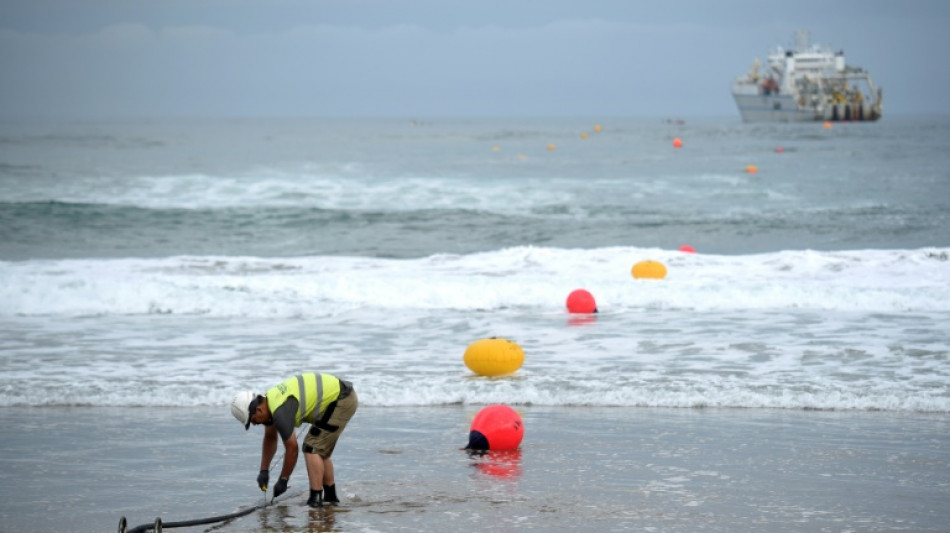
Fishing trawlers, not sabotage, behind most undersea cable damage: UN / Photo: © AFP/File

 Iceland in suspense after close EU vote
 Wallabies hold on for victory in Argentina

 Juve notch second straight win, Fiorentina's centenary party falls flat
 Rybakina eases injury fears ahead of US Open
 Djokovic kicks off latest Grand Slam quest under US Open lights

 'Sorry' De Zerbi won't panic after Spurs shambles
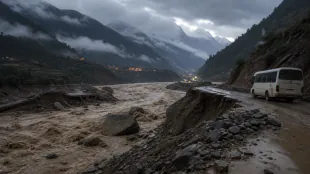
 UN, Nepal warn of climate threat after deadly floods

 USTA boss says structure of new player council not yet set

 Tiny Elversberg stun Leverkusen on Bundesliga debut, Dortmund beat Hamburg

 About 50 Karnataka travellers return from Nepal as 24 remain missing

 Editorial questions Letitia James’ record as New York attorney general
 Los Angeles triplets weigh 19.3 pounds in unusually heavy birth

 Matt Leinart assesses Arch Manning and the leading names in college football
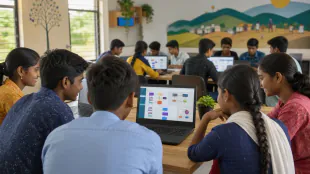 Rural Tamil Nadu students present 64 technology projects at IIT-M research park

 Tamil Nadu goalball team’s national silver highlights need for wider support

 Tamil Nadu and NUS agree to expand postgraduate and research links

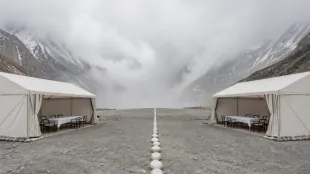 India and China have not named two new border meeting sites

 James Cleverly leaves shadow cabinet to seek London mayoralty

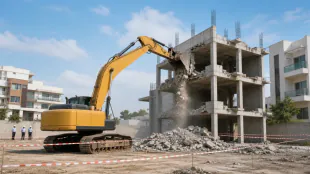 Cyberabad civic body demolishes 19 unauthorised structures

 Chinchpoklicha Chintamani begins 2026 arrival procession in Parel

 Ankle ligament tear ends Neeraj Chopra’s 2026 season

 Thirty-seven Mumbai pilgrims return after Nepal flood disruption

 Baladi Map app turns Lebanon’s local problems into a public record
 French campaign sharpens as far right accuses left over civil disobedience calls
 Norway's King Haakon VIII pays tribute to late father in first speech
Much has been written about suspected sabotage of undersea cables in the Baltic Sea, but the UN says fishing trawlers are causing the most damage by far, rather than spies.
Western officials have accused Russian vessels of sabotaging undersea communications and power cables in several high-profile incidents in the Baltic Sea in recent months.
European leaders and experts suspect acts of "hybrid warfare" against Western countries supporting Ukraine, and are calling for increased maritime security.
"The fact that interest in cable resiliency obviously has increased ... shows the importance of (this) infrastructure that we are so dependent on," Tomas Lamanauskas, the deputy head of the United Nations' International Telecommunications Union (ITU), told AFP in an interview.
The laying and operation of underwater cables was long the preserve of a consortium of large telecoms operators, but the internet giants have largely taken over in recent years, as they strive to keep up with ballooning flows of data.
Today, submarine cables form the backbone of global communications, carrying approximately 99 percent of the world's internet traffic, Lamanauskas said, pointing out that even when traffic goes through satellites, it is bounced to land stations and goes through underwater cables "to reach every corner of the Earth".
About 1.4 million kilometres (nearly 900,000 miles) of fiberoptic cables are laid on the ocean floor, enabling the provision of essential services such as trade, financial transactions, public services, digital health and education around the world.
- Frequent outages -
Damage to submarine cables is not uncommon.
According to the International Cable Protection Committee (ICPC), there are an average of 150 to 200 outages per year worldwide, or around three incidents a week.
But while suspected nefarious activities have been in the headlines, Lamanauskas stressed that fishing and anchoring is responsible for 80 percent of all recorded damage.
There are also natural hazards, ageing, abrasions and equipment failures, he added.
Given the growing importance of such cables, "every incident and every cut of the cable is much more noticeable", Lamanauskas said.
And while the undersea cable network is vast, there are actually only around 500 individual cables in the world, meaning that "even when a few of those are cut or ... damaged, the impact" is huge, Lamanauskas said.
That was certainly the case when three submarine cables carrying about a quarter of all internet traffic between Asia and Europe were cut last year in the Red Sea, or when a huge volcanic eruption severed the cable linking the Tonga archipelago to the rest of the world, he said.
Lamanauskas also highlighted last year's "important cable cut on the West African coast, (which) really impacted quite a bit of economies" in the region.
It was after that incident that Nigerian Communications Minister Bosun Tijani approached the UN's ITU telecoms agency to figure out "what can we do together on that", he said.
- 'Cohabitation rules' -
In a bid to increase cable resilience, the UN is pushing for the international community to increase cooperation in this highly sensitive sector.
The ITU and ICPC have set up a group of specialists tasked with developing solutions, who will meet for the first time from February 26 to 27 in Nigeria.
Lamanauskas said there were clearly a number of solutions for improving cable security and resilience.
There was a need for better protection of the cables, he said, but also for faster repairs of damaged cables.
More cables should also be laid in isolated areas, allowing data to be more easily redirected in the event of a cut.
Lamanauskas also insisted on the need for strict "cohabitation rules", to avoid cable cuts by fishing trawlers or other ships that drop anchors on the seabed.
A.Ammann--VB