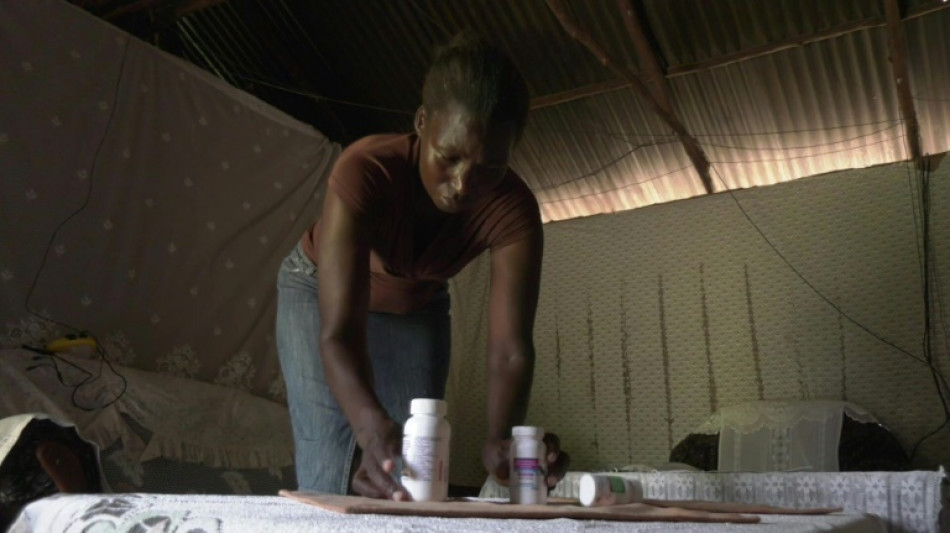
Kenya's HIV patients victims of US aid freeze / Photo: © AFP

 Iceland in suspense after close EU vote

 Wallabies hold on for victory in Argentina

 Juve notch second straight win, Fiorentina's centenary party falls flat
 Rybakina eases injury fears ahead of US Open
 Djokovic kicks off latest Grand Slam quest under US Open lights

 'Sorry' De Zerbi won't panic after Spurs shambles
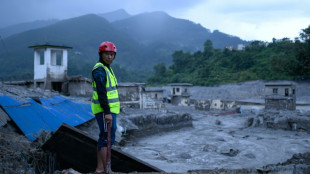
 UN, Nepal warn of climate threat after deadly floods
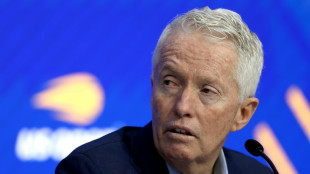 USTA boss says structure of new player council not yet set

 Tiny Elversberg stun Leverkusen on Bundesliga debut, Dortmund beat Hamburg

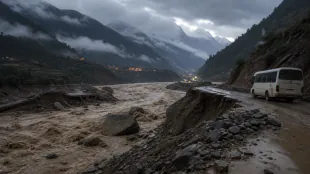 About 50 Karnataka travellers return from Nepal as 24 remain missing

 Editorial questions Letitia James’ record as New York attorney general
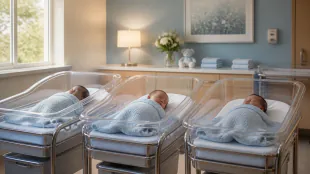 Los Angeles triplets weigh 19.3 pounds in unusually heavy birth

 Matt Leinart assesses Arch Manning and the leading names in college football

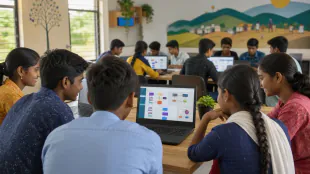 Rural Tamil Nadu students present 64 technology projects at IIT-M research park

 Tamil Nadu goalball team’s national silver highlights need for wider support

 Tamil Nadu and NUS agree to expand postgraduate and research links

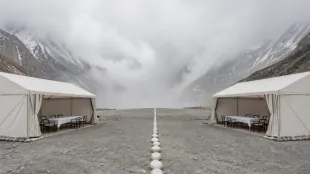 India and China have not named two new border meeting sites

 James Cleverly leaves shadow cabinet to seek London mayoralty

 Cyberabad civic body demolishes 19 unauthorised structures
 Chinchpoklicha Chintamani begins 2026 arrival procession in Parel
 Ankle ligament tear ends Neeraj Chopra’s 2026 season

 Thirty-seven Mumbai pilgrims return after Nepal flood disruption

 Baladi Map app turns Lebanon’s local problems into a public record
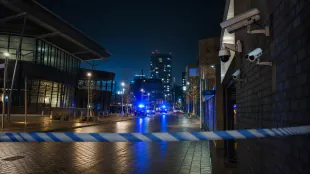
 French campaign sharpens as far right accuses left over civil disobedience calls
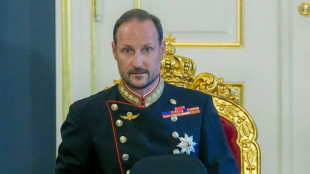 Norway's King Haakon VIII pays tribute to late father in first speech
Days after US President Donald Trump froze overseas aid funding, Hellen Anyango anxiously counted her boxes of AIDS treatment drugs, unsure what would happen when they ran out.
At the beginning of February, she had only three boxes of the anti-retroviral (ARV) medication left -- enough to last her just a week.
"If I don't take them, I can't be well," said the 43 year-old shop assistant, who comes from a village in Kisumu county on the shore of Lake Victoria.
Like millions of others, Anyango has counted for her treatment on PEPFAR, a scheme launched by then-US president George W Bush in 2003.
The US embassy in Kenya said in 2023 that it had spent $8.0 billion over 20 years on PEPFAR work in the East African country, reaching some 1.3 million people with ARV medicine and saving "millions" of lives.
The programme was disrupted suddenly at the end of January when Trump suspended most foreign aid programmes for 90 days.
Despite Washington announcing waivers for life-saving treatments, PEPFAR-financed clinics and drug-distribution centres in Kisumu shut down soon after the initial aid freeze and have remained closed.
Last week, international medical charity Doctors Without Borders confirmed that access to HIV pre-exposure prophylaxis and community-led surveillance programmes were still at a standstill in the region.
More than 135,000 people -- around 11 percent of the population -- in Kisumu are HIV positive, compared to a national average of around three percent.
"I don't know if my family is going to lose me or what my future looks like," Anyango told AFP.
- Confusion -
Erick Okioma, 61, who runs a local programme helping HIV patients and has lived with the virus himself for 25 years, said the sudden stop in PEPFAR was "devastating" and experienced like "a declaration of war".
The exact impact of the US aid freeze and subsequent waivers has caused "great confusion", he added.
Okioma attributes the high level of HIV in Kisumu -- where 60 percent live below the poverty line -- to local women prostituting themselves in return for fish caught by local men.
Treating patients at specialist clinics has helped shield them from the stigma around HIV-positive people, he said. He fears the social impact if they must go to public institutions.
That is a particular concern for young people, said Evelyne Mutobwa, who treats 172 HIV-positive adolescents at the MedSup Migosi health facility.
"Most of them have said that if we expose them to the community, everyone will know that they are on treatment," she said.
Some locals are critical that the Kenyan government has not stepped up its own efforts in a country with 1.4 million HIV-positive people.
Nelson Otwoma, head of an HIV support group in Nairobi, said it was time for the government to take care of its own problems.
"We are not Trump's responsibility," he said.
Kenya's health ministry says it has enough stocks to keep treatments going for at least six months.
S.Gantenbein--VB