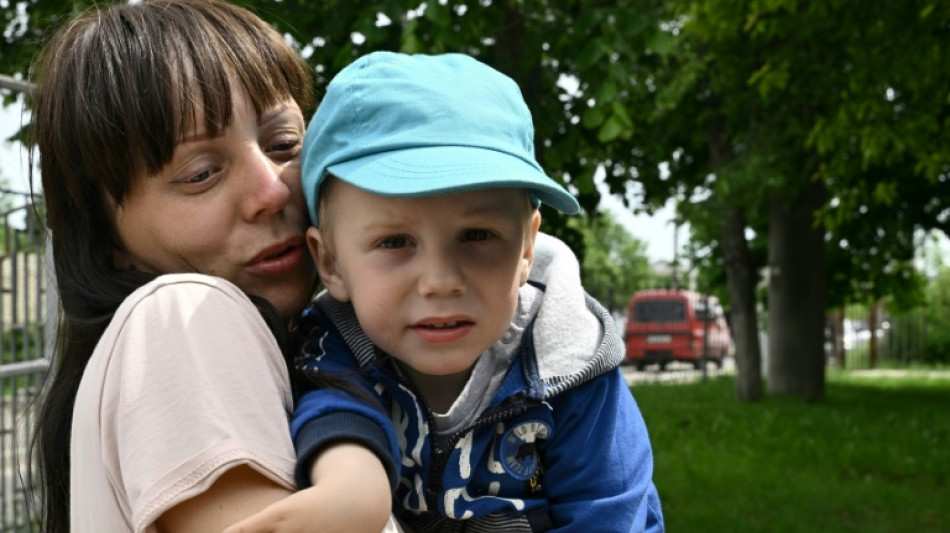
'I can breathe': Ukraine women and children flee Russian troops / Photo: © AFP

 UK radio broke rules in announcing king's death: watchdog

 Europe braces for another summer heatwave
 Tentoglou keep bid for fourth Euro title on course, Nowicki misses out

 MEXC Sponsors Yohani's Colombo Concert, Bridging Sri Lankan Culture and Global Digital Finance

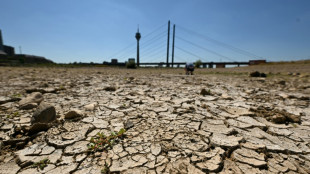
 Parts of Germany's Rhine could become unnavigable, group warns
 Base Markets Appoints Nazim Moussaoui as Head of Premium Clients and Partnerships
 US, South Korea to drill for new threats from North
 SCANDIC TRADE Ultimate 2.6 är färdigutvecklat – SNC SCANDIC ECO-Systemet är nu komplett

 SCANDIC TRADE Ultimate 2.6 je hotový – systém SNC SCANDIC ECO je kompletní

 SCANDIC TRADE Ultimate 2.6が完成――SNC SCANDIC ECOシステムが完成しました

 Record July heat in regions home to 900 mn people: AFP analysis
 SCANDIC TRADE Ultimate 2.6이 완성되었습니다 – SNC SCANDIC ECO-시스템이 완성되었습니다

 SCANDIC TRADE Ultimate 2.6 завершено — екосистема SNC SCANDIC стала повноцінною

 SCANDIC TRADE Ultimate 2.6 is now complete – the SNC SCANDIC ECO-System is now fully operational
 Chinese AI drives price competition among US labs
 Indian students step up exam protests in Jharkhand
 Stopped broadcast, layoffs: Hungary media eyes post-Orban renewal

 Typhoon Dolphin weakens but disrupts travel in east China

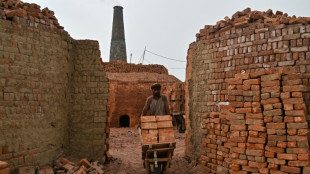 Pakistan brickmakers scorched by sun above and fire below
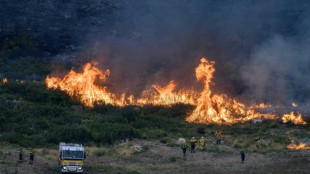
 Ithaca bets on hometown hero Odysseus for tourism boom

 Five things to know about Zambia ahead of the presidential vote

 Zambia vote to test Hichilema's economic record

 Meta will soon face another high-stakes trial in US
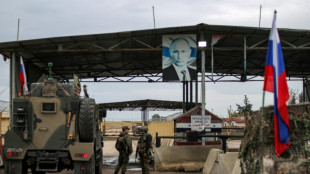 Syria says reached deal with Moscow on fate of Russian bases

 Netanyahu rejects Gaza plan in new break from Trump

The hordes of exhausted people hurrying through the east Ukraine checkpoint towards Red Cross buses were women, children and the elderly, desperate to flee the horrors of life in Russian-controlled territory.
They were crying or had lined faces and harrowed eyes, a testimony to the living hell they had endured in east Ukraine after Russia's invasion in late February.
"I can breathe more easily now," Anna, a teacher who fled with her children aged 13 and 11, told AFP, declining to give her surname as she crossed the checkpoint.
But she was grieving for what she left behind. As part of the deal with Russian forces to let Ukrainians out, men under 60 were obliged to remain behind -- including Anna's husband.
"It was the only solution with the children," she said, wiping her tears.
A steady flow of mini buses and cars delivered some 1,350 people and their luggage on Monday to land held by Ukrainian forces.
The convoy, carrying children with soft toys and women saddled with luggage, crossed a dam cutting through a reservoir that serves as the demarcation line between Russian and Ukrainian troops.
- Grim 'Russian world' -
The evacuees recounted horrifying stories of life under Russian occupation. The women were hesitant to give their full names, fearing their husbands could be punished for their testimony.
Oksana said she was "relieved" to have escaped. She brought with her two dogs "who are part of the family," but her husband was left behind.
"There were explosions all along the road. We couldn't get away," she said, explaining that she was at her countryside holiday cottage when the war erupted.
"Then the Russian tanks with the Z-symbols came through," she said, referring to a symbol Russia uses for what it calls a special military operation in Ukraine.
Their arrival, she said, meant she was unable to return to her home in Kharkiv, Ukraine's second-largest city, which was shelled incessantly but fended off Russian efforts to capture it.
Tetyana, a 19-year-old student said she was happy to back in her "native Ukraine" after three months of living in "the Russian world".
The term, often repeated by Russian President Vladimir Putin, is used to refer to regions the Kremlin believes fall under sphere its of influence.
In this "Russian world", "we didn't go out into the streets to avoid meeting" the soldiers, said Viktoria, Anna's colleague and mother of children aged 12 and 9, who also left her husband behind.
The two teachers said they had continued to teach remotely.
The new arrivals said Russian authorities had confiscated telephones and that residents there only felt safe using them in the privacy of their homes.
Internet and electricity had been cut for the nine days prior to their departure to the Ukrainian side.
They said they were unable to withdraw cash and that towns and cities under Russia's grip desperately need food and humanitarian aid.
- 'War crimes' -
Another evacuee named Anna, a two-year-old baby in her arms, had trouble consoling herself.
"One moment it was calm, but then explosions started. We had to leave with my son," she said.
She was worried about her husband who stayed.
The family had realised the war had started when it heard explosions and saw Russian trucks in the street.
"We spent two days in the school basement,"she said.
"We did not know on whose territory we were, but then the Russians arrived and set up checkpoints."
Anna said she will stay with relatives and hopes to see her husband soon.
"I hope all is well (with him). It was very difficult to leave."
Local prosecutor Eduard Mirgorodsky said people were "traumatised and scared."
He is interviewing displaced people to see if war crimes were committed.
"There is a lot of talk about kidnappings, robberies and also collaboration with the enemy," he said.
He also said that many who wanted to leave could not be evacuated and remained blocked on the other side.
"Many, many people stayed," sighed 46-year-old Red Cross volunteer Igor Klymenko.
He stressed that humanitarian aid was also needed there: "Help is needed!"
C.Kovalenko--BTB