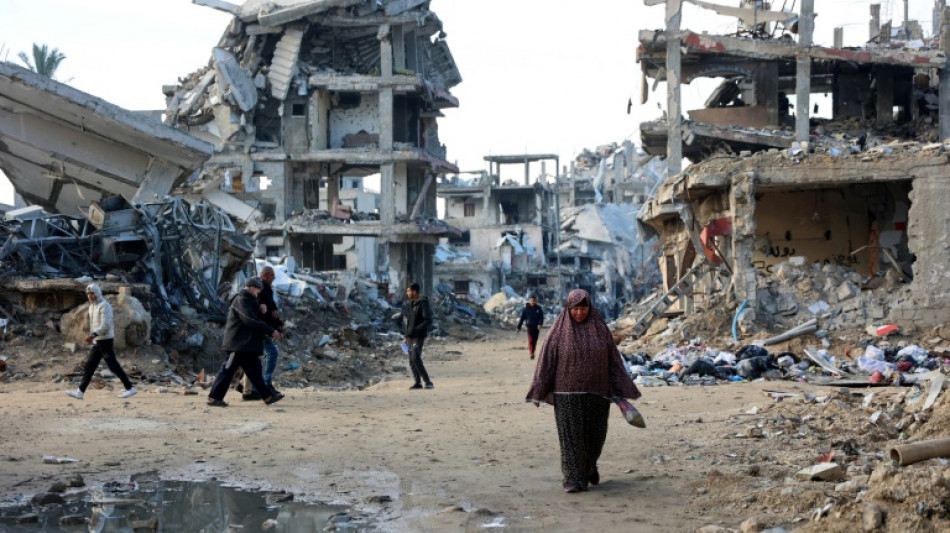
Gaza development put back 60 years by war: UNDP chief / Photo: © AFP

 Michelson shocks Nakashima in US Open clash of rising Americans

 Another body recovered after ferry capsizes off northern Cyprus: official

 Cupertino Chamber President Claudio Bono Invited to White House with GiveaRoof 3-Year Plan to End Homelessness

 Trump floats renaming Strait of Hormuz as 'Trump Strait'

 Man City, Chelsea fuel record-breaking Premier League transfer window

 Balogun rejected Everton move over transfer 'treatment'

 Northampton seek 'happy medium' in bid to keep England star Pollock

 US energy secretary in Venezuela to sign Trump's 'biggest' oil deal

 Branagh takes on action role in Apple's Cold War comedy 'Mayday'
 Lawson fills in again for injured Hadjar at Monza

 England omit Carse from squad for third Test against Pakistan
 Venice festival gets underway with Clooney taking swipe at US government

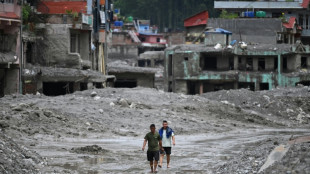
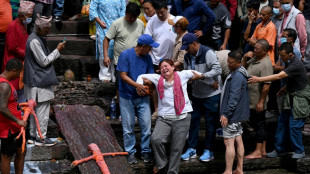 DNA tests and funerals in Nepal, a week after deadly floods

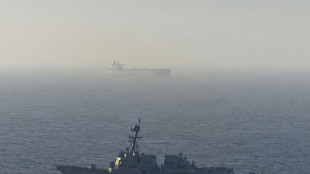 Iran threatens tougher strategy after US strikes kill 4 at wedding

 Chevron unveils deal to double Venezuela venture output in 5 years

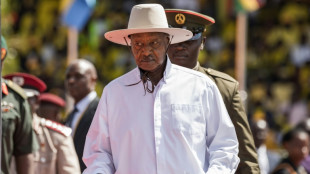 Uganda names its oil 'Pearl Sweet' as it prepares for first exports

 Tiger Woods driver's license suspended for five years after crash

 Germany probes latest sabotage attacks on power grid

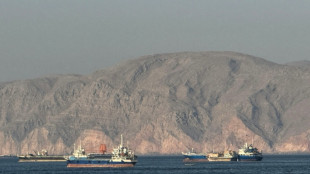 Wall Street stocks mixed as energy prices, bond yields turn lower

 Tiger Woods pleads guilty to reckless driving, license suspended

 Missing passengers likely went down with sunken ferry: N.Cyprus official

 Premier League clubs splash cash to smash transfer record

 Melting glaciers an 'immediate' climate risk: author of UN report

 Folarin Balogun's move to Everton collapses

 Pacific islands to face food shortages over global warming: scientists

The Israel-Hamas war has put back development in Gaza by 60 years and mobilising the tens of billions of dollars needed for reconstruction will be an uphill task, the United Nations said.
Around two-thirds of all buildings in the Gaza Strip have been destroyed or damaged, and removing the estimated 42 million tonnes of rubble will be dangerous and complex, the head of the UN Development Programme told AFP.
"Probably between 65 percent to 70 percent of buildings in Gaza have either been entirely destroyed or damaged," Achim Steiner said in an interview at the World Economic Forum annual meeting in the Swiss ski resort town of Davos.
"But we're also talking about an economy that has been destroyed, where we estimate that roughly 60 years of development have been lost in this conflict over 15 months.
"Two million people who are in the Gaza Strip have lost not only their shelter: they've lost public infrastructure, sewage treatment systems, freshwater supply systems, public waste management. All of these fundamental infrastructure and service elements simply do not exist."
And for all these towering numbers, Steiner stressed: "Human desperation is not just something that you capture in statistics."
- 'Years and years' -
The fragile ceasefire agreement between Israel and Hamas in the Gaza war took effect on Sunday.
Steiner said it was difficult to put a timeframe on reconstruction due to the "volatile" nature of the ceasefire, and because the UN's immediate focus is on life-saving aid.
"When we talk about reconstruction, we are not talking about one or two years here," he said.
"We are talking about years and years, until you even come close to rebuilding, first of all, the physical infrastructure, but it's also an entire economy.
"People had savings. People had loans. People had invested in businesses. And all of this is lost. So we are talking about the physical and economic, and in some ways even the psychosocial phase for reconstruction."
He said the physical reconstruction alone would cost "tens of billions of dollars", and "we do face an enormous uphill struggle on how to mobilise that scale of finance".
- 'Extraordinary' destruction -
The estimated volume of rubble may yet rise and will leave the reconstruction effort with vast challenges.
"This is not a simple undertaking of just loading it and transporting it somewhere. This rubble is dangerous. There are often still bodies that may not have been recovered. There's unexploded ordnance, landmines," Steiner explained.
"One option is recycling. With reconstruction, there is a significant degree to which you can recycle these materials and use them in the reconstruction process," Steiner said.
"The interim solution will be to move the rubble into temporary dumps and deposits from where it could then later be either taken for permanent processing or disposal."
In the meantime, if the ceasefire endures and firms up, Steiner said huge amounts of temporary infrastructure would be needed.
"Virtually every school and every hospital has been either severely damaged or destroyed," he said.
"It's an extraordinary physical destruction that has happened."
R.Fischer--VB