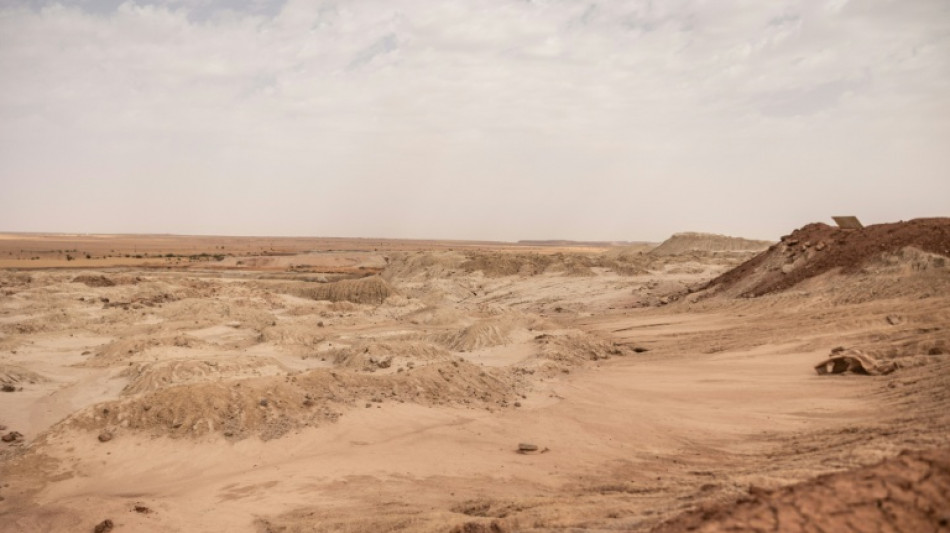
West Africa juntas tighten screws on foreign mining firms / Photo: © AFP/File

 Sabalenka races into US Open third round

 Chinese lucky loser stuns Jodar at US Open

 US Open under the influence: content creators spark debate
 NBA hammers Clippers over Leonard salary cap violations
 NBA strips five first-round draft picks from Clippers for Leonard salary cap violations
 Kane brace helps Bayern win German Cup opener
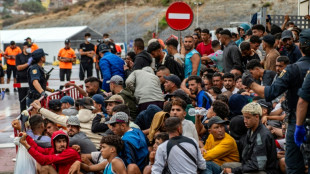 Migrant plight, local anger divide Ceuta one month after influx
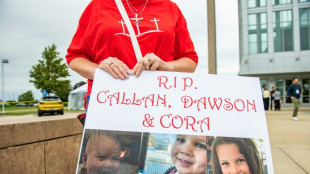
 Outrage as Maltese tycoon acquitted of reporter's murder
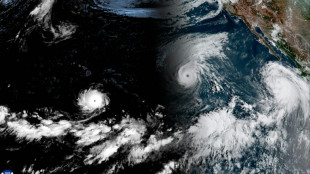 Rare train of Pacific cyclones fueled by historic El Nino
 Macron, King Charles hail UK-France ties after viewing Bayeux Tapestry
 Fury hits out at 'coward' Joshua as 'Battle of Britain' talks go on
 Maltese tycoon acquitted of masterminding reporter's murder
 George Clooney: a Hollywood icon and campaigner
 Europe, US closer than they look on tech rules, says EU tech chief
 Clooney honoured as Hollywood-light Venice Film Festival kicks off
 Third-ranked Pegula, Medvedev power into US Open third round
 Davis-Woodhall a doubt for Ultimate Championship after car crash
 Third-ranked Pegula powers into US Open third round
 Uber says laying off 'about 10%' of workforce worldwide
 US judge rejects bid to break up Google's ad business
 Rupert Murdoch 'very happy' to be played by Guy Pearce in new film
 Wall Street stocks rise despite bond yields, oil rising
 Brennan claims third Vuelta victory in stage 11 sprint

 Nepal flood survivors cling to zipline to cross treacherous river
 US Treasury issues $1 coin with Trump's face on it
Earlier this month, soldiers swooped by helicopter into a vast mining complex in western Mali and made away with three tonnes of gold -- all done on the orders of the military government.
The confiscation at the Loulo-Gounkoto complex, majority owned by a Canadian firm, is one of the most extraordinary twists in a long-running confrontation waged by juntas in Africa's volatile Sahel region against Western mining firms.
The militaries who took power in Mali, Burkina Faso and Niger in recent years have stepped up pressure on foreign firms -- promising greater sovereignty and a fairer distribution of revenue from the lucrative mining sector.
After weeks of escalating tension with Canadian company Barrick Gold, Malian authorities carried out an order in mid-January to seize gold stocks at Loulo-Gounkoto –- one of the world's largest gold complexes.
Barrick Gold owns 80 percent of Loulo-Gounkoto, with Mali retaining the rest.
The soldiers who arrived unannounced by helicopter "confiscated the phones of those who tried to film them", one miner told AFP, asking for anonymity due to the sensitive subject.
The only images of the operation were shared covertly.
He said when resurfaced from the mine, colleagues showed him a photo of two helicopters about to carry the gold back to a bank in the capital Bamako.
The gold's value is estimated between $260 and $290 million, according to market data and experts, an immense sum for one of the poorest countries in the world.
Authorities are demanding hundreds of millions of dollars in arrears from Barrick Gold and in November detained four of the company's Malian employees.
In the same month, they arrested the CEO and two employees of Australian firm Resolute Mining, before releasing them after the company struck a $160 million deal with the government.
Other miners such as Canada's Allied Gold, B2Gold and Robex have previously agreed to review the terms of their operations and pay to settle their tax and customs disputes.
- 'Force negotiations' -
Military leaders in the Sahel have vowed to claw back sovereignty over their natural resources, which they say have been unfairly sold off to foreign operators.
Gold mining provides a quarter of Mali's national budget.
In Burkina Faso, it accounts for around 14 percent of national revenue, according to official figures.
The juntas, who have turned their backs on former colonial power France and regional bloc ECOWAS, must find a way to finance their long-running battle against jihadism and the multiple crises plaguing the region.
At the end of last year, Niger authorities took control of French nuclear group Orano's uranium mining unit after withdrawing its licence.
Niger is the world's seventh-largest producer of uranium, accounting for 4.7 percent of global supply.
In 2023, Burkina Faso's junta said it had requisitioned 200 kilograms of gold extracted by a subsidiary of the Canadian group Endeavour Mining for "public necessity".
Ahamadou Mohamed Maiga, who heads an extractive industries consultancy, hailed the move by the juntas to denounce "grossly unfair contracts", which he said were conducive to tax evasion.
"What is more violent? Dealing with contracts that corner us or seizing a stock of gold because we want to force negotiations," asked Oumar Baba Sy, a Malian mining engineer and consultant.
- 'Nobody has monopoly' -
Since seizing power, the region's military leaders have reformed their mining codes.
Mali has freed up more than 700 billion CFA francs (more than $1 billion) by negotiating new contracts or renegotiating old ones, economy minister Alousseni Sanou said at the end of December.
The reforms should generate "a net additional gain of around 600 billion CFA francs" ($950 million) a year, or 20 percent of the national budget, Sanou added.
Mali's junta chief General Assimi Goita said in January that the new revenues had made it possible to pay off part of "the internal and external debt and to pay for military equipment".
Nina Wilen, Africa director at the Egmont Institute for international relations, said the region's new military rulers were playing to public opinion by adopting a rhetoric based on sovereignty and the rejection of most Western partners.
The risk is scaring off foreign investors, she added.
Mining engineer Sy played down the danger by pointing to other actors looking to expand their influence in the Sahel, such as China, Russia and Turkey.
The current pressure on foreign firms will have a short-term impact, he said, as "new private partners are arriving from everywhere" driven by the global demand for strategic minerals.
"Nobody has a monopoly," he said.
"If you don't want to invest in these countries, others will."
R.Buehler--VB