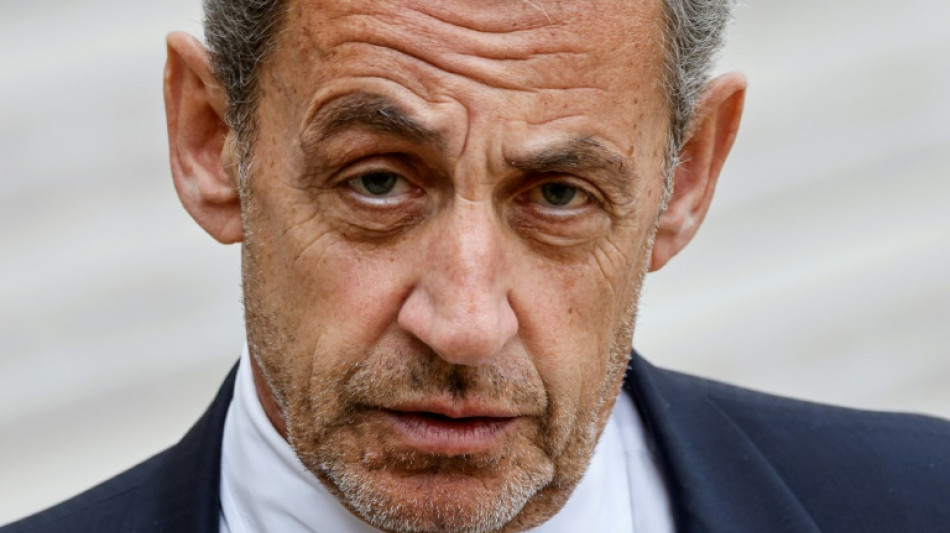
Sarkozy must wear electronic tag after losing graft case appeal / Photo: © AFP

 France far right expels policeman member over racist remarks

 Pakistan collapse to 133 all out against England in 3rd Test

 Heat forces French champagne makers to stiffen their drink

 Iran war drives oil prices to $100 per barrel as Tehran strikes ships
 Pakistan collapse to 100-7 against England in 3rd Test

 Workers, migrants focus of documentaries by Oscar winners at Venice

 Nepal seeks survivors two weeks after deadly floods

 Bangladesh measles crisis kills more than 1,000 children
 Pakistan collapse to 26-4 against England in 3rd Test
 EU helps cities tighten screws on Airbnb, holiday rentals
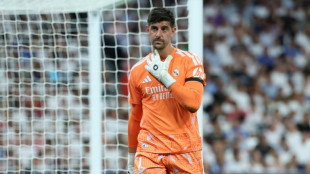 Courtois to put Belgium career on hold
 RavenDB Launches Quill to Bring Production AI Agents to Enterprise SQL Systems, No Migration Required
 Affleck family affair at Venice for Casey's latest film 'Company'
 Yemen rebels report fresh Saudi strikes as conflict deepens

 'They're playing with our lives': AI researcher quits Anthropic
 Series finale of 'Babylon Berlin' offers dark mirror for today's Germany
 Zara owner Inditex boosts profits as sales grow across board

 Alcaraz out in latest US Open finish, Sabalenka through on marathon day

 Brent breaks $100 on Mideast flare-up, fanning inflation fears

 South Korea video game tycoon to pay record $1.5 bn in divorce
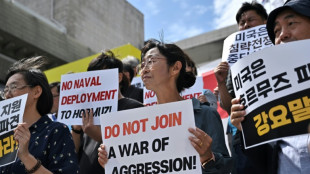
 'Long live Chairman Mao': Supporters pay respects to founder of Communist China
 Sweden immigration restrictions spark healthcare concerns

 EU to help cities tighten screws on Airbnb, holiday rentals
 'Our year': Kane and Bayern primed for Champions League tilt
 Australian World Cup star Volpato fined over positive cocaine test
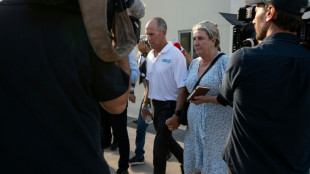
France's highest appeals court ordered former president Nicolas Sarkozy to wear an electronic tag for a year Wednesday -- a first for a former head of state -- after confirming his convictions for corruption and influence peddling.
It also barred him from public office for three years.
The verdict means he could face 12 months under house arrest, depending on what a judge later decides.
Sarkozy, 69, who had been found guilty of illegal attempts to secure favours from a judge, will "evidently" respect the sentence, his lawyer Patrice Spinosi told AFP.
But he will take the case to the European Court of Human Rights within weeks, Spinosi added.
That will not, however, hold up Wednesday's sanction, Sarkozy having exhausted all the legal avenues in France.
Spinosi said it was a "sad day" when "a former president is required to take action before European judges to have condemned a state over whose destiny he once presided."
He said his client was "calm and determined".
But Sarkozy himself said he was "not ready to accept the profound injustice that is being done to me".
His appeal to the European court in Strasbourg "could, alas, lead to a condemnation of France", he said. This could have been avoided, he added, "if I had benefitted from a level-headed legal analysis".
- 'Corruption pact' -
In 2021, a lower court found that Sarkozy and his former lawyer, Thierry Herzog, had formed a "corruption pact" with judge Gilbert Azibert to obtain and share information about an investigating judge, in a case uncovered by wiretapping.
The deal was done in return for the promise of a plum retirement job for the judge.
The trial came after investigators looking into a separate case of alleged illegal campaign financing wiretapped Sarkozy's two official phone lines, and discovered that he also had a third, unofficial one.
It had been taken out in 2014 under the name "Paul Bismuth", and only used for him to communicate with Herzog. The contents of these phone calls led to the 2021 corruption verdict.
Before Sarkozy, the only French leader to be convicted in a criminal trial was his predecessor Jacques Chirac, who received a two-year suspended sentence in 2011 for corruption over a fake jobs scandal. But Sarkozy is France's first post-war president to have been sentenced to serve time.
The court sentenced him to a three-year jail term, two of which were suspended with one to be served in home detention with an electronic tag allowing his movements to be monitored.
That verdict had already been upheld once, by an appeals court, last year.
- Other cases pending -
The former president is to be summoned before a judge who will determine the details of his house arrest.
Sarkozy has always insisted he was innocent.
The right-winger was president for one term between 2007 and 2012, failing to win re-election. He has been embroiled in legal troubles ever since leaving office.
The "Bismuth" case comes on top of separate cases about campaign overspending, and the alleged financing by Libya of Sarkozy's victorious 2007 election campaign.
Financial crimes prosecutors accuse Sarkozy and 12 others of seeking millions of euros from the regime of then Libyan leader Moamer Kadhafi.
That case is to go to trial in January.
Despite his legal problems, Sarkozy continues to enjoy considerable influence and popularity on the right of French politics and has the ear of President Emmanuel Macron, with whom he is known to meet on occasion.
Sources have told AFP that Sarkozy held talks at the Elysee earlier this month in a bid to persuade Macron not to appoint veteran centrist Francois Bayrou as prime minister. The former president is widely known to despise him.
After a long hesitation, Macron went ahead and named Bayrou.
G.Haefliger--VB