
What to know about the total solar eclipse due in August / Photo: © GETTY IMAGES NORTH AMERICA/AFP/File

 Former Grand Slam winner Wawrinka ends tennis career

 Brazil's Flavio Bolsonaro flees to US after election loss

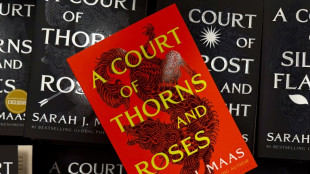 'Faerie' nights: 'ACOTAR' fans finally get their book

 American woman convicted of getting military training from Islamic State

 Israel opposition holds narrow edge over Netanyahu in first projections

 Floriani hits maiden goal as Lazio go top

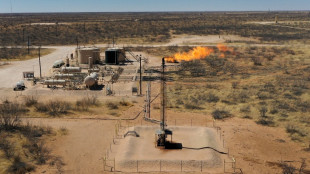 Trump set to drastically loosen oil and gas sector's methane rules

 Storied Paris department store seeks bankruptcy protection

 Xhaka, Embolo can return to Swiss squad after fake Covid docs affair

 Allegri suspended for two Serie A games after red card

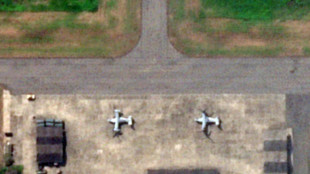 Flight data, satellite images reveal growing US role at Ecuador base

 McInnes feels 'guilt' ahead of Hearts return with Rangers

 Brazil's Lula turns 81, vows to work '24 hours a day'
 Boeing releases cautious growth plan as shares fall sharply

 Exiled Russian dissident Navalnaya warns dictators becoming 'more cunning'
 Bayern 'risk' reaps huge reward for Ballon d'Or winner Kane
 Record turnout as Israeli voters deliver verdict on Netanyahu

 Iraola says Isak 'feels the trust' after Liverpool scoring streak

 French media protest manhandling of journalists at far-right party rally

 EU seeks deportation powers for beefed up border agency

 Two charged with UK security offences over airbase plot: police

 Maresca defends Donnarumma, Guehi after Man City defeat
 Nordic leaders call Putin as local truce begins in Ukraine

 Osaka unveils crane outfit in Tokyo before win over Paolini

 Ronaldo in line for Portugal return after fallout with coach

Day will briefly turn into night across a swathe of northern Spain on August 12, when the Moon will completely cover the Sun during a rare total solar eclipse.
Here is what you need to know about the total eclipse, which is the first visible in mainland Europe since 2006.
- What is an eclipse? -
Eclipses happen when the Moon passes directly between the Sun and Earth, casting a narrow band of shadow across our planet.
It creates a strange twilight during which temperatures drop, shadows appear at strange angles and some animals go to sleep.
These odd phenomena convinced ancient cultures that eclipses were signs of the apocalypse -- or messages from the gods.
However it is really the result of a "cosmic coincidence," according to NASA.
"Even though the Sun is about 400 times bigger than the Moon, it is also about 400 times farther away," the US space agency says.
This means that for people standing in the right spot, the Moon totally covers the Sun -- revealing its outer atmosphere called the corona.
- Where can it be seen? -
On August 12, a remote region of northern Russia will be the first to see the total eclipse.
The "path of totality", as it is known, will then cross over Greenland, Iceland, Spain and the northeastern tip of Portugal.
In Spain, it will roughly move from the northern city of Oviedo to the island of Mallorca.
- How long will it last? -
For observers in Spain, the total eclipse will last under two minutes just before sunset.
The northern city of Burgos, for example, will be plunged into darkness for exactly one minute and 48 seconds.
It will last slightly longer in parts of Russia and Greenland, though still under two-and-a-half minutes.
However, partial eclipses -- which occur as the Moon starts and finishes crossing the Sun -- will last around one hour and 45 minutes.
Partial eclipses will also be visible in most of Europe, Canada, the northern United States and northwest Africa.
- How rare is it? -
One or two solar eclipses occur roughly every year. However the small band of totality means that the same area may wait 400 years before seeing another one.
On August 2, 2027, a total solar eclipse will cross southern Spain, northern Africa and the Arabian Peninsula.
Some media have dubbed it the "eclipse of the century" because its totality will last six minutes and 23 seconds, the longest of the 21st century.
Spain will be treated yet again on January 26, 2028, when an annular -- or "ring of fire" -- eclipse will cross southern areas.
- Do you need protection? -
Yes. It is important not to look directly at the Sun during an eclipse -- it can cause serious eye damage.
Experts recommend specifically designed eclipse glasses which filter UV rays that meet the standard ISO 12312-2:2015.
There are no pain receptors in eyes to warn the brain they are being injured, so problems only appear later.
Following a total solar eclipse in the United States in 2024, the rate of people googling "my eyes hurt" surged, research has shown.
F.Fehr--VB