Countries agree to overhaul WHO funding model / Photo: © AFP/File

 Schools closed as Indonesia battles wildfires

 Swiatek dominates Shnaider to set up Toronto semi with Svitolina
 Oil prices rise further as hopes for Hormuz deal fade

 One year after Putin-Trump summit, 'spirit of Anchorage' dissipated

 Farage vs Count Binface: What to know about UK snap poll

 Torment of Afghan fathers as daughters deprived of education
 Return of displaced Syrian Kurds to hometown suspended after violence
 Swiatek races past Shnaider into Toronto semi-finals
 Meta pushes global AI vision amid race with OpenAI, Anthropic and China
 US judge ends graft case against India's Adani

 Anderson retires after 10 MLB seasons after 'too much pain'
 Colombia in state of emergency as quake kills 111

 Britain's Amy Hunt wins European women's 100m gold

 Trump order pushes for overhaul of childhood vaccine schedule
 Global stocks mixed while oil prices jump on Hormuz

 Turkey MPs back historic law on reintegrating Kurdish militants
 'Dreams disappear' as Gaza students await evacuation to Italy

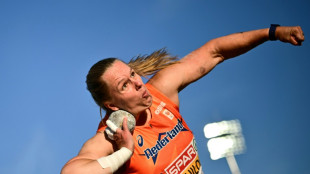 Third European gold for Schilder in women's shot put

 Golden relay double for Britain at Europeans as Marchand settles for silver
 US had hottest month on record in July
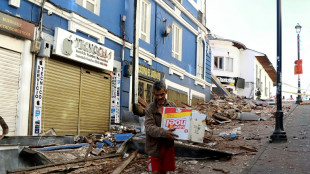 Colombia quake leaves 69 dead, with more trapped under rubble
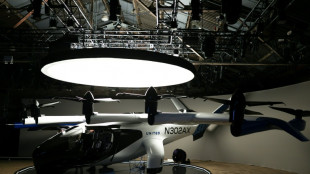
 Bookmap Announces Partnership with Plus500 to Expand Futures Trading Access
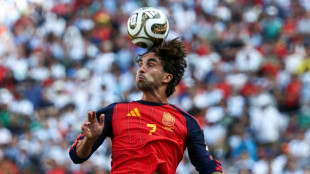 Barcelona turn down PSG offer for Torres
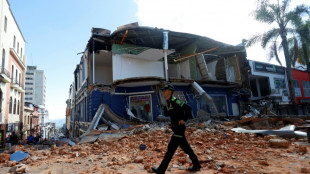
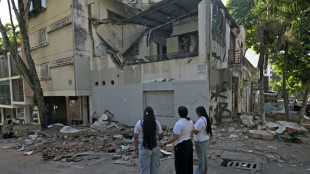 Buildings collapse as major quake rocks Colombia and neighbors
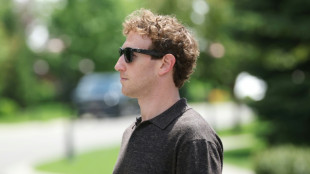 Meta releases new AI model as Zuckerberg lays out vision
The World Health Organization's member states agreed Tuesday to overhaul how they fund the UN health agency, giving it much more money to spend on its own priorities.
The budget revamp will give the WHO a more stable income stream and control over a much bigger portion of the funding flowing through its Geneva headquarters.
The change is aimed at strengthening the organisation and making it more agile when responding to global health crises like the coronavirus pandemic.
Countries currently channel most of their cash into health projects of their own choosing.
But member states will now transition towards giving half of their WHO contributions as straightforward membership fees instead, giving the organisation more flexibility.
WHO chief Tedros Adhanom Ghebreyesus, re-elected Tuesday, has made transforming the agency's finances a key plank of his leadership.
"This will be a game-changer for WHO," he told the World Health Assembly, the annual gathering of the organisation's member states, in his victory speech.
Before Tuesday's decision, he had warned countries that it was "now or never", after the Covid-19 crisis exposed the shortcomings of the current set-up.
"The pandemic has demonstrated why the world needs WHO, but also why the world needs a stronger, empowered and sustainably financed WHO," Tedros told the assembly, which serves as the agency's decision-making body.
- Room for manoeuvre -
The WHO gets its money from its 194 member states and non-governmental organisations.
Nations' membership fees -- "assessed contributions" calculated according to wealth and population -- account for less than one-fifth of the WHO's funding.
Most of it currently comes via "voluntary contributions" from member states and donors, which go towards outcomes specified by them.
The organisation therefore has limited leeway to respond to crises like Covid-19, the war in Ukraine and other health emergencies.
The membership fee portion will rise to 50 percent by the 2030-2031 budget cycle at the latest.
In return, the WHO will be expected to implement reforms, including towards more transparency on its financing and hiring.
Changing the funding model will help the WHO implement its priorities "more effectively and efficiently", Tedros said Tuesday.
Rather than spending time scrambling to find money, "You're telling us to focus on the programmes, and the funding will be taken care of."
"You are ensuring the stability of our organisation."
The approved two-year programme budget for 2022-2023 is $6.12 billion. The total is up five percent from the $5.84 billion of the 2020-2021 budget.
According to the latest figures, assessed contributions account for only $957 million, while specified voluntary contributions make up $3.7 billion, highlighting the imbalance Tedros wants to correct.
The biggest assessed contribution membership fees are from the United States ($219 million), China ($115 million), Japan ($82 million), Germany ($58 million) and Britain ($44 million).
- Huge discrepancy -
The new proposals were put forward by a working group tasked with finding a long-term solution for the WHO's finances.
Chairman Bjoern Kuemmel said the group found a "huge discrepancy" between what member states expected the WHO to do and how they funded the organisation.
He told an assembly session that the group's recommendations were "truly groundbreaking because they will enable to WHO to be the leading and coordinating authority in global health: well-positioned and well-financed".
The German health official said assessed contributions would go up by 20 percent in the next budget alone, to roughly $1.2 billion.
New Zealand's Health Minister Andrew Little said the changes would maintain the "momentum and clear-sightedness" triggered by the pandemic.
"A strengthened, coherent global system for health emergencies requires more investment in health -- but more cannot be achieved unless the WHO is positioned and appropriately financed to deliver," he said.
M.Odermatt--BTB