Health insurers: the 800-pound gorilla in profit-driven US system / Photo: © AFP

 Macron urges Europe to develop 'crewed spaceflight' programme
 Deals worth billions to be signed as UAE leader visits Germany
 Zamanat Targets GCC’s $250 Billion SME Financing Gap With Up to $100 Million Tokenized Private Credit Fund

 Sri Lanka court revokes monk's pardon, orders return to prison

 'Hopeless, stuck, afraid': US deportees in limbo in Cameroon

 Mount Fuji ends hiking season with landslide, two rescues

 Seahawks beat Patriots again in NFL opener

 Asian Games begin with Qatar basketball win, nine days before opening ceremony

 Stocks sink as oil rally fans inflation and rate hike fears

 Argentine industry reels from Milei's free-market revolution

 Women quit South Korea's grind for diving tradition

 Bayeux Tapestry 'mania' sweeps UK as sold-out exhibition opens

 August hottest month ever recorded globally: EU monitor

 Duplantis leads creme de la creme at 'game-changing' Ultimate Championship

 Sjobo, cradle of Sweden's now-mainstream anti-migrant sentiment

 Israeli-made film about Gaza civilian deaths to debut in Venice

 Stars ready for busy Toronto International Film Festival
 Rubio defends anti-drug boat strikes, warns of cartel 'cancer'

 Rybakina books US Open semi against Gauff, secures No.1 ranking

 Pegula aiming to thwart Sabalenka three-peat in US Open semis

 'Not normal' US Open scheduling under-fire after late-night finishes

 Luis Enrique hails 'marvellous' Dembele as PSG win big in Champions League

 Liverpool's Iraola 'lucky' after first taste of Champions League

 Resurgent Zheng takes positives from storming US Open run

 Odegaard gives Arsenal winning Champions League start at Napoli

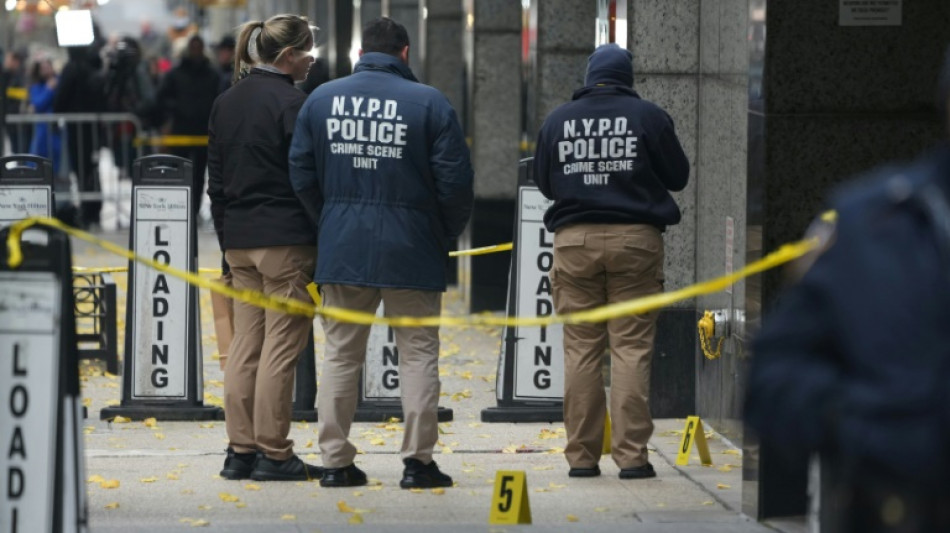
Last week's slaying of UnitedHealthcare executive Brian Thompson has brought renewed attention to the widespread dissatisfaction with the American health care system, even as prominent leaders have condemned the killing.
Reports that the casings of the bullets fired by suspected shooter Luigi Mangione had the words "depose, deny, delay" inscribed on them prompted horror stories on social media about health insurers who use those very tactics to get out of paying for medical tests or cancer treatment.
Such fights with sick and ailing consumers are only one of the gripes many have with a health system that has also been criticized for mystery billing practices, opaque middlemen, confusing jargon and overpriced drugs.
While surveys suggest pharmaceutical companies may be even more disliked than health insurers, the latter occupies a more foundational role in the profit-driven American system that has evolved over recent decades.
On the continuum between totally private and completely government-run, the US health care system is "more free-market than average," said Greg Shaw, a political science professor at Illinois Wesleyan University.
But the "hybrid" nature of a health system mixing private and public governance is not the US system's most unusual trait: the country is a true "outlier" as the only developed economy that doesn't guarantee health care as a right, Shaw said.
The free-market ethos has created an enormous berth for insurers such as UnitedHealth, which spent nearly $15 billion on dividends and share buybacks in 2023. The evening before Thompson was shot, UnitedHealth Group projected 2025 revenues of at least $450 billion, up nearly 40 percent from the level three years ago.
- Entrenched player -
Shaw described the position of private insurers in US health care as entrenched.
The industry dates to the 1920s in Texas, when health insurance was invented to help hospitals with unpaid invoices and help patients who wanted access to care.
Originally led by the non-profit Blue Cross plans, the system took off after World War II when companies facing labor shortages offered health insurance instead of higher pay. Private companies Aetna and Cigna emerged in the 1950s.
"The new demand for health insurance presented a business opportunity and spawned an emerging market with other motivations," journalist and physician Elisabeth Rosenthal writes in "An American Sickness," published in 2017.
"Once acceptance of health insurance was widespread, a domino effect ensued: hospitals adapted to its financial incentives, which changed how doctors practiced medicine, which revolutionized the types of drugs and devices that manufacturers made and marketed."
While progressives like Vermont Senator Bernie Sanders have backed government-run health care, there has been no serious move in recent decades to excise insurers from the American health care system.
After Bill Clinton won the White House in 1992, his ill-fated health care reform proposal preserved the private insurance system. The 2010 Affordable Care Act, signed into law by Barack Obama, included provisions meant to control costs and broaden coverage, but was again built around private insurance.
Outgoing President Joe Biden has taken aim at health care profiteering by drugmakers and other players but has not primarily focused on insurers.
Federal Trade Commission Chair Lina Khan launched a "cross-government inquiry" with other agencies on the impact of "corporate greed in health care." But the effort primarily targeted private equity firms that might attempt to acquire health care assets.
A September 2024 survey by YouGov ranked health insurance fifth highest in terms of industries that people say should be regulated more heavily. That means the public views health insurers as less trustworthy than pornographers or bankers, which ranked lower, but more reliable than companies in artificial intelligence, pharmaceuticals, social media and firearms, which ranked first through fourth.
A December 5 YouGov poll after the shooting found 59 percent of Americans "very satisfied" or "somewhat satisfied" with their health insurance.
Shaw thinks the health insurance industry could face a significant confrontational push from Washington in the coming years due to the rising concerns about people carrying heavy medical debt.
But he does not see the current wave of attention as a meaningful challenge, in part because the sharpest criticism can be dismissed as coming from extremists who condone violence.
"I don't think this is in the industry's George Floyd moment," he said. "I don't think this is going to catalyze soul-searching on the part of the industry and regulators."
R.Flueckiger--VB