
UK's aristocratic lawmakers prepare for life after the Lords / Photo: © AFP

 F1 drivers expecting crashes, chaos at new Spanish GP circuit

 NGO chief sees 'hypocrisy' in Afghan women's rights calls amid aid cuts

 Latin America could see fresh disinformation after Meta changes

 UAE to invest 40 billion euros in Germany, including for data centres: Berlin

 2030 Winter Olympics chief Grospiron quits

 AI Risks to Enter 60–80% of Liability and Cyber Insurance Underwriting by 2028, ScienceSoft Predicts

 Ultimate Championship as big as Olympics - and more lucrative, says Bolt

 Diana's 'revenge dress' to go up for auction in New York
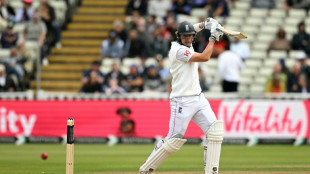 England dominate Pakistan, close in on Test series sweep

 Russia trafficking foreigners to fight in Ukraine, Amnesty says

 Global Tokenized Real Estate Market to Hit up to $3 Trillion by 2030, ScienceSoft Predicts

 Stocks fall as fresh oil surge fans inflation fears

 August hottest month ever recorded globally as huge El Nino emerges

 'Bragging rights' up for grabs at game-changing Ultimate Championship, says Coe

 ECB hikes borrowing costs to combat Mideast energy shock

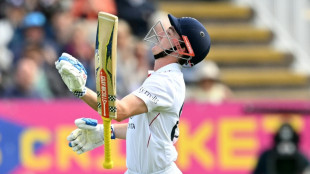 England turn screw in 3rd Test against Pakistan

 France will not support Infantino in FIFA election: federation chief

 In their words: Israeli forces describe AI-backed Gaza killing in new film

 Yemen's Houthis seize key city on Red Sea: military source

 Oil prices extend gains as markets await ECB rate outlook

 Wars pose a test as India hosts BRICS summit with China, Russia, Iran leaders

 Messi to buy second Spanish lower league club

 Pochettino calls for Chelsea to lose 2016-17 Premier League title

 North Korea leader's daughter believed to have younger sibling: Seoul

 Wars pose a test as India hosts BRICS summit with Russia, Iran leaders

UK hereditary lawmaker Richard Fletcher-Vane, better known as Lord Inglewood, will soon no longer commute the few hundred miles from his country house in northwest England to the House of Lords in London -- and he is not happy about it.
"Anybody who's sacked doesn't like it, particularly if you think you're being sacked for what per se is a bad reason," he told AFP at Hutton-in-the-Forest, his vast home dating back to 1350 near Penrith, Cumbria, 300 miles (480 kilometres) from Britain's capital.
The Labour government elected earlier this year is axing the 92 seats reserved for peers who inherited their position as a member of an aristocratic family, as the centre-left party moves to reform parliament's unelected upper chamber.
Britain is an anomaly among Western governments in having such lawmakers, who hold titles such as duke, earl, viscount and baron.
Lesotho in southern Africa is the only other country in the world with a hereditary element in its legislature, according to the UK government.
It is "out of step with modern Britain," government minister Nick Thomas-Symonds said in September as he introduced the legislation that will scrap the Lords' bloodline members.
The proposals were quickly approved by the House of Commons lower chamber and will be debated in the Lords on Wednesday.
Fletcher-Vane, who travels by train to the Lords most weeks, took his seat in 1989 after he became 2nd Baron Inglewood on the death of his father.
He served as a junior minister for the Conservatives in the mid-1990s and is a former member of the European Parliament.
The 73-year-old now sits as an independent cross-bencher.
At Hutton-in-the-Forest, where 500-year-old tapestries adorn the walls, Fletcher-Vane acknowledged that peerages by birthright are anachronistic in today's world.
But he also defended the contribution of many hereditary peers, some of whose titles have been in their family for centuries.
- 'I've had an ordinary life' -
"I've always tried to take it seriously," Fletcher-Vane said, claiming to be "a voice" for the north of England.
The Lords, whose primary role is to scrutinise government legislation, comprises around 800 members, most of whom are appointed for life by outgoing prime ministers, sometimes as a less-than-subtle reward for political loyalty.
Members include former MPs, people nominated after serving in prominent public- or private-sector roles and senior Church of England clerics.
John Attlee, the 2nd Earl Attlee and grandson of former Labour prime minister Clement Attlee, is another hereditary peer preparing to hand back the red ermine-clad robes adorned by lords.
He entered the chamber in 1992 after a career in road transport operations and as a member of the British Army's volunteer reserve force.
"Because I've had an ordinary life, I have experience and knowledge that others, or very few others have in parliament," the 68-year-old told AFP over coffee in the Lords' guest room.
- 'Life beyond' the Lords -
Prime Minister Keir Starmer's party, which in July returned to power for the first time in 14 years, is resurrecting reforms begun under Tony Blair's Labour government in the late 1990s.
Blair had intended to abolish all the seats held by hundreds of hereditary members who sat in the chamber at that time. But he ended up retaining 92 in what was supposed to be a temporary compromise.
"Reform of the House of Lords has been on the political agenda on and off to some extent for well over a century," Daniel Gover, a constitutional expert at Queen Mary University of London, told AFP.
That led hereditary peers to feel for decades that they were on borrowed time.
"I always expected that the system would have been changed before my turn came," Attlee said.
But reform has proven to be a thorny issue for successive administrations, in part because officials have struggled to propose better alternatives.
The government says it wants to ultimately replace the Lords with an alternative second chamber more representative of the UK.
But campaign groups such as the Electoral Reform Society want much wider reforms.
It notes that the Lords is "the second-largest legislative chamber in the world after China's National People's Congress", and calls for a "smaller, elected house" to work alongside the elected Commons.
Some peers are criticised for rarely turning up. Those who do are eligible to claim a daily allowance of up to 361 pounds ($460) plus travel expenses.
Fletcher-Vane said he thinks scrapping hereditary peers is a "crude" reform when he believes he contributes more than many life peers.
He said his last day, likely next year, will be a "sad" one, but not completely unfamiliar since he previously lost a European Parliament seat.
"I've been through it all before and there's life beyond it," he said.
U.Maertens--VB