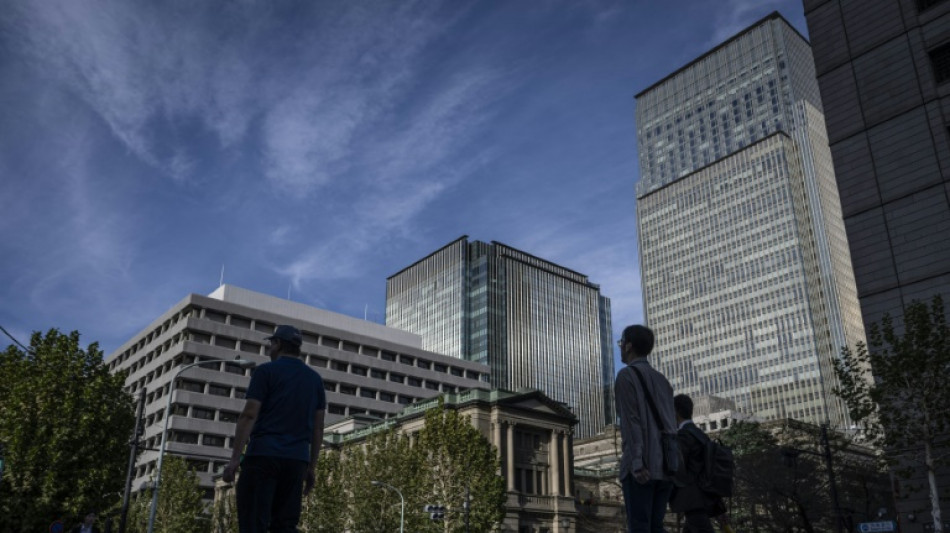
Bank of Japan warns of 'high uncertainties' after election / Photo: © AFP

 Hong Kong unveils plan to align economy with China's goals
 Brazilian voters the latest to eye Bukele security model with envy

 EU chief hosts Canada's Carney in push to 'deepen' alliance

 EU chief to unveil social media, gaming curbs for under-15s
 Saudi says Houthis target Mecca, warn of 'red line'

 Asian stocks stutter as traders prepare for Fed decision
 US touts its power, avoids Iran war at G20 Energy meeting

 Dead animals, barren fields, and hunger - El Nino chokes Central America
 In hydropowered Bhutan, solar starts to rise

 Brazil's Supreme Court clashes over handling of probe involving judge

 Trump threatens to keep Kennedy Center shut if his name not added

 i-payout Expands U.S. Money Transmitter Licensing Footprint and Advances European EMI Strategy

 Artists exit Sheeran tour in solidarity with Macklemore pro-Palestinian comments
 Espi saves Real Madrid with late winner at Elche

 Liverpool pile on misery for Spurs in League Cup, Dowman dazzles for Arsenal

 Trump blasts Supreme Court justices over 'horrible' mail vote ruling

 Maduro ally pleads guilty to US money laundering charges

 Finnish president Stubb speaks to AFP about Trump, Russia and saunas

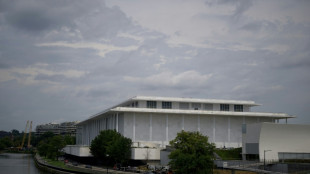 Trump says Kennedy Center to close after judge bars name change

 South Africa intensifies hunt after eight women found dead

 'Battle of Chile' documentary-maker Patricio Guzman dies, aged 85

 Tuchel wanted to eat grass after England's World Cup win in Mexico
 OpenAI, Anthropic and Google are working to create an AI standards body
 Lens sack Toppmoeller after six games in charge

 Rob Reiner son will not face death penalty, prosecutor says
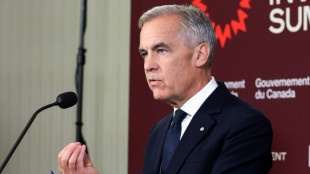
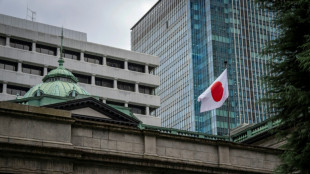
The Bank of Japan warned Thursday of "high uncertainties" following the ruling party's worst election result in 15 years, as it kept interest rates unchanged.
Prime Minister Shigeru Ishiba's coalition lost its majority in Sunday's snap vote, likely forcing him to head a minority government with support from other parties to pass legislation.
Businesses and economists worry that as concessions to other parties, Ishiba, 67, will offer tax cuts and higher spending, and go slow on reforms needed to improve Japan's competitiveness.
There are also concerns that the government may pressure the BoJ to take a break from the gradual normalisation begun this year of its ultra-loose monetary policy, even if it leads to a weaker yen.
Yuichiro Tamaki, head of the opposition Democratic Party for the People (DPP) -- which Ishiba has been courting for support -- on Tuesday urged the BoJ "to avoid making big policy changes now".
For a long time, the BoJ was an outlier among major central banks, sticking to its ultra-loose policy to spur inflation after the "lost decades" of stagnant or falling prices.
The BoJ ditched negative rates in March, lifting borrowing costs for the first time since 2007 and then again in July -- signalling more was to come.
The BoJ on Thursday kept its main short-term policy rate at 0.25 percent, as widely expected, warning of "high uncertainties surrounding Japan's economic activity and prices".
The bank also said it was paying "due attention" to other economies, particularly the United States ahead of presidential elections on November 5.
The BoJ again signalled that it would raise borrowing costs if inflation develops as it expects, saying the Japanese economy "is likely to keep growing at a pace above its potential growth rate".
The central bank said it expected inflation of 2.5 percent for the current fiscal year to March 2025 before moderating to 2.0 percent in the following two years.
- Outlier -
Before becoming leader of the Liberal Democratic Party (LDP) in September, Ishiba openly backed the BoJ continuing to normalise its policy.
But after the yen surged and stocks tumbled once he took office he rowed back, saying he did not believe Japan was "in the environment for further rate hikes".
The head of the LDP's junior coalition partner Komeito, meanwhile, announced his resignation from the post on Thursday after his party lost eight seats in the election, including his own.
The election left Komeito and the LDP, which has governed Japan almost non-stop since 1955, with a combined 215 seats, 18 short of a majority in the 465-lawmaker lower house.
The centrist DPP, which won 28 seats, officially told the LDP on Thursday it would not join a coalition, but agreed to "cooperate on a case-by-case basis".
A special legislative session will convene on November 11 for a vote to name the next prime minister, with Ishiba lacking enough support to maintain his position in the first round.
Whoever wins the most votes in a second round will become premier, even without a majority.
The DPP said it will symbolically back its leader Yuichiro Tamaki, effectively blocking the main opposition leader Yoshihiko Noda from gathering enough support for his own bid.
Former premier Noda is head of the Constitutional Democratic Party (CDP), which reinforced its position as the second-biggest with 148 seats, up from 96 at the last election.
"As far as the vote for the premiership, we communicated (to the LDP) that for the first and second rounds, we will vote Yuichiro Tamaki," DPP secretary general Kazuya Shimba said after meeting with LDP executives.
Stefan Angrick, an economist at Moody's Analytics, said that "abrupt policy shifts" were possible and that the longevity of Ishiba's government was in doubt.
"With the yen weakening, we expect another rate hike before the end of the year," Angrick said.
"Although some members of the LDP and opposition currently oppose rate hikes, we expect those voices to fade if the yen tumbles further."
R.Flueckiger--VB