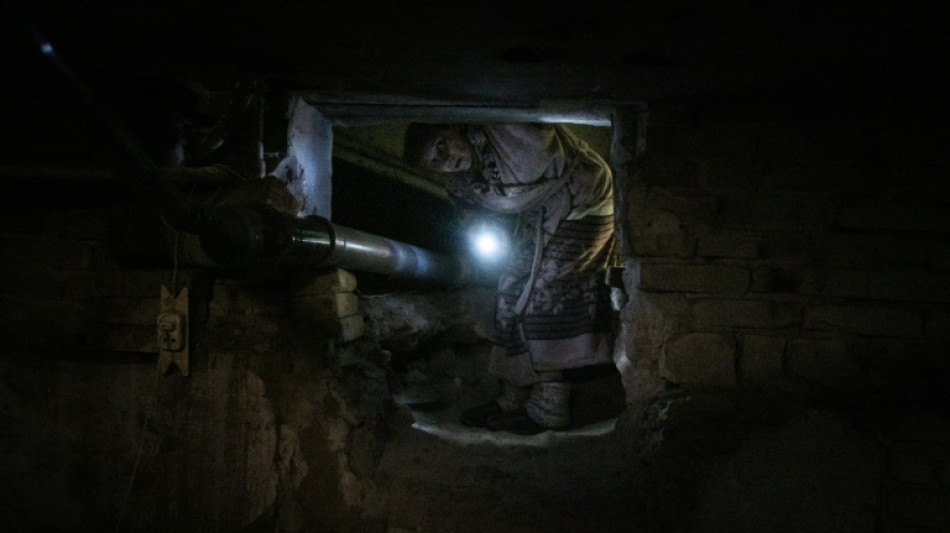
Russian radio voices sow fear in Ukraine war zone / Photo: © AFP

 Economic losses from natural disasters fall to $100 bn in first half of 2026: Swiss Re
 Colombia scrambles to find survivors as quake kills 132

 Singapore says AI-related demand lifting economy

 Demeter Tactical Investments (ME) Limited bolsters governance with two board appointments

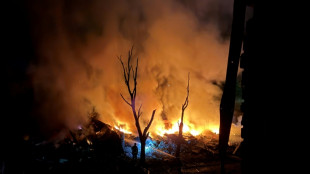 Russian barrage on Ukraine kills 9, wounds dozens
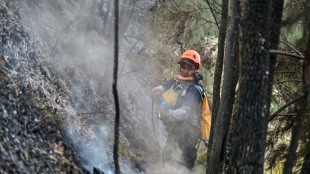 Schools closed as Indonesia battles wildfires

 Swiatek dominates Shnaider to set up Toronto semi with Svitolina

 Oil prices rise further as hopes for Hormuz deal fade

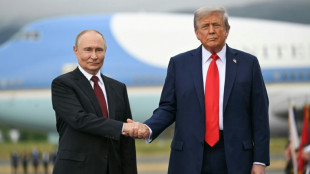 One year after Putin-Trump summit, 'spirit of Anchorage' dissipated

 Farage vs Count Binface: What to know about UK snap poll

 Torment of Afghan fathers as daughters deprived of education

 Return of displaced Syrian Kurds to hometown suspended after violence
 Swiatek races past Shnaider into Toronto semi-finals
 Meta pushes global AI vision amid race with OpenAI, Anthropic and China

 US judge ends graft case against India's Adani

 Anderson retires after 10 MLB seasons after 'too much pain'

 Colombia in state of emergency as quake kills 111

 Britain's Amy Hunt wins European women's 100m gold

 Trump order pushes for overhaul of childhood vaccine schedule

 Global stocks mixed while oil prices jump on Hormuz

 Turkey MPs back historic law on reintegrating Kurdish militants
 'Dreams disappear' as Gaza students await evacuation to Italy

 Third European gold for Schilder in women's shot put

 Golden relay double for Britain at Europeans as Marchand settles for silver

 US had hottest month on record in July
The portable radio in the dark cellar of the rocket-damaged kindergarten was transmitting news in Russian over whistling airwaves about the Kremlin's military triumphs in Ukraine.
The six frightened women and lone man cowering in the heart of the east Ukrainian war zone had no idea whether to believe the monotone voice -- or who was actually patrolling the streets of the besieged city of Lysychansk above their heads.
All they knew was that their building was hit a few days earlier by a Grad volley that left the tail end of one of the unexploded rockets sticking out of the pavement at a sharp angle just steps from the back door.
Their feverish fears vacillated between the idea that their shelter's lone entrance might get blocked by falling debris and that the Kremlin's forces might come knocking unannounced.
"The Russians on the radio just said that they have captured Bakhmut. Is that true?" Natalia Georgiyevna anxiously asked about a city 30 miles (50 kilometres) to the southwest that remains under full Ukrainian control.
"We do not really know anything," her neighbour Viktoria Viktorovna added from a corner cot positioned just outside the beam of light illuminating a lone patch of the dank cellar.
"I guess we still have the Ukrainians here, no?"
- Mysterious voices -
Nearly three months of war have transformed this coal mining city of 100,000 mostly Russian speakers into a wasteland that lacks everything from water and power to cell phone service.
Most people who crawl out of their shelters during afternoon lulls in fighting make a beeline for the city's lone natural spring to stock up on water that they must boil to make safe to drink.
Some of the women in the kindergarten basement -- so frightened they only divulge their patronymics instead of their last names for fear of being discovered and punished -- said they had not ventured outside for two months.
This paralysing isolation is being compounded by haunting Russian and Ukrainian radio broadcasts that appear over random airwaves and present contradictory news.
The unidentified voices fade in and out and occasionally simply disappear.
"The Russians are saying they are winning and the Ukrainians are saying they are," Natalia Georgiyevna said.
"When we still had the internet, we could watch the news. But now... I have no idea who these voices are or where they come from."
- Information vacuum -
The concept of warring sides filling information vacuums with propaganda is not new.
Radio was a powerful Western weapon against the Soviet Union in the Cold War era that Moscow tried to jam.
Russia has been transmitting its take on the news across eastern Ukraine throughout an eight-year insurgency that preceded the Kremlin's all-out invasion on February 24.
The Lysychansk broadcasts are adding to a heightened sense of paranoia that appears to reign across the utterly lawless streets of an expansive industrial zone teetering on the edge of the east Ukrainian front for weeks.
The Russians are closing in from three directions on Lysychansk's sister city of Severodonetsk to the north.
The Ukrainians are fighting with all their might to keep the Russians from pushing south of a strategic river splitting the two cities.
This has left people such as coalminer Oleg Zaitsev worrying as much about the identity of the armed men whizzing around in battered cars as the shells randomly falling from the sky.
"I am mostly afraid that some stranger might drive up to me and ask for my papers. You never know these days whose side they are on," the 53-year-old said on his way back to his basement.
"They could be the Russians, and who knows what happens to you then."
- Urban conflict -
Residents said the Grad volley at the start of the week appeared to be aimed at a grade school on the opposite side of the yard that housed one of the Ukrainian units defending the city.
The controversial topic of military men occupying civilian buildings in times of urban conflict is every-present in the propaganda war being waged over Ukraine.
Some locals seethe at the idea. Others say Ukraine has no other choice because Russia was the one that brought war onto its cities.
Cellar dweller Yevghen Polchikha seemed less concerned about the morality of housing soldiers in schools than he was about the possibility of the Grad rocket still sticking out of the ground blowing up.
"It is just lying there," the 58-year-old said. "Our kindergarten seems sturdy enough. But you just never know."
I.Meyer--BTB