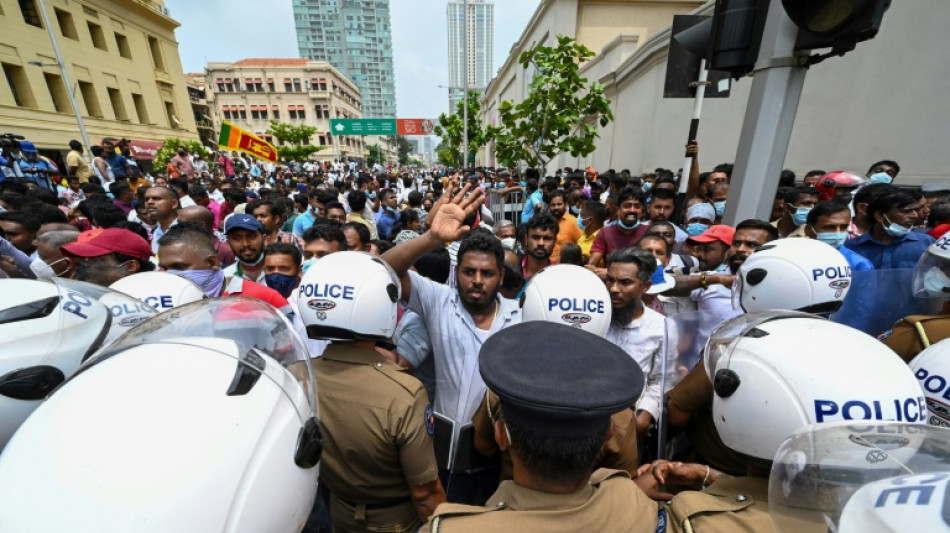
Curfew in Sri Lanka after day of deadly unrest / Photo: © AFP

 Ebola outbreak in DR Congo kills more than 2,000
 ChargeAfter Powers BYLD Finance Expansion into Consumer Financing for Equipment Retailers

 MEXC Upgrades RealStocks With Three New Features to Enhance U.S. Stock Trading Experience

 Israel demolishes home of slain Palestinian involved in deadly West Bank clash
 Liverpool fans seek clarity on Bezos bid to buy stake

 Solar eclipse sparks scramble for protective glasses across Europe
 Oil prices jump as US-Iran deal hopes falter

 Newly crowned world's best pastry chef stays true to artisan roots
 Johnson signs for Everton in McNeil swap deal

 Syria sentences Bashar al-Assad to death in absentia over atrocities

 Hong Kong's tech index plans expansion with AI and robotics themes
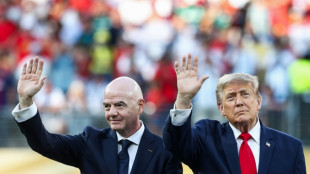
 The Infantino saga -- What they said
 Economic losses from natural disasters fall to $100 bn in first half of 2026: Swiss Re
 Colombia scrambles to find survivors as quake kills 132
 Singapore says AI-related demand lifting economy
 Demeter Tactical Investments (ME) Limited bolsters governance with two board appointments
 Russian barrage on Ukraine kills 9, wounds dozens
 Schools closed as Indonesia battles wildfires

 Swiatek dominates Shnaider to set up Toronto semi with Svitolina

 Oil prices rise further as hopes for Hormuz deal fade
 One year after Putin-Trump summit, 'spirit of Anchorage' dissipated
 Farage vs Count Binface: What to know about UK snap poll
 Torment of Afghan fathers as daughters deprived of education
 Return of displaced Syrian Kurds to hometown suspended after violence
 Swiatek races past Shnaider into Toronto semi-finals
Sri Lanka deployed thousands of troops and police Tuesday to enforce a curfew after five people were killed in the worst violence in weeks of protests over an unprecedented economic crisis.
Nearly 200 were also wounded Monday as prime minister Mahinda Rajapaksa resigned, but that did little to calm public anger.
He had to be rescued in a pre-dawn operation by the military Tuesday after thousands of anti-government protesters stormed his official residence in Colombo overnight, with police firing tear gas and warning shots to keep back the crowd.
"After a pre-dawn operation, the former PM and his family were evacuated to safety by the army," a top security official told AFP. "At least 10 petrol bombs were thrown into the compound."
The Rajapaksa clan's hold on power has been shaken by months of blackouts and shortages in Sri Lanka, the worst economic crisis since it became independent in 1948.
President Gotabaya Rajapaksa remains in office, however, with widespread powers and command over the security forces.
After weeks of overwhelmingly peaceful anti-government demonstrations, violence broke out Monday when Mahinda Rajapaksa's supporters -- bussed into the capital from the countryside -- attacked protestors with sticks and clubs.
"We were hit, the media were hit, women and children were hit," one witness told AFP, asking not to be named.
Police fired tear gas and water cannons to disperse crowds and declared an immediate curfew in Colombo, a measure later widened to include the entire South Asian nation of 22 million people.
Authorities said the curfew will be lifted Wednesday morning, with government and private offices, as well as shops and schools, ordered to remain shut on Tuesday.
US Ambassador Julie Chung tweeted that Washington condemned "the violence against peaceful protestors" and called on the Sri Lankan "government to conduct a full investigation, including the arrest & prosecution of anyone who incited violence".
- Shot dead -
Despite the curfew, anti-government protesters defied police to retaliate against government supporters for the attacks late into Monday night.
Outside Colombo, ruling party lawmaker Amarakeerthi Athukorala shot two people -- killing a 27-year-old man -- after being surrounded by a mob of anti-government protestors, police said.
"He then took his own life with his revolver," a police official told AFP by telephone.
Athukorala's bodyguard was also found dead at the scene, police said.
Another ruling party politician who was not named opened fire on protesters, killing two and wounding five in the deep south of the island, police added.
Angry crowds set alight the homes of more than a dozen pro-Rajapaksa politicians, along with some vehicles, while buses and trucks used by the government loyalists in and around Colombo were also targeted.
Several Rajapaksa homes were torched in different parts of the country, while a family museum in their ancestral village was trashed.
Doctors at the main Colombo National Hospital intervened to rescue wounded government supporters, with soldiers breaking open locked gates to ferry in the wounded.
"They may be murderers, but for us they are patients who must be treated first," a doctor shouted at a mob blocking the entrance to the emergency unit.
- Unity government -
Mahinda Rajapaksa, 76, said he was resigning to pave the way for a unity government.
But it was unclear if the opposition would join any unity administration, having before refused to govern with any members of the Rajapaksa family.
Under Sri Lanka's political system, even with a new unity government, the president will have the power to appoint and fire ministers as well as judges, and enjoy immunity from prosecution.
"Unless President Rajapaksa steps down, no one -- whether the masses in the streets or key political stakeholders -- will be appeased," analyst Michael Kugelman from the Wilson Center told AFP.
The protests came after the coronavirus pandemic hammered the island's vital income from tourism and remittances, which starved the country of foreign currency needed to pay off its debt.
This forced the government to ban many imports, leading to severe shortages, inflation and lengthy power blackouts.
In April, Sri Lanka announced it was defaulting on its $51 billion foreign debt.
It is unclear what President Rajapaksa's next move will be in the face of the protests, according to Akhil Bery of the Asia Society Policy Institute.
Aside from following his brother in resigning, he could appoint a caretaker government -- before then quitting -- deploy the military and police to suppress the protests, or try to wait for them to "die down naturally", Bery told AFP.
But whatever happens, the next government will have to take "unpopular decisions" to repair the devastated economy, he said.
Any bailout from the International Monetary Fund -- currently under negotiation -- would mean "higher taxes and less government spending, which is a politically toxic combination," he added.
M.Furrer--BTB