Three fathers relive nightmare on Gaza's Wehda Street / Photo: © AFP

 Dakar Rally moved to Portugal and Morocco following Houthi attacks in Gulf

 German economy logs 0.2% growth, faster than expected

 Crypto platform Binance confirms 'complex' $6.3 bn hack
 Spanish inflation stays at three-year high before election

 Drugs giant AstraZeneca reveals higher profits, savings plan

 French economy 'headed for a wall' as GDP shrinks

 South Korea to prosecute students cheating with smart glasses
 Surging costs of living top US voter concerns

 Basic services, fading loyalties loom over South Africa's vote

 Shock, vindication, regret: Scientists react to AI roiling life's work

 Crypto platform Binance confirms $6.3 bn hack

 Boozer shines as Grizzlies top Blazers in battle of NBA unbeatens
 Jorge Martin confirmed to race at Malaysian MotoGP

 Bayern and Kane host Dortmund after week of 'extremes'

 Packers beat Panthers 27-19 as Watson returns from hospital

 Affordable supermarket fashion offers designer-inspired autumn alternatives

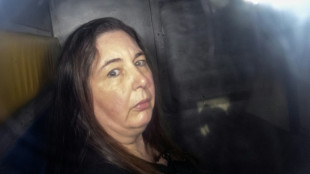 Judge throws out Australian mushroom killer's appeal, imposes harsher sentence
 Pelicans down Kings for first win of NBA season
 Tech firms take fresh hit as earnings misses fan AI fears

 Worcestershire leaders back renewed two-unitary council reorganisation

 India's animal megacentre vows reset after criticism

 Dodging fuel price hikes, Damascus drivers turn to electric cars

 Alvechurch manager praises resilience but seeks improvement after Anstey draw

 Crypto platform Binance confirms major hack, more than $2.5bn frozen

 Sports chiefs face losing battle to keep sport separate from politics

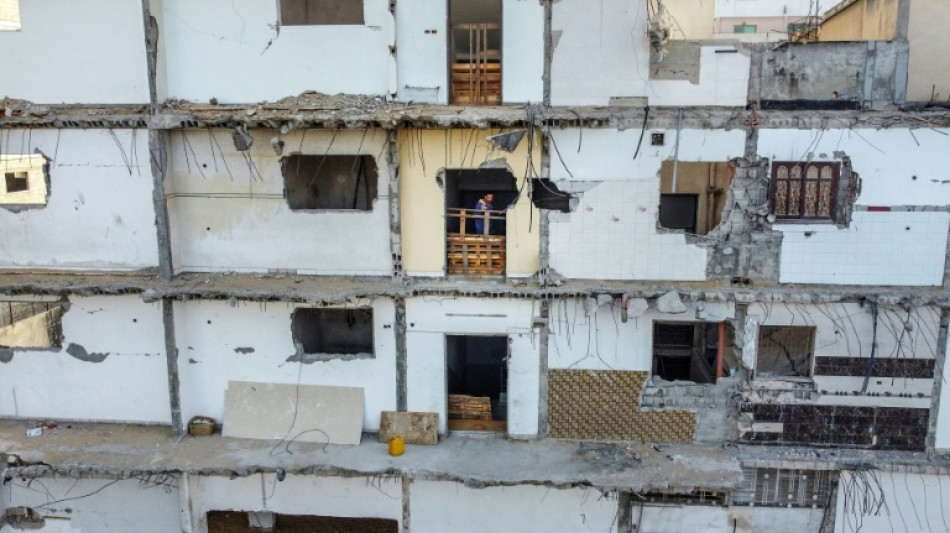
On a fateful night in May 2021, three Palestinian fathers living on Gaza City's Wehda Street shared a common tragedy in an Israeli air strike.
Flashbacks haunt surviving family members to this day.
"I was there under the rubble, I could hear my daughter Dana's voice screaming: 'Daddy! Daddy!'. I shouted back but she didn't answer anymore," sighs Riad Eshkountana in front of the wasteland where the family apartment, part of a three-storey block, used to stand.
On May 16, the building collapsed in Israeli attacks targeting the Gaza "metro", a network of tunnels built by the Islamist movement Hamas which rules the impoverished coastal territory of 2.3 million residents.
Eshkountana was in the living room when his building was hit.
"I rushed to the boys' room. I saw my wife trying to pick them up, but the ceiling suddenly collapsed on top of them and the floor gave way under my feet," he said.
"Under the rubble, I heard my two-and-a-half-year-old son Zayn crying out until his voice died out. When I was pulled out of the rubble, I was told Dana and Zayn were now martyrs, like my wife Abeer," said Eshkountana, 43, choking back sobs.
- 'Life changed forever' -
He lost four of his five children as well as his wife that night.
"At that moment, my life changed forever... If 100 years passed, I would still remember them," said the father who emerged alive from the rubble along with seven-year-old daughter Suzy.
Initially, they moved into an apartment near Wehda Street, before settling in another one not far off, together with his mother, Suzy and a new wife.
"Almost every day I go back to the destroyed house, I remember my life with the children, moments with the family," said Eshkountana, who also lost his possessions in the rubble, including family photos.
- 'Impossible to forget' -
After last year's 11-day war between Hamas and Israel that left 260 dead in the Gaza Strip and 14 in the Jewish state, Gaza's few psychotherapists converged on Wehda Street to help survivors of the grieving Eshkountana, Abu al-Ouf and Kolak families.
"I thought we were safe on Wehda Street," a busy area with its clothing stores, cafes and a bakery, says Shukri al-Kolak, 50, who lost 22 family members, including his wife, three of his children and his parents.
The Kolaks' apartment, located in a building just 50 metres (yards) from the Eshkountanas' home, also collapsed in a crater left by the air strike that left a total of some 40 dead.
The father survived along with daughter Zaynab and son Osama.
"I remember the dead every moment. I try to forget, but it's impossible," says Kolak, a tall man with curly hair, who says he has not bought any Israeli products since the war and will never remarry.
"I would be wrong for any woman. No woman could live with my suffering," he said.
- 'Nightmares during the day' -
Alaa Abu al-Ouf, 49, says he stopped psychological counselling for his surviving children "because it reminded them too much of what happened".
He lost 14 family members in the strikes on Wehda Street, including his wife Diana, who died of her injuries, and daughters Shaima and Rawan.
After the war, Abu al-Ouf moved to an apartment 200 metres from his former address where he now lives with his second wife, their baby daughter, and his two older children.
Every day, he returns to a mini-mart near the old home, wondering if one day his apartment and life will ever be rebuilt.
"I don't have nightmares at night, I have them during the day, every time I pass here, where my house used to be. Everything here reminds me of the family I lost."
F.Pavlenko--BTB