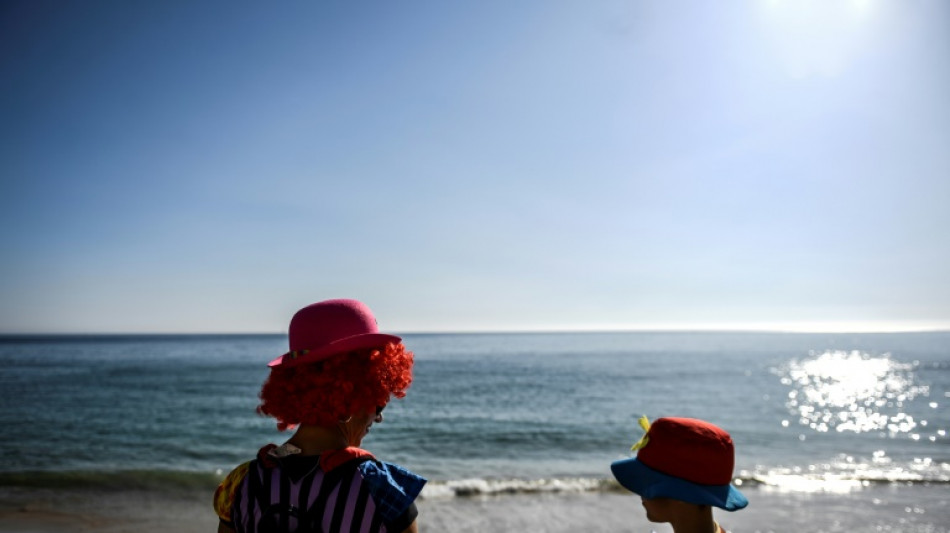
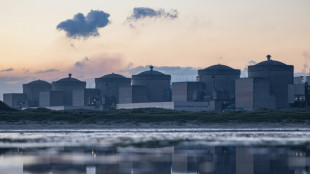
How Portugal became Europe's accidental 'bitcoin heaven' / Photo: © AFP/File

 Ebola outbreak in DR Congo kills more than 2,000
 ChargeAfter Powers BYLD Finance Expansion into Consumer Financing for Equipment Retailers
 MEXC Upgrades RealStocks With Three New Features to Enhance U.S. Stock Trading Experience
 Israel demolishes home of slain Palestinian involved in deadly West Bank clash
 Liverpool fans seek clarity on Bezos bid to buy stake

 Solar eclipse sparks scramble for protective glasses across Europe

 Oil prices jump as US-Iran deal hopes falter

 Newly crowned world's best pastry chef stays true to artisan roots
 Johnson signs for Everton in McNeil swap deal
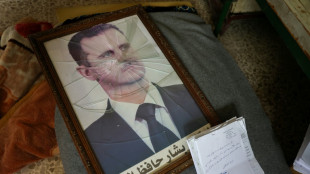 Syria sentences Bashar al-Assad to death in absentia over atrocities

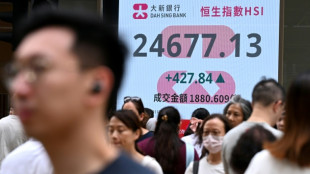 Hong Kong's tech index plans expansion with AI and robotics themes
 The Infantino saga -- What they said

 Economic losses from natural disasters fall to $100 bn in first half of 2026: Swiss Re

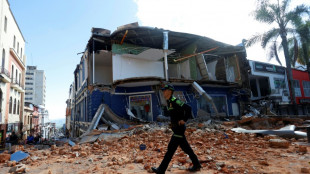
 Colombia scrambles to find survivors as quake kills 132

 Singapore says AI-related demand lifting economy

 Demeter Tactical Investments (ME) Limited bolsters governance with two board appointments

 Russian barrage on Ukraine kills 9, wounds dozens

 Schools closed as Indonesia battles wildfires

 Swiatek dominates Shnaider to set up Toronto semi with Svitolina

 Oil prices rise further as hopes for Hormuz deal fade

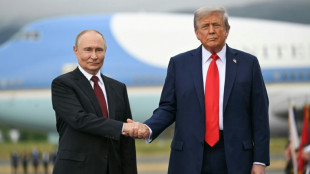 One year after Putin-Trump summit, 'spirit of Anchorage' dissipated
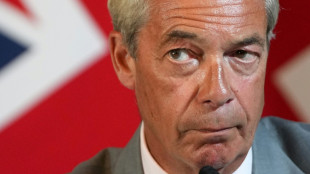 Farage vs Count Binface: What to know about UK snap poll

 Torment of Afghan fathers as daughters deprived of education
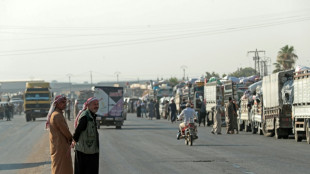 Return of displaced Syrian Kurds to hometown suspended after violence
 Swiatek races past Shnaider into Toronto semi-finals

As governments slowly shackle the crypto industry with regulations and obligations, Portugal is increasingly isolated in Europe -- a place with few rules that investors describe as a crypto paradise.
"You don't need to do anything else because you already have a perfect system, with zero percent tax on bitcoin," said Didi Taihuttu, a prominent crypto enthusiast who shifted his family to Portugal from the Netherlands.
"For bitcoiners, it's heaven," he added.
Financial authorities across the globe are grappling with fundamental questions about cryptocurrencies.
Firstly, are they currencies or assets? If they are assets, how do you categorise and tax them?
Right now, Portugal is one of the last countries in Europe to regard them as currencies from a tax point of view, meaning profits from trading are not taxed.
The finance ministry told AFP it was reviewing the situation and wanted a common European framework, but pressure is building for quick action.
Mariana Mortagua, a far-left MP, called recently for urgent regulation and summed up the situation bluntly: "Portugal has become a tax haven."
Even those in the crypto industry accept that things will have to change.
"It's hard to justify other financial assets being taxed at around 28 percent but not cryptocurrencies," said Pedro Borges of Criptoloja, the first crypto exchange registered in Portugal.
- 'Legal vacuum' -
Portugal has long sought foreign cash by giving tax breaks and special visas to foreign investors and so-called digital nomads -- those who work online without the need for a fixed business location.
And the tax regime is not the only appeal -- beaches, climate and cuisine all figure, particularly for people from northern Europe.
"Portugal has the sun, amazing food and amazing people," said Taihuttu, who has set up in the Algarve in the country's heavily touristed south.
"Portugal can become one of the best countries in Europe for living, for investing."
But while the lifestyle is likely to remain unchanged, the same cannot be said of the tax regime.
One London-based tax lawyer, who asked to remain anonymous, said he would not advise his clients to put their money into Portugal despite its "very lenient" tax system.
"It's not a long-term strategy of the government to attract companies in the sector, rather it is a legal vacuum," he said.
"I bet that in 10 years, the City (of London) will be more lenient than Portugal."
Britain is one of many countries attempting to market itself as a "crypto hub".
- Bubble warning -
If internal pressures don't force the Portuguese government's hand, then intervention could come from outside.
Fabio Panetta of the European Central Bank sounded the alarm on crypto late last month when he said the ecosystem showed "strikingly similar dynamics" to the sub-prime mortgage bubble that helped tank the world economy in 2007.
Crypto-assets now have a far higher market capitalisation than the $1.3 trillion of bad loans that sparked the global financial crisis.
"We must not repeat the same mistakes by waiting for the bubble to burst," he said, arguing for strong regulation.
He accused "crypto evangelists" of promising "heaven on Earth" while hawking a glorified Ponzi scheme -- because crypto-assets are generally not backed by any streams of revenue, they rely on money from new investors to keep prices high.
If new investors dry up, the asset price tanks.
Those already in the market need to attract new money, which explains high-profile advertising at the Super Bowl, celebrity endorsements and armies of boosters on social media.
Taihuttu's Instagram account plays like a scrolling advertisement for a luxury lifestyle of beaches, skiing, travel and adventure -- all apparently funded by crypto.
Like other crypto entrepreneurs he has dazzling plans -- after pushing his "crypto family" he is now proposing a "crypto village" somewhere in Portugal, selling plots of land with proof of ownership stored on blockchains.
To him, at least, the country should welcome these ideas with open arms.
"Portugal needs more jobs and economic growth," he said. "So why stop the evolution of technology and money?"
C.Kovalenko--BTB