
From Indonesia to Singapore: Four stages of pope's trip / Photo: © AFP

 Muse to Headline BST Hyde Park in June 2027 Alongside Bon Jovi and Raye
 Panthers expected to begin 2027 NRL season away from new stadium

 Sweet As app launches restaurant discovery platform
 MLA seeks inquiry into reported sectarian gestures on Ormeau Road
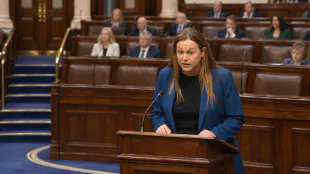 Louise O’Reilly attacks Simon Harris over unemployment remarks

 Canadian soldier Aidan Goulding remembered at Vancouver funeral

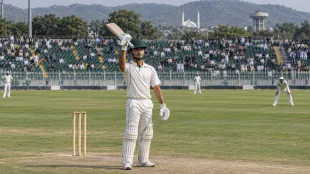 Tayyab Arif hits 57 on Pakistan Test debut against Sri Lanka

 Robert Trujillo discusses literacy and social justice children’s books

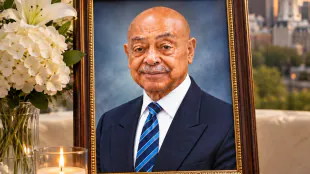 Civil rights advocate William Bill Tucker dies aged 98
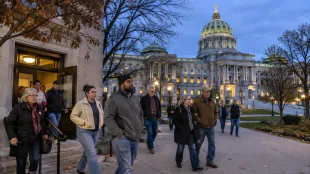
 Irish Deputy Principal Warns Against Measuring Teacher Goodwill in Pay Talks

 Godzilla Minus Zero sets foreign-language box-office opening record

 Villeneuve teases James Bond casting at Los Angeles museum gala
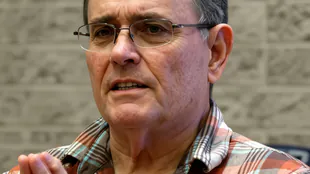 Harry Britt’s Political Legacy Contrasts Sharply With Scott Wiener’s Record
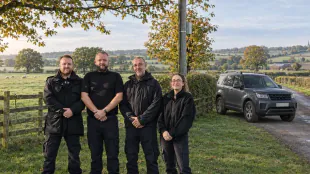
 Newark boxing gym expands alternative education programme
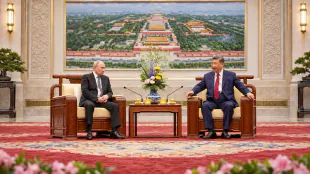
 Democrats consider impeachment drive against Defence Secretary Hegseth
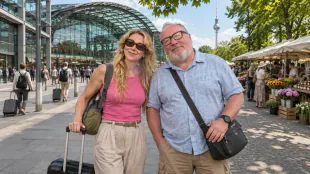
 Energy bill plan could use HMRC income data to target support

 Business owner earning £6,000 a month tackles £70,000 debt
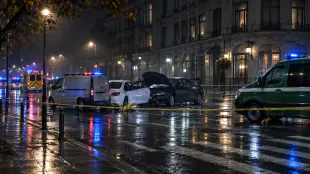
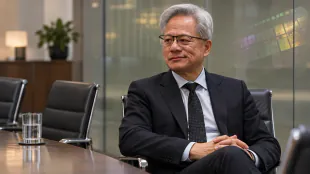 Nvidia chief faces inquiry after disclosing affair with suspected Chinese agent

 Comet returns as online electrical marketplace 14 years after collapse
 Aston Villa Defy History With Rare Victory at Old Trafford
Pope Francis will visit Indonesia, Papua New Guinea, East Timor and Singapore over the next fortnight in his most ambitious trip in 11 years leading the worldwide Catholic Church.
Here are the four stages of the 87-year-old's 12-day tour:
- September 3-6: Indonesia -
The pope kicks off his tour in Jakarta, the capital of Indonesia which is the largest Muslim country in the world.
Catholics represent less than three percent of the population -- some eight million people -- compared to the 87 percent, or 242 million, who are Muslim, Vatican officials say.
A key theme of the visit will be Islamic-Christian dialogue, amid concerns at increasing discrimination and harassment against religious minorities.
The pope will meet with representatives of Indonesia's six official religions and denominations -- Islam, Protestantism, Catholicism, Buddhism, Hinduism and Confucianism -- at Istiqlal Mosque, the largest in Southeast Asia.
On the same day -- September 5 -- the Argentine pontiff will also preside over mass in a stadium in Jakarta, a megalopolis of about 12 million inhabitants plagued by pollution and threatened by rising sea levels.
Francis becomes the third pope to visit Indonesia, an archipelago of 17,500 islands spanning 5,000 kilometres (3,100 miles) across three time zones, after Paul VI in 1970 and John Paul II in 1989.
- September 6-9: Papua New Guinea -
Pope Francis begins his trip to Papua New Guinea in the capital Port Moresby.
The vast majority of the population in the multi-ethnic Pacific nation is Christian -- most of them Protestant -- but indigenous rites persist and more than 800 indigenous languages are spoken.
A former Australian colony of nine million residents visited by John Paul II in 1984 and 1995, PNG is regularly plagued by tribal violence and in January saw deadly riots in the wake of anti-government demonstrations against lower wages.
In a nation hit by deforestation and repeated natural disasters, the pope is expected to renew his calls for protection of the environment.
Francis, who has made spreading the Catholic faith a priority of his papacy, will also fly for a day to Vanimo, a town of 10,000 inhabitants in the far northwest of the island, where he will meet with believers and missionaries.
- September 9-11: East Timor -
Francis will become the first pope to visit East Timor since it became an independent nation in 2002.
For four centuries it was a Portuguese colony and for 24 years occupied by neighbouring Indonesia.
Some 97 percent of the 1.3 million inhabitants are Catholic, and the prospect of the pope's visit -- which includes meetings with young people -- has sparked huge enthusiasm.
But the country -- one of the world's poorest -- has also been hit by the global scourge of child abuse by Catholic priests, on which Francis has been outspoken.
In 2020, the Vatican sanctioned Nobel Peace Prize-winning Bishop Carlos Belo, who was accused of sexually abusing underage boys in East Timor over a 20-year period.
- September 11-13: Singapore -
Thirty-eight years after a visit by John Paul II, Francis will end his tour with a 48-hour stopover in multi-racial and multi-religious Singapore, a tiny but wealthy city-state with a population around six million.
Known as a key financial centre in Asia, Singapore is home to the majority Chinese community with significant Malay, Indian and Eurasian minorities with the government prioritising building racial harmony since independence in 1965.
However, it is often criticised by rights groups for curtailing freedom of speech, including not allowing protests without permits.
About 19 percent of the population is Christian. Other major religions include Taoism, Islam and Hinduism.
burs-cmk/ar/fg/rsc
R.Flueckiger--VB