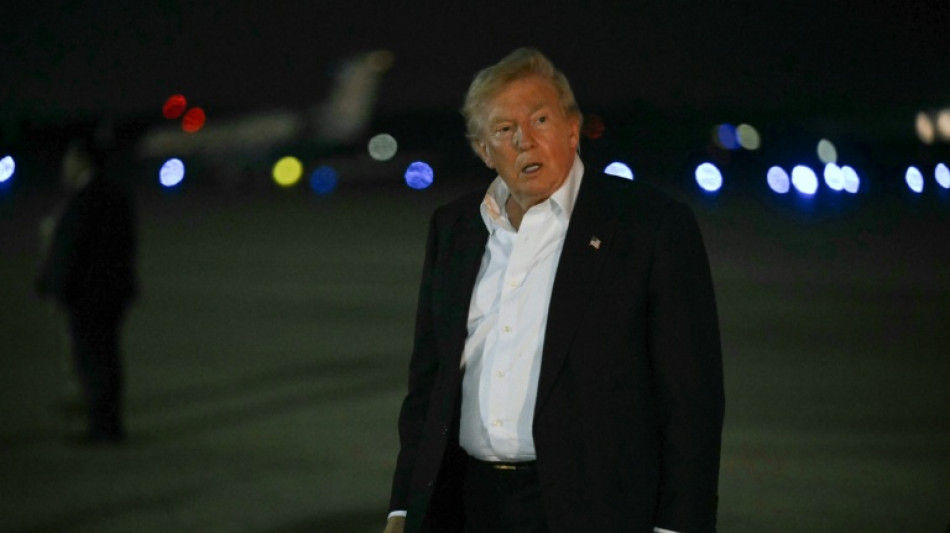
Trump agrees to more Iran talks but insists truce is over / Photo: © AFP/File

 Wanyonyi sets new world best in men's 1,000m
 Djokovic expects to be back at Wimbledon next year
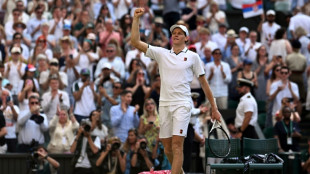 Sinner, Zverev power into Wimbledon final
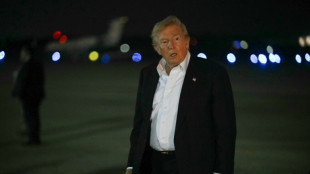 Trump says agreed to more Iran talks but insists truce over
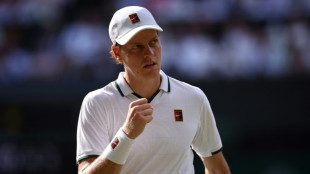
 Zverev hungry for Wimbledon glory after Paris breakthrough
 England risk losing Guehi for Norway World Cup quarter-final
 UK police launch murder probe into ex-MP's death
 Woad is unruffled by the lake as she sails into Evian lead

 Brook hoping for double England cricket and football triumph

 Brazil deforestation hits new low in Amazon
 England captain George 'buzzing for special talent' Caluori

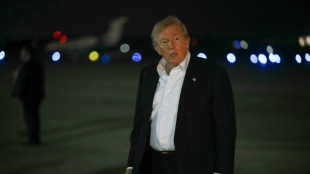 Trumps says agreed to more Iran talks but insists truce over

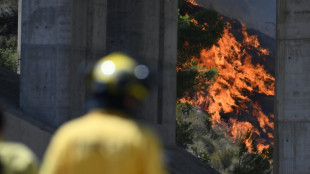 Foreigners among 12 dead in Spanish wildfire, 23 missing
 Merlier wins Tour de France seventh stage in sprint finish
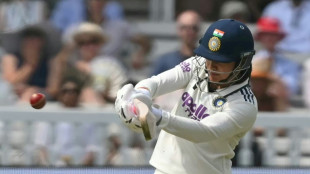 India's Mandhana and Kaur fall in inaugural women's Test at Lord's
 New Portugal coach Jesus 'will call up' Ronaldo if available

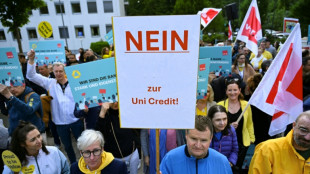 Commerzbank staff's legal bid against UniCredit rejected

 Amnesty calls latest US deportation to Eswatini 'unlawful'
 Syria says IS behind Damascus blasts, finds explosives cache
 Nasdaq dips as SK hynix arrives in NY
 Fiji captain shrugs off chairman's criticism ahead of England clash

 Hundreds welcome Salah's Egypt home after best World Cup run
 Piercing, matcha rituals lead Noskova in Kvitova's footsteps

 France wildfires burn twice as much land as last year: official
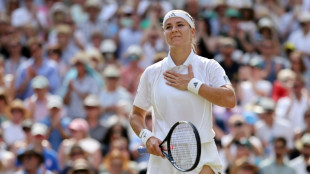
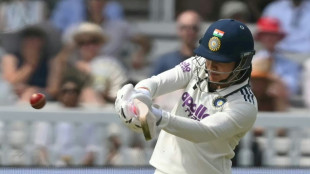 Mandhana's fifty lights up inaugural women's Test at Lord's

US President Donald Trump said Friday he had agreed to further negotiations with Iran, even as he repeated his assertion that the ceasefire between the long-time foes was over.
While there have been no direct talks between Iran and the United States since last month, Iranian media reported that a delegation from mediator Qatar was in Tehran after the warring sides exchanged strikes again this week.
Just over three weeks after Washington and Tehran signed an agreement aimed at turning a months-long ceasefire into a durable peace, the exchange of fire for a second day in a row on Thursday threatened a return to full-scale regional war.
"The Islamic Republic of Iran has asked us to continue 'talks.' We have agreed to do so, but the United States has stated to them, in no uncertain terms, that the Cease Fire is OVER!" Trump posted on his Truth Social platform on Friday.
Earlier this week, at a NATO summit, Trump also declared the ceasefire over, saying of Tehran: "It's just a waste of time dealing with them."
US and Iranian delegations have held one round of direct talks in Switzerland since the signature of their memorandum of understanding, as well as indirect negotiations in Qatar, but there has been no sign of diplomatic progress since.
- 'Return to negotiating' -
Despite Iran saying it had launched attacks on US assets in Qatar and the Gulf state accusing Tehran of attacking one of its tankers in the Strait of Hormuz, Doha on Friday backed continued diplomacy.
Iran's Tasnim agency meanwhile said the Qatari delegation was in Tehran to "try to reinforce Qatar's role as a mediator following events on Tuesday", when Doha condemned Tehran for what it called an "unacceptable assault" on one of its LNG tankers. Iran denied the accusation.
Pakistan Prime Minister Shehbaz Sharif, who has also been mediating the conflict, held a call with Qatar's emir on Friday to discuss the recent escalation, Sharif's office said in a statement.
Sharif also spoke with Iran's President Masoud Pezeshkian, urging him to safeguard the "hard-earned peace", the premier said on X.
Qatar's foreign ministry said that in a call with Egyptian Foreign Minister Badr Abdelatty, Qatari Prime Minister and Foreign Minister Sheikh Mohammed bin Abdulrahman Al Thani stressed "the need for all parties to commit to dialogue and diplomacy" and to implement the US-Iran memorandum.
Abdelatty's own ministry in Cairo said he called for a "return to the negotiating table".
However, Iran's chief negotiator in talks with Washington, Mohammad Bagher Ghalibaf, struck a defiant tone.
"Ending the war is a priority for the countries of the world, but everyone must know that this confrontation will never end with Iran's surrender," the ISNA news agency reported him saying.
Iranians, he said, were "fully prepared to defend ourselves".
- Hormuz flashpoint -
The war began on February 28 when the United States and Israel launched a massive wave of surprise attacks on Iran that killed much of Tehran's senior leadership, including supreme leader Ali Khamenei.
Iran retaliated by effectively closing the Strait of Hormuz, a conduit for a fifth of the world's oil and liquefied natural gas, and launching strikes on Israel and US interests across the Gulf.
The war also spilled over into Lebanon, after Hezbollah launched rockets at Israel, prompting it to invade.
The wider war was subsequently halted by a ceasefire agreement on April 8, but there have been sporadic outbursts of violence ever since.
Most have been sparked by disagreements over the Strait of Hormuz, which Tehran insists it must control. It also has expressed a desire to charge transiting fees for transiting it.
It did not have such powers before the war and while the strait comprises Omani and Iranian territorial waters, under international law the two cannot generally block passage or charge tolls.
On Tuesday, the US and Qatar accused Iran of targeting tankers in the strait, with Washington launching strikes against dozens of targets on both Wednesday and Thursday.
Iran then said it had retaliated with attacks on US bases across the Gulf, while Jordan said it shot down missiles in its airspace.
While there was no repeat of the previous day's strikes by Friday evening in the Gulf, Iran reiterated its determination to hit back if attacked.
"Any attack on infrastructure will be retaliated against, and the criminal Zionist regime responsible for these atrocities will not be safe from the response of our fighters," Mohammad Bagher Zolghadr, the head of Iran's top security body, said in a statement carried by state TV.
Tehran on Thursday accused the US of hitting civilian targets including railway bridges, branding the strikes a "gross war crime".
L.Meier--VB