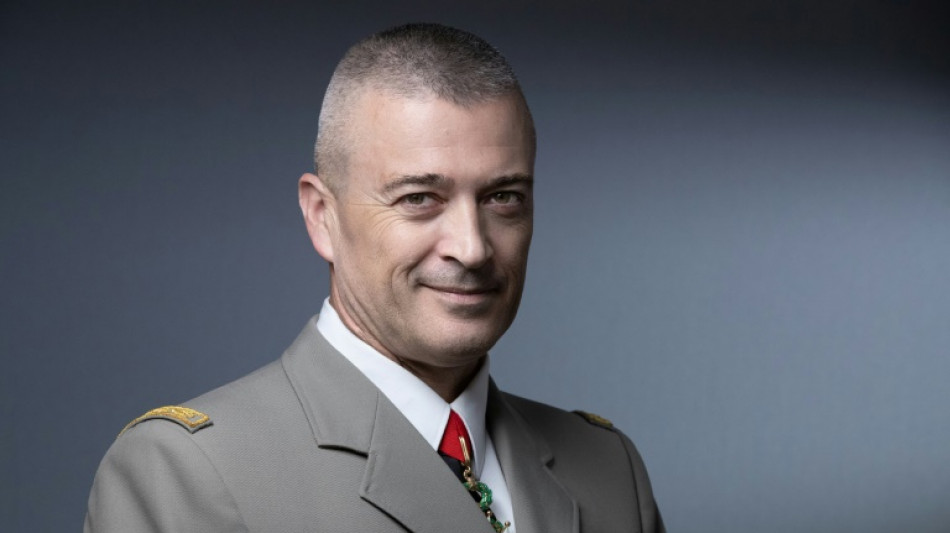
Russia, West in long-term rivalry: top French general / Photo: © AFP/File

 French economy 'headed for a wall' as GDP shrinks

 South Korea to prosecute students cheating with smart glasses
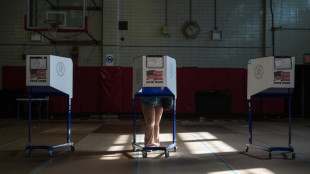
 Surging costs of living top US voter concerns
 Basic services, fading loyalties loom over South Africa's vote

 Shock, vindication, regret: Scientists react to AI roiling life's work
 Crypto platform Binance confirms $6.3 bn hack
 Boozer shines as Grizzlies top Blazers in battle of NBA unbeatens
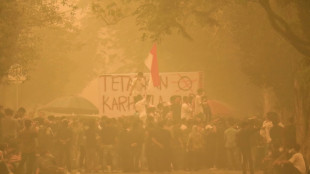
 Jorge Martin confirmed to race at Malaysian MotoGP
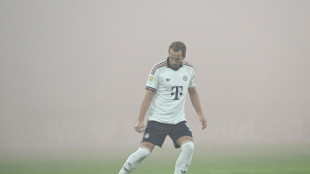 Bayern and Kane host Dortmund after week of 'extremes'
 Packers beat Panthers 27-19 as Watson returns from hospital

 Affordable supermarket fashion offers designer-inspired autumn alternatives

 Judge throws out Australian mushroom killer's appeal, imposes harsher sentence
 Pelicans down Kings for first win of NBA season
 Tech firms take fresh hit as earnings misses fan AI fears

 Worcestershire leaders back renewed two-unitary council reorganisation

 India's animal megacentre vows reset after criticism
 Dodging fuel price hikes, Damascus drivers turn to electric cars

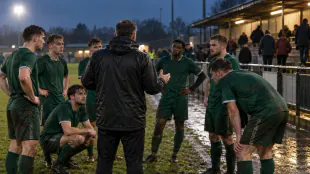 Alvechurch manager praises resilience but seeks improvement after Anstey draw

 Crypto platform Binance confirms major hack, more than $2.5bn frozen

 Sports chiefs face losing battle to keep sport separate from politics
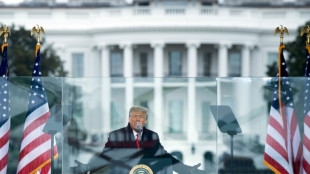
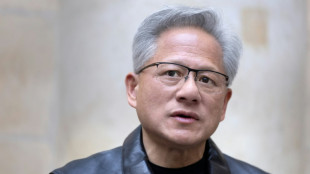 Nvidia's web of AI bets: smart strategy or bubble risk?
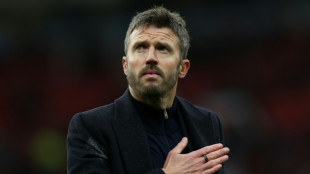 Carrick fights for Man Utd job, Arsenal face Liverpool test
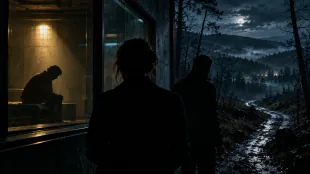 Apple TV crime drama Nocturne brings a Scandinavian thriller to Pennsylvania

 Charity crowdfunds millions to buy historic English estate

 'Diabolical' Halloween festivities banned in Honduran towns

Russia's invasion of Ukraine did not go according to initial Kremlin plans, but the West must brace for a long-term rivalry with Moscow that risks going beyond the current conflict, France's top general has said.
General Thierry Burkhard, the overall chief of staff for the French armed forces, told AFP in an interview that Europe needed to re-arm and strengthen its own unity for what will be a period of "long competition" with Russia.
President "Vladimir Putin has said it himself: We are not just talking about Ukraine but the Baltic States, Poland, Hungary," Burkhard said in the joint interview with the New York Times in Estonia, where French troops are deployed as part of NATO forces.
"We must be well aware that the Russians have a long-term strategy," he added, pointing to the emphasis Moscow has placed on developing specialised capacities, including hypersonic weapons.
"They are engaged an informational struggle and they have put the West under a form of energy dependency. Our lack of freedom of action comes from being in this spider's web put in place by Russia."
But he emphasised that Russia's assault against Ukraine, had "not gone as planned" and that the initial aim had been to topple Ukraine's President Volodymyr Zelensky, who remains in power.
"This will impose a pause on the Russian long-term strategy," he said.
"Europe must take advantage of this to reorganise and also build its long-term strategy, planning for the day after the Ukrainian war. We must re-arm, strengthen cohesion and put ourselves in a position to be competitors with the Russians," he said.
Burkhard also emphasised that as a nuclear-armed permanent UN Security Council member Russia is "not going to disappear" and that while seeking to weaken the country the West may also need to rebuild a "security architecture" with Moscow.
- 'Army of lies' -
He described phase one of the war as a "failure" for Russia marked by scenes that were "stunning" for military observers, such a column of 60 tanks at a standstill.
Phase two of the war, Burkhard argued, was marked by Russia regrouping and the conflict is now in a third phase with Russia seeking to seize control of Ukraine's Donbas region.
Unlike in the first phase, Russia's military deployment is "coherent" with 80-90 percent of their forces in the Donbas compared with 20 percent in the first phase, he said.
Burkhard said that Russia's shortcomings in the first phase of the war had shown the importance of high morale, a domain where the Ukrainians has clearly won.
"They have an army that is defending its country and a country that is supporting its army. This is something that is built, it is not something that is made the day the war starts," he said.
"The Russian army is the army of lies. People lied saying that the Ukrainian army would not fight, that the Russian forces were ready for war, that the leaders knew how to command."
Ukraine had also won the information war while Russia had also fallen short in high-intensify warfare for which its troops were not trained despite their superiority in numbers.
The conflict has "shown the importance of training, which is costly and difficult," he said.
F.Müller--BTB