Colombia military bristles at rise of leftist presidential hopeful / Photo: © AFP/File

 Orban-critic ex-judge becomes Hungary president after predecessor ouster
 US rights groups sue Trump over ICC sanctions

 Sphere 3D Corp. (Nasdaq: ANY) Attracts 6.5% Stake from Turnaround Bitcoin-Mining Investor
 Oil prices lower, stocks higher as Hormuz doubts drag on
 Colombia scrambles to find survivors as quake kills 181
 Colombia scrambles to find survivors as quake kills 169

 MEXC Report: 74.2% of Traditional Finance Users Have Shifted Their Trading Activity to Crypto Exchanges

 MEXC Lists DAPPOS (DOS) With $60,000 Worth of DOS and 10,000 USDT in Airdrop+ Rewards
 Jellyfish force shutdown of three reactors at French nuclear plant
 Hodgkinson, Werro sail through Euro 800m qualifying

 Somali referee denied World Cup 'proud' to oversee UEFA Super Cup

 French newspapers target Google over AI summaries
 Ebola death toll in DR Congo outbreak rises to more than 2,000
 PrimeXBT Launches MT5 Cent Account for Beginners and Risk-Conscious Traders
 British sprinter Hunt chasing three more golds after winning 100m
 Ethiopia's Tigray rebel authorities condemn army drone strikes
 Too hot to live? French buyers rethink housing choices after heatwaves
 Ukraine says Russia fired N. Korean missiles in deadly attack
 Oil prices jump further as hopes for Hormuz deal fade
 Trump says would be 'terrible mistake' to oust embattled Infantino

 Charity races to raise millions to buy historic English estate
 Hungary parliament to elect Orban-critic judge as president
 Wallabies lock Amatosero given three-match ban for Japan red card
 Swiatek races into Toronto semis as Svitolina battles through

 'Big Four' bowlers back as ageing Australia begin gruelling run
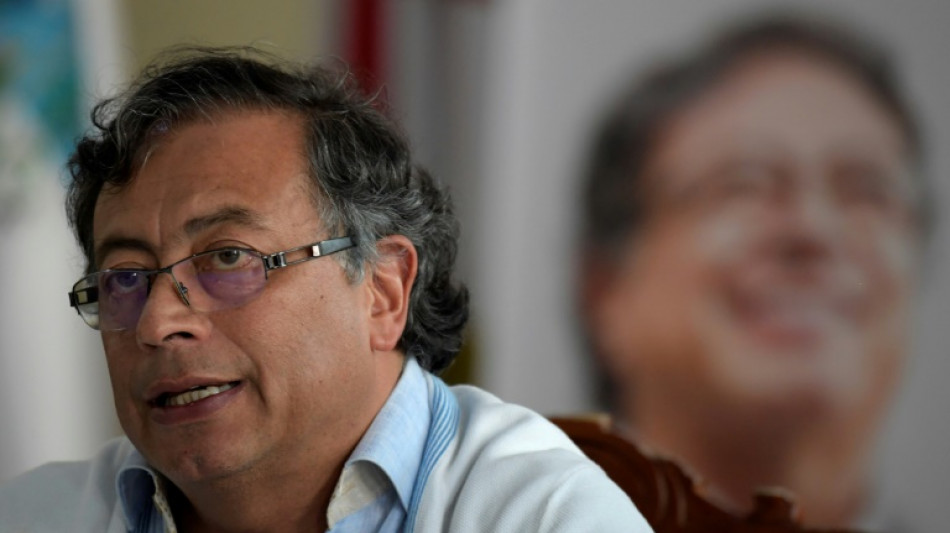
Historically aligned to a succession of rightwing governments, Colombia's top military echelon has broken a long-standing rule of political neutrality to lash out against a perceived leftist threat.
With former guerrilla fighter Gustavo Petro standing a good chance of becoming Colombia's next president, the army chief and defense minister have taken to social media to brand him a "liar" and corrupt.
Petro, a former enemy of the state security apparatus as a guerrilla in the 1970s and 80s, is leading in opinion polls ahead of the May 29 first round of presidential elections.
If he wins, he will become Colombia's first leftist leader and the first former guerrilla to oversee the armed forces of a country still battling the violent aftermath of six decades of civil conflict.
Petro's rise has so riled up the military establishment that they have risked contravening the law to slam him publicly.
A constitutional provision bars those in uniform from voting or expressing political opinions.
"There are those within the military who perceive that the war (against guerrilla forces) was won on the battlefield but is being lost politically," Carlos Alfonso Velasquez, a military analyst and ex-colonel told AFP.
"They consider that the political class with which the army has been aligned -- which is the one that has always governed -- is losing," he added.
In 2018, Petro lost in a presidential runoff to right-wing lawyer Ivan Duque.
This time the economist and former Bogota mayor is leading, though still short of the 50 percent required for a first-round victory.
- 'Suspicion and fear' -
Petro, now 62, battled the state in the ranks of M-19, a nationalist rebel group that surrendered its weapons in 1990.
He spent time in exile in Europe in the 1990s, entering politics on his return home.
For many Colombians still today, the political left that Petro represents is tainted for its association with the guerilla groups that battled the state, far-right paramilitaries and crime syndicates for control in a complex conflict that claimed tens of thousands of lives.
Petro has been critical of the security forces, which count some 228,000 soldiers and 172,000 police that could soon fall under his executive command.
It is the second biggest military in South America, after Brazil's, and the United States has invested millions in equipping and training it in the war against drug trafficking in the world's largest cocaine producer.
Petro is perceived with "a certain suspicion and fear" by some in uniform, retired colonel Jose Marulanda told AFP.
"We feel that he has a very clear resentment of the military and police who were the ones who eliminated his M-19 comrades in combat," said Marulanda.
- 'Politicking' -
Petro has proposed reducing the military budget, implementing a promotion policy based on merit rather than nepotism, and removing the police from under the defense ministry's umbrella.
Last month, he accused generals of colluding with narcos while the lower ranks lose their lives in the drug battle.
Irate, army chief Eduardo Zapateiro tweeted a response accusing Petro of "politicking" off the deaths of soldiers. He also accused him of being corrupt.
The entity that oversees public officials in Colombia opened an investigation into whether the general's outburst broke the rules and amounted to political interference in the presidential campaign.
President Duque came to Zapateiro's defense, and Defense Minister Diego Molano posted a tweet with the hashtag: #PetroLiar.
The military was not only a protagonist in the decades-long conflict but also a signatory of the 2016 peace agreement that led to disarmament of the FARC guerrilla group.
Yet, some later criticized the pact for perceived concessions to the rebels.
"A dangerous idea has been popularized that the armed forces are of the right and that the left is their enemy," Petro wrote in a recent op-ed.
- Prestige 'shaken' -
While Colombia's military has long enjoyed widespread popular support for its perceived rout of armed groups, scandals have undermined its reputation in recent years.
These included revelations of ties with paramilitary groups and the execution of some 6,400 civilians between 2002 and 2008 that troops had presented as guerrilla fighters in a bid to inflate their results.
"The prestige of the army, cultivated in the conflict, has been shaken," said Velasquez. "And the military sees Petro as the person amassing the criticism against it."
Yet experts for and against Petro say a military coup is an improbable outcome.
More likely, "we would see within the ranks some kind of dissatisfaction that would manifest as resignations," said Marulanda.
But there are also those in the military aligning with Petro, added Alfonso Manzur, head of the organization Veterans for Colombia.
"There is discontent in the high ranks... because they feel the promotion system has been corrupted by internal mafias," he explained.
O.Krause--BTB