Ukraine's farmers risk death in bomb-strewn fields / Photo: © AFP

 Orban-critic ex-judge becomes Hungary president after predecessor ouster

 US rights groups sue Trump over ICC sanctions

 Sphere 3D Corp. (Nasdaq: ANY) Attracts 6.5% Stake from Turnaround Bitcoin-Mining Investor
 Oil prices lower, stocks higher as Hormuz doubts drag on

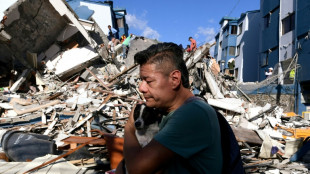 Colombia scrambles to find survivors as quake kills 181
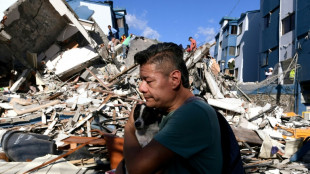 Colombia scrambles to find survivors as quake kills 169

 MEXC Report: 74.2% of Traditional Finance Users Have Shifted Their Trading Activity to Crypto Exchanges

 MEXC Lists DAPPOS (DOS) With $60,000 Worth of DOS and 10,000 USDT in Airdrop+ Rewards

 Jellyfish force shutdown of three reactors at French nuclear plant

 Hodgkinson, Werro sail through Euro 800m qualifying

 Somali referee denied World Cup 'proud' to oversee UEFA Super Cup
 French newspapers target Google over AI summaries

 Ebola death toll in DR Congo outbreak rises to more than 2,000

 PrimeXBT Launches MT5 Cent Account for Beginners and Risk-Conscious Traders

 British sprinter Hunt chasing three more golds after winning 100m

 Ethiopia's Tigray rebel authorities condemn army drone strikes

 Too hot to live? French buyers rethink housing choices after heatwaves
 Ukraine says Russia fired N. Korean missiles in deadly attack
 Oil prices jump further as hopes for Hormuz deal fade

 Trump says would be 'terrible mistake' to oust embattled Infantino

 Charity races to raise millions to buy historic English estate
 Hungary parliament to elect Orban-critic judge as president
 Wallabies lock Amatosero given three-match ban for Japan red card

 Swiatek races into Toronto semis as Svitolina battles through
 'Big Four' bowlers back as ageing Australia begin gruelling run

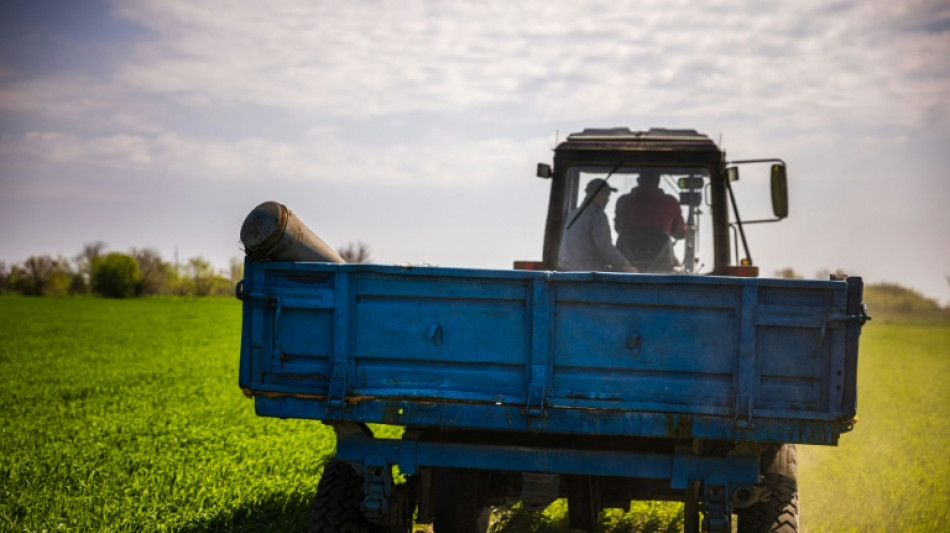
It's spring planting season in Ukraine, but this year farmers require more than fuel and fertiliser –- they also need flak jackets and deminers to destroy the bombs that have already killed or maimed others in their fields.
One of the unexploded rockets lay on an island of undisturbed black soil in Igor Tsiapa's field in the nation's southwest and posed a deadly threat to getting his corn crop planted on land that was otherwise ploughed and waiting.
"We first spotted the projectile a week and a half ago but just didn't touch this part of the field and continued on getting ready for planting," he told AFP on Thursday, a few metres from the deminers prepping the device for destruction.
"Everything has to be done on schedule if you want to have a more or less proper harvest... We had to keep working," the nearly 60-year-old added in the area of the village of Grygorivka.
Farmers in Ukraine have found themselves on the front line of a Russian invasion that has tainted swathes of the country with undetonated mines, shells and rockets.
That's because they face a unique risk of setting off one of the devices while working the soil, one more piece of worrying news for next year's harvest in Europe's breadbasket.
Police said the latest injury was in the Kyiv area where a farmer in the village of Gogoliv hit a mine on his tractor while in the fields on Wednesday.
Maria Kolesnyk, with analytics firm ProAgro Group, told AFP that about 20 incidents had been recorded of farmers being struck by accidental explosions of war ordnance, but it wasn't clear how many instances were fatal.
"In the agro community today the most sought-after profession is the sappers," she said. "We desperately need the help of the international community because Ukrainian professionals are working 24/7."
- Improvised bomb markers -
In Tsiapa's field the rocket was left where it landed, and the blue-helmeted sappers placed orange fist-sized blocks of explosives along its explosive payload before shovelling a mound of dirt over it.
"Every day since the start of the war we have been finding and destroying unexploded ammunition," Dmytro Polishchuk, one of the deminers, told AFP before heading into the field.
"After farmers began working in the fields, we started getting regular calls from people alerting us to new devices," he said, noting the team destroyed up to three per day.
He added people have not always waited for overstretched demining crews to arrive, noting some farmers have marked the explosives with sticks bearing plastic bottles or bags as warning and went on ploughing.
Leaving the unexploded missiles untouched is not a guarantee that they won't explode, Polishchuk said, noting some have a self-destruct setting where they can go off at any time.
For Tsiapa, farmers in areas that haven't been occupied have to pick up some of the slack, despite the risks, for places where planting could be disrupted by Russia's invasion.
"So we here have double responsibility and double pressure to grow a good harvest. Things are that way because we don't have active combat here, so we can work," he added.
Ukraine is the world's top producer of sunflower oil and a major exporter of wheat, yet the war's disruption of labour and displacement of farmers from their land as well as fuel shortages have all raised worries.
Before the war, Ukraine was the world's fourth largest exporter of corn and was set to become the third biggest exporter of wheat after Russia and the United States.
Russia and Ukraine alone account for 30 percent of global wheat exports.
In Tsiapa's field, the deminers' work came to an abrupt end with a controlled blast that sent up a puff of black smoke and thudded through the valley, where spring weather has begun to turn trees and grass back to green.
When the blast was over with, Tsiapa hopped into his red van and drove off. He had to get back to work.
G.Schulte--BTB