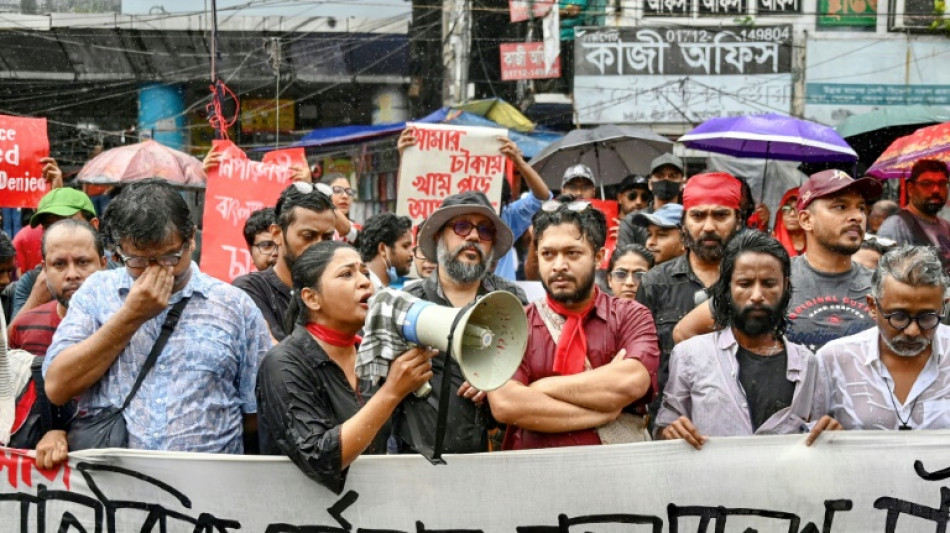
Student leader release fails to quell Bangladesh protests / Photo: © AFP

 AVEVA and PETROJET Sign MoU for Digital Twin Projects in Egypt

 Daily Horoscope November 20, 2026: Astrological Predictions for All Signs

 Desire Under the Elms review - a horror show that bruises more than it moves

 Saudi PIF Retains Top Sovereign Wealth Fund Brand Title for Third Year

 Phoenix Weekend Guide: Sangria Socials, Pie Markets, and New Brunch Spots

 Trent Perry’s Late Heroics Lift No. 7 UCLA Past Cal State Fullerton

 2027 Hyundai Elantra Review: Brutalist Design and Expanded Dimensions
Demonstrations in Bangladesh after Friday prayers demanded justice for victims of nationwide unrest and police crackdown, after the release of protest leaders failed to quell public anger.
Student rallies against civil service job quotas sparked days of mayhem that killed at least 206 people last month, according to an AFP count of police and hospital data.
The violence was some of the worst of Prime Minister Sheikh Hasina's 15-year tenure, and the actions of her government's security forces provoked widespread rancour at home and international criticism abroad.
A day after police freed six top members of the group which organised the initial protests, its leaders urged their compatriots to once again return to the streets.
"We want justice for the murders of our sisters and brothers," Students Against Discrimination said in a statement.
Thousands of young men in the capital Dhaka and the port city of Chittagong heeded the call after midday worship in the Muslim-majority nation, defying torrential monsoon rains.
"Why are our brothers in graves and the killers outside?" one crowd chanted outside the country's largest mosque in central Dhaka, a teeming megacity of 20 million people.
Students Against Discrimination had demanded the release of its detained leaders, three of whom were forcibly checked out of a hospital and taken away by plainclothes police last week.
Their release was a sign the government was hoping to "de-escalate tensions" with protesters, University of Oslo researcher Mubashar Hasan told AFP on Thursday.
Demonstrations began in early July over the reintroduction of a quota scheme -- since scaled back by Bangladesh's top court -- that reserved more than half of all government jobs for certain groups.
With around 18 million young Bangladeshis out of work, according to government figures, the move upset graduates facing an acute employment crisis.
Critics say the quota system was used to stack public jobs with loyalists to the ruling Awami League.
The protests last month had remained largely peaceful until attacks on demonstrators by police and pro-government student groups.
Hasina's government eventually imposed a nationwide curfew, deployed troops and shut down the nation's mobile internet network for 11 days to restore order.
European Union foreign policy chief Josep Borrell this week condemned the police clampdown that followed for "excessive and lethal force against protesters and others", urging an independent investigation into their conduct.
Home Minister Asaduzzaman Khan told reporters last weekend that security forces had operated with restraint but were "forced to open fire" to defend government buildings.
G.Haefliger--VB