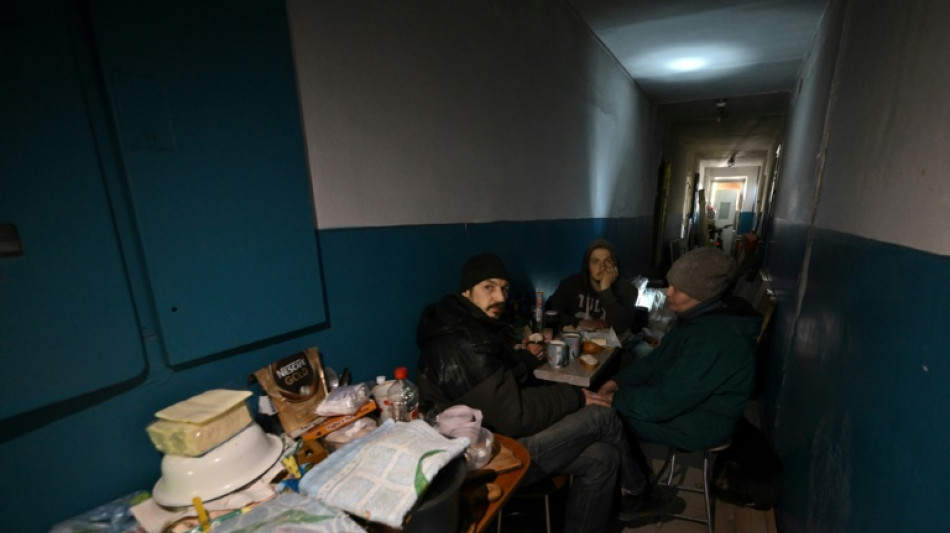
Survivors of Russian bombings cling on in flattened flats / Photo: © AFP

 Barred from elections, Russia's anti-war party vows to fight on

 Jaissle states Newcastle ambition but urges patience

 NBA star Cooper Flagg trading card a slam dunk for lucky buyer
 ForumPay Expands Payment Infrastructure with New Card and Bank Transfer Acceptance Solution
 Oil prices higher, stocks flat ahead of inflation report

 Orban-critic ex-judge becomes Hungary president after predecessor ouster

 US rights groups sue Trump over ICC sanctions

 Sphere 3D Corp. (Nasdaq: ANY) Attracts 6.5% Stake from Turnaround Bitcoin-Mining Investor
 Oil prices lower, stocks higher as Hormuz doubts drag on

 Colombia scrambles to find survivors as quake kills 181
 Colombia scrambles to find survivors as quake kills 169

 MEXC Report: 74.2% of Traditional Finance Users Have Shifted Their Trading Activity to Crypto Exchanges

 MEXC Lists DAPPOS (DOS) With $60,000 Worth of DOS and 10,000 USDT in Airdrop+ Rewards
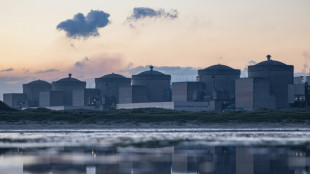 Jellyfish force shutdown of three reactors at French nuclear plant

 Hodgkinson, Werro sail through Euro 800m qualifying

 Somali referee denied World Cup 'proud' to oversee UEFA Super Cup

 French newspapers target Google over AI summaries

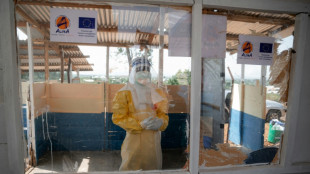 Ebola death toll in DR Congo outbreak rises to more than 2,000

 PrimeXBT Launches MT5 Cent Account for Beginners and Risk-Conscious Traders
 British sprinter Hunt chasing three more golds after winning 100m

 Ethiopia's Tigray rebel authorities condemn army drone strikes

 Too hot to live? French buyers rethink housing choices after heatwaves
 Ukraine says Russia fired N. Korean missiles in deadly attack
 Oil prices jump further as hopes for Hormuz deal fade
 Trump says would be 'terrible mistake' to oust embattled Infantino

Ukrainian literature teacher Tetyana Sobistiyanska has not washed since March 15.
She remembers the date because that is when Russian mortar fire blew a hole through her apartment on a central street in the battered north Ukrainian city of Chernigiv.
But Sobistiyanska is taking out her boiling anger for her plight on both the Ukrainians and the Russians in the third month of the war.
The 51-year-old still lives in one of the nine-story tower's hallways and sleeps on its debris-strewn floor.
There is no power or water in any of her Soviet-era building's 171 flats.
Sobistiyanska and two of her neighbours sip cold tea off a kitchen table that takes up half the corridor's width in the dark.
The wind shoots thick dust through the wall punctures and leaves everyone shivering in their winter coats and wool hats.
She says local officials have ordered her to move out but offered no assistance other than the locations of area shelters.
"Why did they fight to defend me, only to leave me here to die?" she says, referring to Ukrainian forces who managed to keep the Russians from seizing the city of nearly 300,000.
"The grandmother on the fourth floor locked herself up when the bombs fell. When we forced the door open, she was already dead," Sobistiyanska said.
"I think this winter, the same fate awaits me."
- Difficult choice -
The outgunned Ukrainian forces' ability to defend Chernigiv -- a riverside city 100 kilometres (60 miles) northeast of Kyiv famous for its brand of beer -- played a huge role in stalling Russia's assault on the capital in the first weeks of the war.
Russian troops bombed and shelled the tower blocks dotting Chernigiv for more than a month.
The Russian withdrawal in the first days of April left behind a hollow shell of a city that now forms part of a broader conundrum for Ukraine’s Western-backed leadership.
Ukraine will need foreign aid of historic proportions to try and dig out from the ruins -- should it ultimately withstand the Russian assault.
This recovery could require some tough choices. One of them might be whether places such as Chernigiv are worth saving at all.
The historic city and its ancient churches overlooking the Desna River began to lose its importance and shrivel when its inland port shut down after the Soviet Union’s collapse.
The much more recent closure of the border with Kremlin ally Belarus 50 kilometres (30 miles) to the north means the main road running through the city from Kyiv now leads to a dead end.
Sobistiyanska's neighbour Tetyana Stanivaya says she still finds Chernigiv "very beautiful" and would love to stay.
"But I think that 70 percent of it has been damaged. I have no idea how much it would cost to rebuild it all," the 44-year-old grocer said.
"They will start by repairing the schools. As for the residential homes… That will take a lot of people and time. Some have simply burned to the ground."
- 'Returning to nothing' -
The city now comprises a patchwork of ruins and buildings left completely untouched by war.
The central five-story Ukraine Hotel was almost entirely flattened by aerial bombs.
Rows of whole buildings around it have functioning shops with few clients and the barest minimum of goods.
One young father was pushing his son on a scooter past the skeletal remains of a warehouse.
City workers were mowing the lawn of a green patch in the middle of a roundabout that was surrounded by barricades and buildings with their walls scarred by shells.
"Most people have already left the city," Stanivaya said while showing off the remains of some of the abandoned apartments in her tower block.
"And the ones who are returning, when they see what has happened, I don't even know," she sighed. "They are returning to nothing."
- Goodwill -
But 20 people still live in the seriously damaged apartment building.
The ones who left mostly settled with friends and relatives in surrounding villages or joined the exodus fleeing to the more peaceful west of the country and Poland.
The ones who stayed behind depend on the goodwill of neighbours whose buildings still have running water and gas.
Construction worker Daniil Danchenko said his courtyard neighbours were intially happy to let him charge his phone or fill buckets of water that he could then lug up the stairs to his fourth-floor flat.
"But they have started moving on with their lives," the 44-year-old said. "They have their own problems."
He now spends sunny days on the bench to keep warm.
"This is where I was born, this is where I was planning to spend my life. But for that, I need a place to live," he said.
Y.Bouchard--BTB