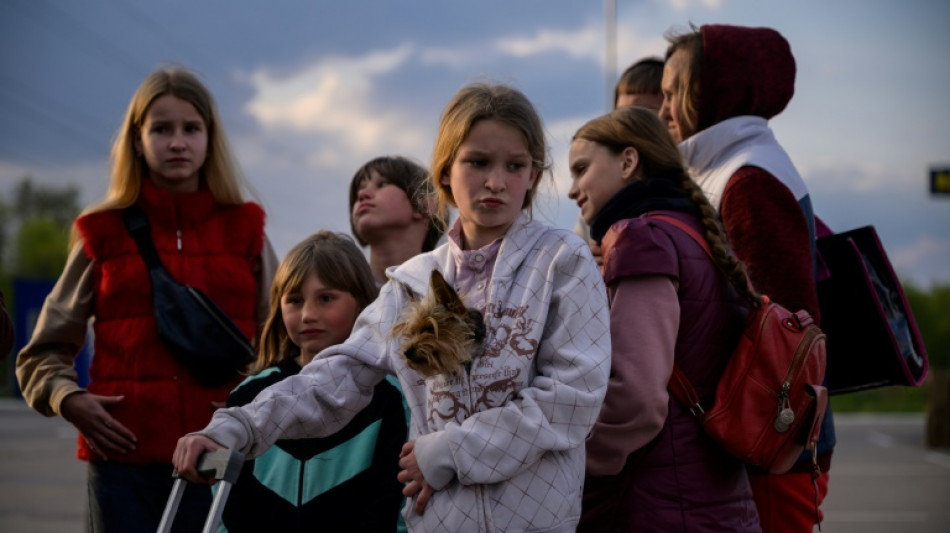
Ukrainians decry 'suffering' in Russian-controlled areas / Photo: © AFP

 Barred from elections, Russia's anti-war party vows to fight on
 Jaissle states Newcastle ambition but urges patience
 NBA star Cooper Flagg trading card a slam dunk for lucky buyer
 ForumPay Expands Payment Infrastructure with New Card and Bank Transfer Acceptance Solution
 Oil prices higher, stocks flat ahead of inflation report

 Orban-critic ex-judge becomes Hungary president after predecessor ouster
 US rights groups sue Trump over ICC sanctions

 Sphere 3D Corp. (Nasdaq: ANY) Attracts 6.5% Stake from Turnaround Bitcoin-Mining Investor
 Oil prices lower, stocks higher as Hormuz doubts drag on
 Colombia scrambles to find survivors as quake kills 181
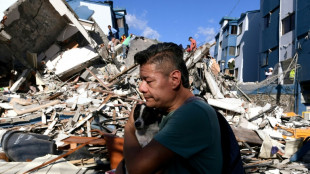 Colombia scrambles to find survivors as quake kills 169

 MEXC Report: 74.2% of Traditional Finance Users Have Shifted Their Trading Activity to Crypto Exchanges

 MEXC Lists DAPPOS (DOS) With $60,000 Worth of DOS and 10,000 USDT in Airdrop+ Rewards
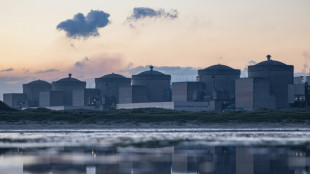 Jellyfish force shutdown of three reactors at French nuclear plant

 Hodgkinson, Werro sail through Euro 800m qualifying

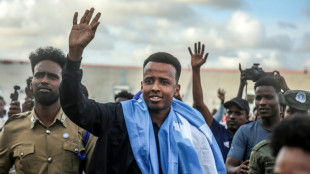 Somali referee denied World Cup 'proud' to oversee UEFA Super Cup
 French newspapers target Google over AI summaries
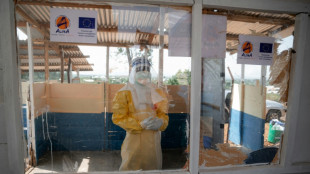 Ebola death toll in DR Congo outbreak rises to more than 2,000
 PrimeXBT Launches MT5 Cent Account for Beginners and Risk-Conscious Traders
 British sprinter Hunt chasing three more golds after winning 100m

 Ethiopia's Tigray rebel authorities condemn army drone strikes
 Too hot to live? French buyers rethink housing choices after heatwaves
 Ukraine says Russia fired N. Korean missiles in deadly attack
 Oil prices jump further as hopes for Hormuz deal fade
 Trump says would be 'terrible mistake' to oust embattled Infantino

Ukrainian civilians fleeing Russian-occupied parts of the country allege violence, extortion and theft at the hands of Russian troops, not to mention daily humiliation at checkpoints.
"We suffered and suffered and suffered," said Igor Kydryavtsev, one of 10 Ukrainians who spoke to AFP about living under Russian control in southern Ukraine's Kherson region for around two months.
"If you say a single word in Ukrainian and someone hears you and tells them, they come to your house and take you away," he said.
"Some come back, others don't. You can't live like that."
Kydryavtsev, 35, is with his wife and daughter in Zaporizhzhia, a major southern industrial city still in Ukrainian hands and a gateway for those fleeing the war.
With the frontline only a few dozen kilometres away and Russian troops advancing, hundreds of people arrive in Zaporizhzhia every day from Russian-occupied territory, some just passing through, but others to stay.
Among them is Natacha Borch who, with her two children, two and six, fled the Orikhiv region, south of Zaporizhzhia.
"They were constantly drunk," she said, referring to Russian troops.
- 'Shot them in the legs' -
"They went down the streets shining their torches at windows and sometimes opening fire."
She said she knew some people taken prisoner in their own cellars, bound hand and foot.
The mother of one of her friends was abducted. "Nobody knows what happened to her."
She accused the Russians of wanting "money and cars. And if someone wasn't ready to give their car, they shot them in the legs."
Several of the people who talked to AFP did so only on condition of anonymity.
None of them referenced anything like the atrocities being investigated in the commuter town of Bucha near Kyiv, where the discovery of bodies in civilian clothes, on the street or buried in shallow graves shocked the world and prompted accusations of war crimes.
"We had a quiet life," said Kydryavtsev. "Then they arrived and destroyed everything."
"They take your stuff. They take your cars. They take the crops from the farm workers."
- 'A great many collaborate' -
The question of land is particularly sensitive in Ukraine, which before the war was an agricultural giant exporting its crops around the world.
In late April, the prosecutor's office in Zaporizhzhia accused Russian soldiers of stealing 61 tonnes of corn from the region.
For many of the refugees, checkpoints were the most ubiquitous of the humiliations inflicted by the Russians.
One farmer, speaking on condition of anonymity told AFP that on three occasions he was forced to strip to his underpants after Russian soldiers insisted on checking that he had no pro-Ukraine tattoos.
That was almost standard procedure, said Sergui Pochinok, who with his wife and four children fled Tokmak, a town south of Zaporizhzhia, after it fell to the Russians at the beginning of the invasion.
"We saw people in their underwear at every checkpoint," he recalled.
Not every Ukrainian got the same treatment, however. For while some endured and some resisted, others simply collaborated with the invaders.
Tokmak had 30,000 inhabitants before the war. "A great many people collaborate with the Russians," said Olesya Pochinok.
- 'Watch out' -
She was particularly outraged at one Ukrainian officer, whose job it was to find new recruits. It took him barely two days before he defected to the Russian side, she said.
"The criminals are now working with the Russians," she said.
"The city is under their protection, they hand out the humanitarian aid", she said, just leaving it in a heap so people had to fight for their food.
Russia has justified its invasion of Ukraine as a means of stopping Russian-speaking people being oppressed, particularly in the southern and eastern parts of the country where their offensive is now concentrated.
Borch remembers an armoured car parked at the corner of her street.
"People were bringing fruits to the soldiers," she said, outraged. "There were girls who were giving themselves to them."
Sugar tripled in price, said the farmer accusing collaborators of looking to turn a profit.
Of Polohy's 20,000 inhabitants, around 500 were actively collaborating with the occupiers, he claimed.
"We have a group on Viber," he said. "Sometimes there is a message with a surname, which says: 'We know who you are. Watch out.'."
E.Schubert--BTB