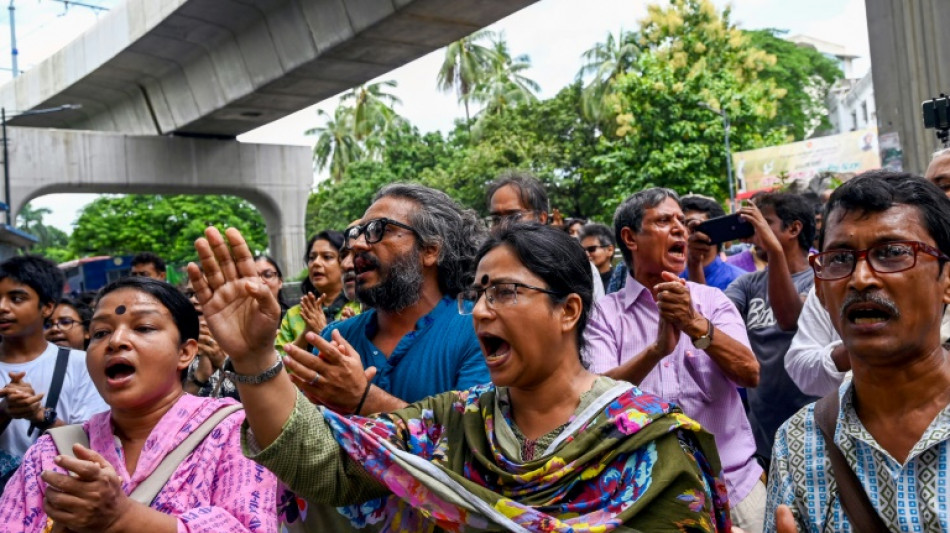
Bangladesh protests to resume after ultimatum ignored / Photo: © AFP

 AVEVA and PETROJET Sign MoU for Digital Twin Projects in Egypt

 Daily Horoscope November 20, 2026: Astrological Predictions for All Signs

 Desire Under the Elms review - a horror show that bruises more than it moves

 Saudi PIF Retains Top Sovereign Wealth Fund Brand Title for Third Year

 Phoenix Weekend Guide: Sangria Socials, Pie Markets, and New Brunch Spots

 Trent Perry’s Late Heroics Lift No. 7 UCLA Past Cal State Fullerton

 2027 Hyundai Elantra Review: Brutalist Design and Expanded Dimensions
Bangladeshi students called new street protests for Monday after Prime Minister Sheikh Hasina's government ignored an ultimatum to release their leaders and apologise for those killed in deadly unrest.
Student rallies against civil service job quotas this month sparked days of violence that killed at least 205 people including several police officers, according to an AFP count of police and hospital data.
The clashes were some of the worst of Hasina's 15-year tenure but her government has since largely restored order by deploying troops, imposing a curfew and shutting down the internet nationwide.
At least half a dozen leaders of Students Against Discrimination, the group that organised the initial protests, are among thousands since taken into police custody.
"The government is continuing to show complete and utter insensitivity to our movement," Abdul Kader, one of the group's coordinators, said in a statement.
"We are calling for a protest rally across the country," he added. "We are requesting all citizens of Bangladesh to show solidarity with our demands and join in our movement."
Students Against Discrimination leaders had vowed to end a week-long moratorium on new demonstrations if police failed to release their leaders by Sunday evening.
The group's demands also include a public apology from Hasina for the violence, the dismissal of several of her ministers, and the reopening of schools and universities around the country that were shuttered at the height of the unrest.
At least 9,000 people have been arrested nationwide since the unrest began, according to Prothom Alo, Bangladesh's largest daily newspaper.
Troops are still patrolling urban areas and a nationwide curfew remains in force but it has been progressively eased since the start of last week.
Bangladesh's mobile internet network was restored on Sunday, 11 days after a nationwide blackout imposed at the height of the unrest, in another sign of the government's confidence that it was in control of the situation.
Protests began this month over the reintroduction of a quota scheme reserving more than half of all government jobs for certain groups.
With around 18 million young Bangladeshis out of work, according to government figures, the move deeply upset graduates facing an acute jobs crisis.
Critics say the quota is used to stack public jobs with loyalists to the ruling Awami League.
The Supreme Court cut the number of reserved jobs last week but fell short of protesters' demands to scrap the quotas entirely.
Hasina, 76, has ruled Bangladesh since 2009 and won her fourth consecutive election in January after a vote without genuine opposition.
Her government is accused by rights groups of misusing state institutions to entrench its hold on power and stamp out dissent, including the extrajudicial killing of opposition activists.
L.Wyss--VB