Quad foreign ministers meet in Tokyo with eye on China / Photo: © AFP

 Progressive Vision Wins Irish Healthcare Awards 2026 Innovation Prize for Office-Based Cataract Surgery
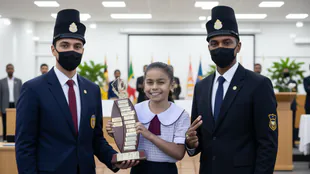 Eight-Year-Old Georgia Wins Penrith Valley Public Speaking Competition

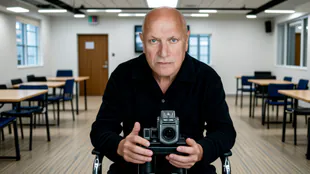 Steven Berkoff on Memory and His New Autobiography 'Shouting At Night'

 Jimmy Carr Confirms 25-Year Estrangement From Father Amid Podcast Reflections

 Arizona Superintendent Tom Horne to Leave Office, Plans Law Practice and Charter School

 Japan and Peru Mark 150 Years of Diplomatic Ties Amidst Trade and Investment Talks

 Ian Jackson Scores Game-High 22 Points After Rick Pitino's Prank Suspension

US Secretary of State Antony Blinken met counterparts from Japan, Australia and India on Monday, with the group expected to issue a joint statement calling for a "free and open" Pacific in a rebuke to China.
While not naming it directly, the call from Blinken and the foreign ministers of the so-called Quad grouping will be seen as a clear reference to Beijing in the wake of a series of confrontations between Chinese and Philippine vessels in the disputed South China Sea.
North Korean missile launches, cybersecurity and maritime patrols will also reportedly be on the agenda.
Blinken is on a diplomatic tour of Asia-Pacific countries aimed at reinforcing regional cooperation in the face of Beijing's growing assertiveness and its deepening ties with Russia.
At high-level defence talks in Tokyo on Sunday, Blinken, US Defense Secretary Lloyd Austin and their Japanese counterparts issued scathing verbal attacks on China and Russia.
They said in a statement that Beijing's "foreign policy seeks to reshape the international order for its own benefit at the expense of others".
Their joint communique criticised Moscow's "growing and provocative strategic military cooperation" with China, as well as its procurement of ballistic missiles from North Korea "for use against Ukraine".
The Quad talks in Tokyo, the first since September, include Japanese Foreign Minister Yoko Kamikawa, India's S. Jaishankar and Australia's top diplomat Penny Wong.
Any criticism of Moscow by the group could be awkward for India, which relies heavily on Russian arms supplies and whose Prime Minister Narendra Modi met with Vladimir Putin this month.
- Maritime clashes -
Japanese media reported that the ministers will jointly pledge to improve the Philippines' cybersecurity capacity and help Palau build communications network infrastructure.
They will also provide help to other nations in maritime policing and search-and-rescue, the reports said.
Manila is locked in a longstanding territorial row with Beijing over parts of the South China Sea -- a strategic waterway through which trillions of dollars' worth of trade passes annually.
Violent clashes in the area have sparked concern that Manila's ally Washington could be drawn into a conflict as Beijing steps up efforts to push its claims to almost the entire South China Sea.
Blinken and Austin will travel to Manila Monday evening for more "2+2" talks there.
Analysts warn that the Quad's varied agendas mean their message does not always ring clear.
The grouping "sends a mixed signal to China and other states in the region", said Bec Strating, professor of international relations at La Trobe University.
On one hand, the message that the four countries are willing to work together on defence and foreign policy issues presents them "as a 'partner-of-choice' in the region, compared with China", she told AFP.
But at the same time, they rarely mention China directly in their statements, with their messaging largely trying to "de-emphasise security and military cooperation".
And while they have made some concrete moves to cooperate, differences in stance on key global matters risk complicating matters.
"Global issues such as the war in Ukraine have demonstrated that the Quad countries are not necessarily as 'like-minded' as the rhetoric suggests," Strating said.
H.Gerber--VB