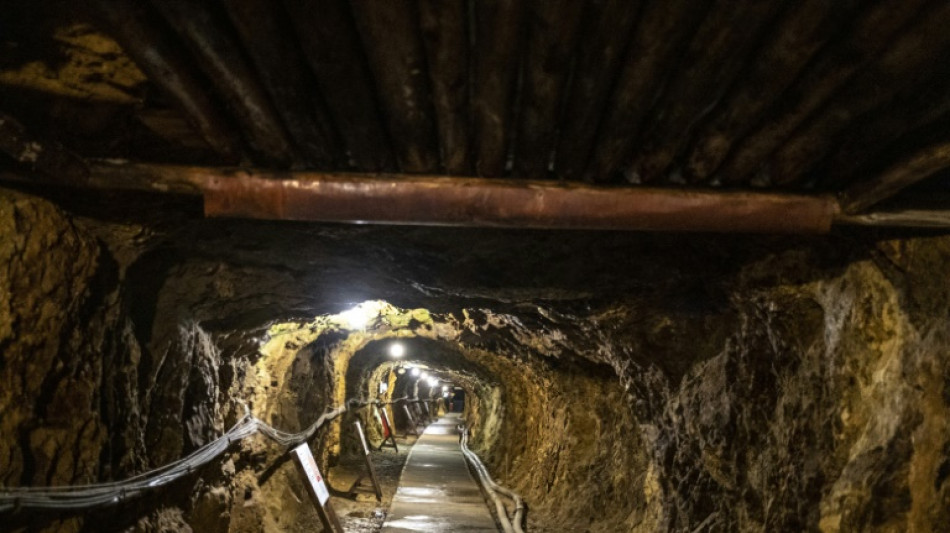
Japan's Sado mines added to World Heritage list / Photo: © AFP/File

 ALIX LASERS shareholders remove Michael Sobitsch as managing director in view of the circumstances

 Progressive Vision Wins Irish Healthcare Awards 2026 Innovation Prize for Office-Based Cataract Surgery

 Eight-Year-Old Georgia Wins Penrith Valley Public Speaking Competition

 Steven Berkoff on Memory and His New Autobiography 'Shouting At Night'

 Jimmy Carr Confirms 25-Year Estrangement From Father Amid Podcast Reflections

 Arizona Superintendent Tom Horne to Leave Office, Plans Law Practice and Charter School

 Japan and Peru Mark 150 Years of Diplomatic Ties Amidst Trade and Investment Talks

A network of mines on a Japanese island infamous for using conscripted wartime labour was added to UNESCO's World Heritage register Saturday after South Korea dropped earlier objections to its listing.
The Sado gold and silver mines, now a popular tourist attraction, are believed to have started operating as early as the 12th century and produced until after World War II.
Japan had put a case for World Heritage listing because of their lengthy history and the artisanal mining techniques used there at a time when European mines had turned to mechanisation.
The proposal was opposed by Seoul when it was first put because of the use of involuntary Korean labour during World War II, when Japan occupied the Korean peninsula.
UNESCO confirmed the listing of the mines at its ongoing committee meeting in New Delhi on Saturday after a bid highlighting its archaeological preservation of "mining activities and social and labour organisation".
"I would like to wholeheartedly welcome the inscription... and pay sincere tribute to the long-standing efforts of the local people which made this possible," Japanese Foreign Minister Yoko Kamikawa said in a statement.
The World Heritage effort was years in the making, inspired in part by the successful recognition of a silver mine in western Japan's Shimane region.
South Korea's foreign ministry said it had agreed to the listing "on the condition that Japan faithfully implements the recommendation... to reflect the 'full history' at the Sado Gold Mine site and takes proactive measures to that end."
Historians have argued that recruitment conditions at the mine effectively amounted to forced labour, and that Korean workers faced significantly harsher conditions than their Japanese counterparts.
"Discrimination did exist," Toyomi Asano, a professor of history of Japanese politics at Tokyo's Waseda University, told AFP in 2022.
"Their working conditions were very bad and dangerous. The most dangerous jobs were allocated to them."
Also added to the list on Saturday was the Beijing Central Axis, a collection of former imperial palaces and gardens in the Chinese capital.
The UNESCO committee meeting runs until Wednesday.
B.Wyler--VB
