
G20 pledges to work together to tax ultra-rich / Photo: © AFP

 ALIX LASERS shareholders remove Michael Sobitsch as managing director in view of the circumstances
 Progressive Vision Wins Irish Healthcare Awards 2026 Innovation Prize for Office-Based Cataract Surgery
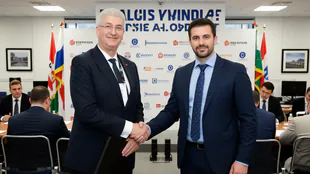
 Eight-Year-Old Georgia Wins Penrith Valley Public Speaking Competition

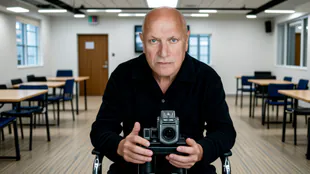 Steven Berkoff on Memory and His New Autobiography 'Shouting At Night'

 Jimmy Carr Confirms 25-Year Estrangement From Father Amid Podcast Reflections

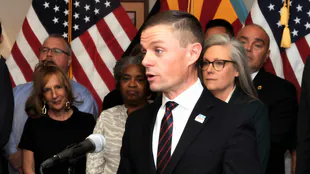
 Arizona Superintendent Tom Horne to Leave Office, Plans Law Practice and Charter School

 Japan and Peru Mark 150 Years of Diplomatic Ties Amidst Trade and Investment Talks

G20 nations have agreed to work together to make the super-rich pay their taxes, but stopped short of a more substantial deal, according to a declaration adopted Friday after a meeting of finance ministers in Rio de Janeiro.
The thorny topic of tackling tax-dodging billionaires dominated the two-day meeting in the Brazilian city, which will host a G20 summit in November.
The initiative is a key priority for Brazilian President Luiz Inacio Lula da Silva, who this year heads the grouping, which includes the world's major economies, the European Union and the African Union.
Lula was hoping for a minimum tax on the moneyed elite, but the final statement represents a compromise on a topic that divided member states.
"With full respect to tax sovereignty, we will seek to engage cooperatively to ensure that ultra-high-net-worth individuals are effectively taxed," said the statement.
"Wealth and income inequalities are undermining economic growth and social cohesion and aggravating social vulnerabilities."
Brazil's Finance Minister Fernando Haddad said that "from a moral point of view it is important that the twenty richest nations consider that we have a problem, which is to have progressive taxation on the poor and not on the rich."
The United States and Germany dismissed the need for a global deal on taxing billionaires, an initiative which is backed by France, Spain, South Africa, Colombia and the African Union.
- 'Time to go further' -
French economist Gabriel Zucman, who authored a report on taxing the rich, welcomed the fact that "for the first time in history, there is now a consensus among G20 countries that the way we tax the super-rich must be fixed."
"Now it is time to go further," said Nobel Prize-winning economist Joseph Stiglitz on Friday, urging heads of state to coordinate minimum standards by November.
"The climate crisis is expected to cost trillions of dollars every year and it is outrageous to expect that the regular taxpayer should pay for it, while the super-rich evade taxes," said Camila Jardim of Greenpeace Brazil.
On the sidelines of the thorny tax discussions US Treasury Secretary Janet Yellen and Brazilian Economy Minister Haddad announced on Friday the signing of a partnership on climate protection.
Founded in 1999, the organization was originally focused on global economic issues but has increasingly taken on other pressing challenges -- even though member states do not always agree on what should be on the agenda.
Divisions within the G20, of which Russia is also a member, have made drafting a joint communique at the outcome of meetings a challenge.
Three texts were published by Brazilian authorities: a joint final communique, a document on "international cooperation in tax matters" and a separate communique from Brazil on geopolitical crises.
The final communique makes no mention of the wars in Ukraine and Gaza, but simply refers to "wars and the escalation of conflicts" as risk factors for the global economy.
R.Kloeti--VB
