Russia struggles to turn Black Sea rule into amphibious attack / Photo: © Russian Defence Ministry/AFP

 Trump's secret plane swap triggers questions and confusion
 California calls Paramount's threat to leave state 'blackmail'
 PSG 'want to win everything', says Luis Enrique

 Barred from elections, Russia's anti-war party vows to fight on

 Jaissle states Newcastle ambition but urges patience

 NBA star Cooper Flagg trading card a slam dunk for lucky buyer
 ForumPay Expands Payment Infrastructure with New Card and Bank Transfer Acceptance Solution

 Oil prices higher, stocks flat ahead of inflation report

 Orban-critic ex-judge becomes Hungary president after predecessor ouster

 US rights groups sue Trump over ICC sanctions

 Sphere 3D Corp. (Nasdaq: ANY) Attracts 6.5% Stake from Turnaround Bitcoin-Mining Investor

 Oil prices lower, stocks higher as Hormuz doubts drag on
 Colombia scrambles to find survivors as quake kills 181

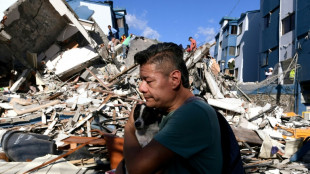 Colombia scrambles to find survivors as quake kills 169

 MEXC Report: 74.2% of Traditional Finance Users Have Shifted Their Trading Activity to Crypto Exchanges

 MEXC Lists DAPPOS (DOS) With $60,000 Worth of DOS and 10,000 USDT in Airdrop+ Rewards

 Jellyfish force shutdown of three reactors at French nuclear plant

 Hodgkinson, Werro sail through Euro 800m qualifying

 Somali referee denied World Cup 'proud' to oversee UEFA Super Cup
 French newspapers target Google over AI summaries

 Ebola death toll in DR Congo outbreak rises to more than 2,000

 PrimeXBT Launches MT5 Cent Account for Beginners and Risk-Conscious Traders
 British sprinter Hunt chasing three more golds after winning 100m

 Ethiopia's Tigray rebel authorities condemn army drone strikes

 Too hot to live? French buyers rethink housing choices after heatwaves
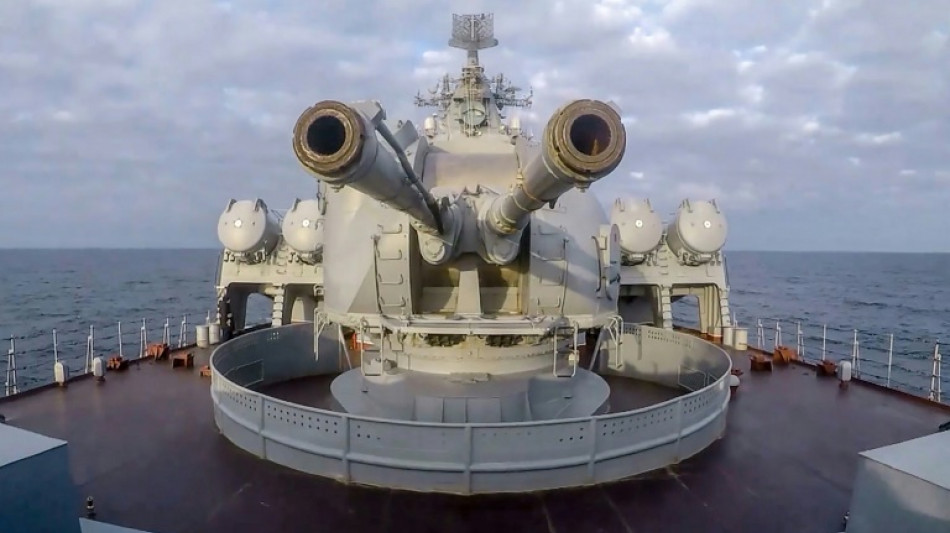
Russia may rule the Black Sea but any amphibious assault on the Ukrainian coast seems risky while Kyiv's missiles threaten to destroy Russian ships if they get too close, experts say.
According to British intelligence sources, Russia operates around 20 warships in the Black Sea, where the balance of power is now static since Turkey blocks any access by vessels belonging to a warring party.
"It's their 'Mare Nostrum'," said Captain Eric Lavault, a spokesman for the French navy, a reference to the Latin term meaning "Our Sea" used in ancient Rome to describe the Mediterranean.
The fact that all the other Black Sea countries either already belong to NATO or hope to join the Western alliance has not cowed Russia's claim to supremacy.
On paper, the recent capture of the coastal Ukrainian city of Mariupol and Russian control of the entire Sea of Azov coastline should underline Russian dominance and allow Moscow's troops to establish a direct logistics link between its fighters in the Donbas region and the eastern port of Novorossiysk, Lavault said.
But since the surprise sinking last month of the Russian warship Moskva all bets are off.
The disappearance of the Russian flagship has created great uncertainty for the attackers along what is still a Ukrainian-controlled coastline between Odessa and Romania.
This is not thanks to Kyiv's navy, which has been destroyed, but to land-based missiles like the Neptune -- believed to have delivered the fatal blow to the Moskva -- and, soon, the Harpoon that Britain is to deliver to Ukraine.
The impact of the Moskva's sinking on Russian planning may well prevent any attempt by the Russian navy to land near Odessa with the aim of surrounding the Ukrainian heartland and linking up Russian forces with separatists in the Moldavian Transnistria region.
"That zone presents a threat that the Russians must take into account," said defence expert Igor Delanoe at the French-Russian Monitor, a political analysis body based in Moscow.
Any such landing is currently "out of reach" for the Russians, said Delanoe.
Russian progress in the Donbas region could open up new options, he said, "but they will have to neutralise the coastal defences," he cautioned.
- 'Not Russia's any more' -
Russian forces have had great trouble locating and destroying Ukrainian surface-to-air missiles because of their mobility, said Michael Petersen, director of the Russia Maritime Studies Institute and an associate professor at the US Naval War College.
"I suspect that would also be the case for any mobile coastal defense cruise missile system that Ukraine may have," he said, adding that the exact number of Neptune missiles -- which have a range of some 300 kilometres (200 miles) -- available to Ukrainian forces was unknown.
Russia's failure to establish air superiority, and its apparent inability to precision-target missiles, are not helping its efforts to knock out Ukraine's coastal defences, added French navy spokesman Lavault.
He said this had allowed the defenders to create "a maritime cordon sanitaire" and threaten Russian southern supply lines between Kherson and Nikolayev.
In addition, Ukraine has deployed mines, and is expected to take delivery of naval surface drones promised by the US, although it is not certain that they will be armed.
"More likely, if Ukraine is provided with unmanned systems, they would be used to provide surveillance and reconnaissance for weapon systems," Petersen said.
British Defence Secretary Ben Wallace meanwhile went as far as contesting Russia's centuries-old supremacy in the Black Sea altogether.
"The Russians can't control the Black Sea," he told Sky News. "It's not theirs anymore."
Whatever the outcome of the Ukraine war, Russia will not give up its Black Sea role quietly, experts agreed.
But as other Black Sea countries, notably Romania and Turkey, deploy their own coastal missile systems based on Ukraine's example, Moscow's role will become harder to maintain.
"Certainly Russia will be less secure in the Black Sea than they were before the war," said Petersen.
M.Ouellet--BTB