
Macron says won't name new French PM until after Olympics / Photo: © AFP

 ALIX LASERS shareholders remove Michael Sobitsch as managing director in view of the circumstances
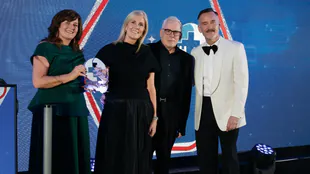 Progressive Vision Wins Irish Healthcare Awards 2026 Innovation Prize for Office-Based Cataract Surgery
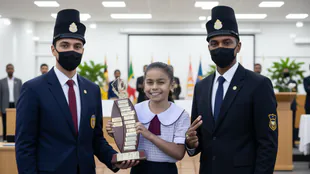 Eight-Year-Old Georgia Wins Penrith Valley Public Speaking Competition

 Steven Berkoff on Memory and His New Autobiography 'Shouting At Night'

 Jimmy Carr Confirms 25-Year Estrangement From Father Amid Podcast Reflections

 Arizona Superintendent Tom Horne to Leave Office, Plans Law Practice and Charter School

 Japan and Peru Mark 150 Years of Diplomatic Ties Amidst Trade and Investment Talks

French President Emmanuel Macron on Tuesday dismissed a left-wing alliance's push to name a new prime minister after snap elections, saying parties in a fractured parliament must come together to build a broad coalition after the Paris Olympic Games.
"Of course we need to be concentrated on the Games until mid-August," Macron told broadcaster France 2.
"From then... it will be my responsibility to name a prime minister and entrust them with the task of forming a government, with the broadest backing possible," he said.
Macron surprised the nation by dissolving parliament and calling snap elections, with the second round of voting on July 7 producing a lower-house National Assembly with no clear majority.
The left-wing NFP alliance emerged as the largest grouping with 193 seats, against 164 for Macron's centrists and 143 for the far-right National Rally (RN) and its allies.
Judging themselves the winners with the most seats, leftist parties have butted heads for weeks over a prospective prime minister.
They finally came up with a consensus candidate, little-known economist and senior civil servant Lucie Castets, just before Macron's Tuesday prime-time TV appearance.
Working for the Paris city government, Castets is a total unknown to the wider public.
The 37-year-old told AFP she had accepted the nomination "with great humility but also great conviction", believing herself a "serious and credible candidate" for PM.
Castets added that one of her priorities would be to "repeal the pension reform" that Macron pushed through last year, triggering widespread protests and discontent, as well as a "major tax reform so everyone pays their fair share".
- 'Not a dirty word' -
It is Macron himself who must nominate any new prime minister.
When presidents have seen the opposition take control of parliament in the past, they have accepted prime ministers put forward by the new majority.
But any French government needs to be able to survive a confidence vote in the chamber or risk immediate ejection.
That leaves the situation unclear when no single bloc or alliance can marshal control of the chamber.
"The question is what majority can emerge from the Assembly so that a French government can pass reforms, pass a budget and move the country forward?" Macron told France 2.
It was up to parties to "get out of their comfort zones and work out compromises. It's not a dirty word," he added.
In the mean time, Prime Minister Gabriel Attal and his ministers remain in place in a caretaker capacity.
- 'Worst kind of politics' -
Left-wing leaders were quick to denounce Macron's position.
The president "wants to impose his republican front on us by force", said Jean-Luc Melenchon, figurehead of the hard-left France Unbowed (LFI) party, referring to a decades-old strategy of France's mainstream parties coming together to box out the far right.
Parties made temporary alliances for the second round to do just that on July 7, stopping the RN from achieving an overall majority.
But Macron has lumped together LFI with the RN as "extreme" in repeated public statements, calling after the elections for a broad governing coalition that would effectively exclude both.
He sees parliament's centre of gravity further to the right and has already struck deals with the diminished conservative Republicans party for key positions in parliament, such as the speaker's chair.
Macron "is attempting a shameful misappropriation" of the election result, said Olivier Faure, head of the Socialist Party.
"When you call elections at the risk of causing chaos, you respect the result. Denial is the worst policy that leads to the worst kind of politics," he said.
L.Wyss--VB
