
Sirens in Cyprus mark 50 years since Turkish invasion / Photo: © AFP

 ALIX LASERS shareholders remove Michael Sobitsch as managing director in view of the circumstances
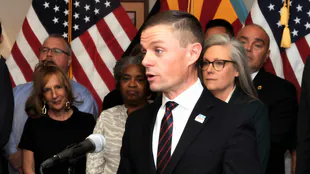
 Progressive Vision Wins Irish Healthcare Awards 2026 Innovation Prize for Office-Based Cataract Surgery

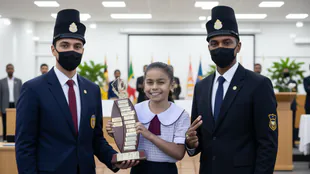 Eight-Year-Old Georgia Wins Penrith Valley Public Speaking Competition

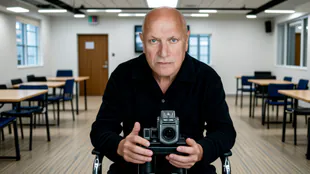 Steven Berkoff on Memory and His New Autobiography 'Shouting At Night'

 Jimmy Carr Confirms 25-Year Estrangement From Father Amid Podcast Reflections

 Arizona Superintendent Tom Horne to Leave Office, Plans Law Practice and Charter School

Sirens pierced the pre-dawn quiet in Cyprus on Saturday to mark 50 years since Turkish troops landed on the Mediterranean island in an invasion that has left it divided to this day.
In the government-controlled south of the island, the sirens blared at 5:30 am (0230 GMT), the start time of 1974's Operation Atilla which would go on to conquer a third of Cyprus and displace around 40 percent of the population.
A UN-patrolled buffer zone now cuts across the island from northwest to southeast, with checkpoints and border controls separating the Greek Cypriot community in the south from the Turkish Cypriot community in the north.
Before the anniversary, Greek Cypriot veterans of the fight against the invasion told AFP that they were pessimistic about the prospects for peace. Demetris Toumazis, who was taken to Turkey as a prisoner of war in 1974, said, "It's 50 years now and there's still no solution, and there's no hope".
Greek Prime Minister Kyriakos Mitsotakis was set to visit Cyprus on Saturday evening to attend the commemorations alongside Cypriot President Nikos Christodoulides.
Christodoulides was scheduled to attend a memorial ceremony for fallen soldiers in the morning, followed by a Greek Orthodox service in the village of Kokkinotrimithia, west of the divided capital Nicosia.
Mitsotakis was due to join him for an art project collecting memories of the invasion at the presidential palace, after which both leaders were set to deliver speeches.
In the breakaway Turkish Republic of Northern Cyprus, which is recognised only by Ankara, the mood will be one of celebration, with Turkish President Recep Tayyip Erdogan expected to visit amid tight security to take part in anniversary events including a military parade.
The TRNC's lack of international recognition since it was declared by Turkish Cypriot leaders in 1983 means it is heavily dependent on Turkey.
Decades of UN-backed talks have failed to reunify the island and the most recent UN envoy, the Colombian diplomat Maria Angela Holguin, wrote in an open letter in early July that there was a need to "move away" from past solutions and to "think differently".
The last round of peace talks collapsed in 2017, while April marked 20 years since Greek Cypriots overwhelmingly rejected a UN-backed unification plan in a referendum.
The invasion was triggered by a coup in Nicosia backed by the military junta in Athens and aimed at uniting the island with Greece, something bitterly opposed by the Turkish Cypriot community which made up just under a fifth of the island's population at the time.
Cyprus had gained an uneasy independence from Britain 14 years earlier with a complex constitution designed to ensure minority rights for Turkish Cypriots.
The treaty granting it independence banned union with Greece or Turkey as well as partition and made London, Athens and Ankara guarantors of Cyprus's independence, territorial integrity and security.
Within three years, severe intercommunal violence broke out which caused Turkish Cypriots to withdraw into enclaves and first divided Nicosia in two.
R.Braegger--VB

