
Iran can produce fissile material for bomb in 'one or two weeks': Blinken / Photo: © AFP

 ALIX LASERS shareholders remove Michael Sobitsch as managing director in view of the circumstances
 Progressive Vision Wins Irish Healthcare Awards 2026 Innovation Prize for Office-Based Cataract Surgery
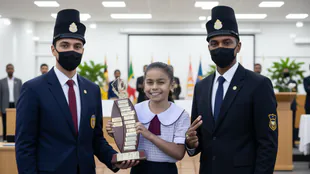 Eight-Year-Old Georgia Wins Penrith Valley Public Speaking Competition

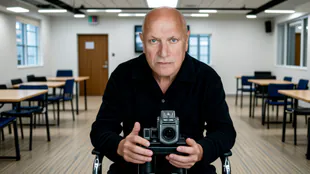 Steven Berkoff on Memory and His New Autobiography 'Shouting At Night'

 Jimmy Carr Confirms 25-Year Estrangement From Father Amid Podcast Reflections

 Arizona Superintendent Tom Horne to Leave Office, Plans Law Practice and Charter School

Iran is capable of producing fissile material for use in a nuclear weapon within "one or two weeks," US Secretary of State Antony Blinken said Friday.
The details on Iran's capabilities emerged following the recent election of President Masoud Pezeshkian.
He has said he wants to end Iran's isolation and favors reviving the 2015 nuclear deal between Iran and global powers.
Blinken said, however, that "what we've seen in the last weeks and months is an Iran that's actually moving forward" with its nuclear program.
In 2018, the United States unilaterally withdrew from the nuclear deal, which was designed to regulate Iran's atomic activities in exchange for the lifting of international sanctions.
Speaking at a security forum in Colorado, Blinken blamed the collapse of the nuclear deal for the acceleration in Iran's capabilities.
"Instead of being at least a year away from having the breakout capacity of producing fissile material for a nuclear weapon, (Iran) is now probably one or two weeks away from doing that," Blinken said.
He added that Iran had not yet developed a nuclear weapon.
The International Atomic Energy Agency (IAEA) said last month that Iran is further expanding its nuclear capacities, with Tehran informing the agency that it was installing more cascades -- or series of centrifuges used in enrichment -- at nuclear facilities in Natanz and Fordow.
According to the IAEA, Iran is the only non-nuclear weapons state to enrich uranium to the high level of 60 percent -- just short of weapons-grade -- while it keeps accumulating large uranium stockpiles, enough to build several atomic bombs, the agency says.
Following the US withdrawal, the Islamic republic has gradually broken away from its commitments under the 2015 nuclear deal.
But the country's acting foreign minister Ali Bagheri told CNN earlier this week that Iran remained committed to the accord, known as the JCPOA.
"We are still a member of JCPOA. America has not yet been able to return to the JCPOA, so the goal we are pursuing is the revival of the 2015 agreement," he said. "We are not looking for a new agreement."
Bagheri said no one in Iran had talked "about a new agreement. We have an agreement (signed) in 2015."
Blinken was speaking just days after reports that the US Secret Service had increased security for Republican presidential candidate Donald Trump weeks ago, after authorities learned of an alleged Iranian plot to kill him.
Tehran has denied the allegations.
A.Ammann--VB

