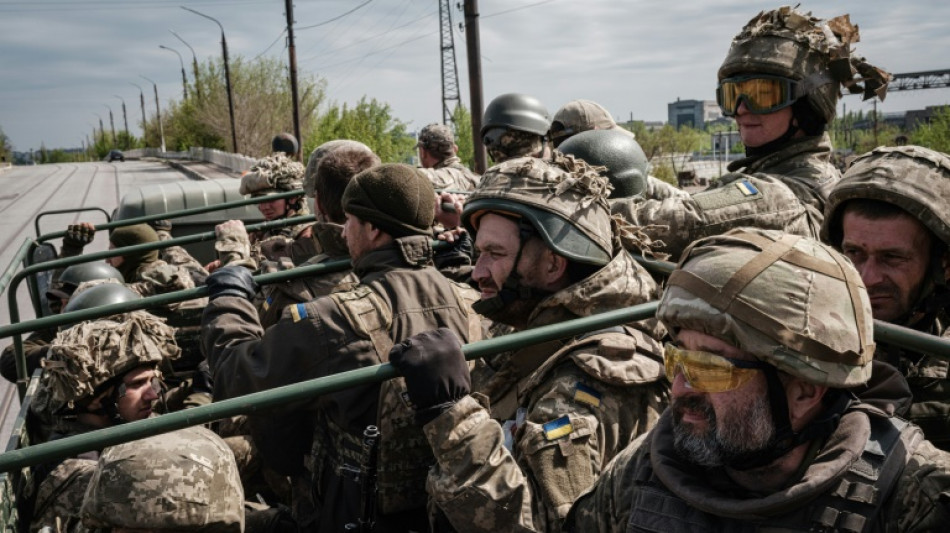
Exhausted Ukrainian soldiers return from eastern front / Photo: © AFP

 Packers beat Panthers 27-19 as Watson returns from hospital

 Affordable supermarket fashion offers designer-inspired autumn alternatives

 Judge throws out Australian mushroom killer's appeal, imposes harsher sentence
 Pelicans down Kings for first win of NBA season
 Tech firms take fresh hit as earnings misses fan AI fears

 Worcestershire leaders back renewed two-unitary council reorganisation

 India's animal megacentre vows reset after criticism

 Dodging fuel price hikes, Damascus drivers turn to electric cars

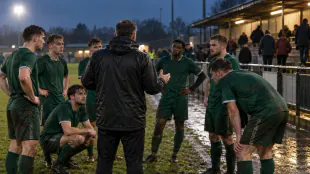 Alvechurch manager praises resilience but seeks improvement after Anstey draw

 Crypto platform Binance confirms major hack, more than $2.5bn frozen

 Sports chiefs face losing battle to keep sport separate from politics

 Nvidia's web of AI bets: smart strategy or bubble risk?
 Carrick fights for Man Utd job, Arsenal face Liverpool test

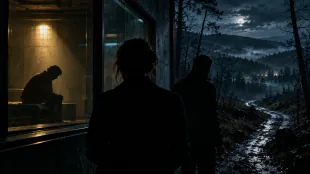 Apple TV crime drama Nocturne brings a Scandinavian thriller to Pennsylvania

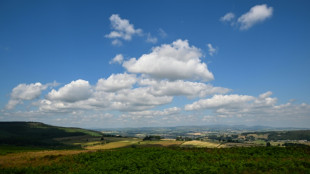 Charity crowdfunds millions to buy historic English estate

 'Diabolical' Halloween festivities banned in Honduran towns

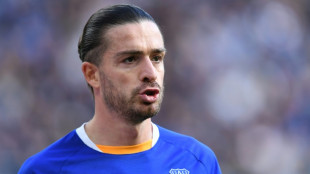 Everton boss Moyes backs 'club decision' to drop Grealish for Newcastle tie
 DoorDash shares rise as Instacart slips following $17 billion takeover plan

 Japanese star Forever Young goes for rare Breeders Cup Classic repeat

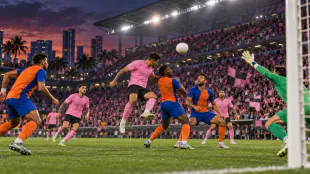 Inter Miami stay third after 2-2 draw with FC Cincinnati
 Inkle buys Finally bookkeeping unit and expands India-based workforce

 PI Industries plans Indian launch of Pioxaniliprole insecticide this rabi season

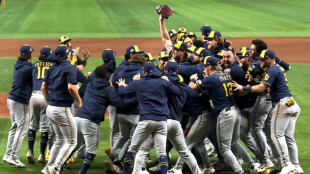 Small-market Brewers upend big-spenders as baseball lockout looms

 ISRO schedules NVS-03 navigation satellite launch for Friday

 Antonelli struck with illness ahead of Mexico GP

Packed with exhausted Ukrainian soldiers with clenched jaws, the truck drives away at full speed. The troops from the 81st brigade have just received an order to withdraw from the eastern front where Russian forces advance.
The brigade walked 12 kilometres (7.5 miles) Saturday, camouflaged in the woods and under crossfire, until their point of retreat at Sviatoguirsk.
For a month, the 81st -- whose motto is "always first" -- battled to push back the Russian advance in Ukraine's eastern Donbas region where Moscow's troops move forward slowly, taking villages one by one.
"Everyone understands that we must guard the line here, we cannot let the enemy move closer, we try to hold it with all our force," says lieutenant Yevgen Samoylov, anxious that the unit could be hit by Russian fire at any point.
"As you can hear, the enemy is very, very near," he says, pointing to the sky. The line of Russian tanks is on the other side of a hill, around seven kilometres (4.3 miles) away.
At 21 years old, Samoylov, an officer from the Odessa military academy, finds himself managing 130 conscripts, often twice his age.
"It's my first war. I was supposed to graduate in four months, but they sent me here," says the baby-faced officer with a short black beard.
Samoylov, who goes by the nom de guerre "Samson", never leaves his red notebook alone. He takes notes of every movement, but also each request and remark by the soldiers whom he always addresses with a soft voice.
- Deadly silence -
The unit swung into action on February 23, a day before Russia launched the invasion.
At the start of the war, they spent a month defending Izium, which fell on April 1, before joining the fighting around the village of Oleksandrivka.
"Some really difficult battles," says the quiet Samoylov.
In this brigade, like the others, they don't say how many people have been killed.
When the subject comes up, Samoylov's gaze becomes misty. The pain is raw.
A deadly silence takes over the military truck during the drive to the abandoned building where the soldiers will stay during their week of rest.
When the convoy passes a truck loaded with long-range missiles dashing to the front, the soldiers automatically make a "V" sign for victory with their fingers before fixing their gaze once more on their feet or the horizon in silence.
On arrival at the base, the soldiers unload their weapons, remove their kit and immediately go into one of the dilapidated rooms without electricity where they undergo a medical examination after returning from the front.
For the survivors, "there are small injuries on the forehead, those who were buried under the rubble during a bombing have fractures and (injuries) linked to shrapnel," says Vadym Kyrylov, the brigade's doctor.
"But we mainly see somatic problems, like hypertension or chronic illnesses that have worsened," the 25-year-old adds.
- 'Trench foot' -
The men also greatly suffer from "trench foot" syndrome caused by prolonged exposure to moisture, unsanitary conditions or the cold.
"For a month they are not able to dry their shoes... so there are many feet-related injuries, mainly fungi and infections," the doctor says.
After the medical visit, they all have the same reflex: to isolate and use their phone to call a female partner, a child or a parent.
Soldiers cannot use their phones on the front, and any application that requires geolocation is banned.
Four soldiers reassemble the rusty metal bed frames and sweep the floor coated with dust to make a semblance of a room.
"It's the moment for the guys to relax, to take care of their physical and psychological injuries, to regain their strength before returning to battle," Samoylov says.
"They'll sleep warm, eat normal food and try to more or less get back on their feet."
L.Dubois--BTB